 Guide On Map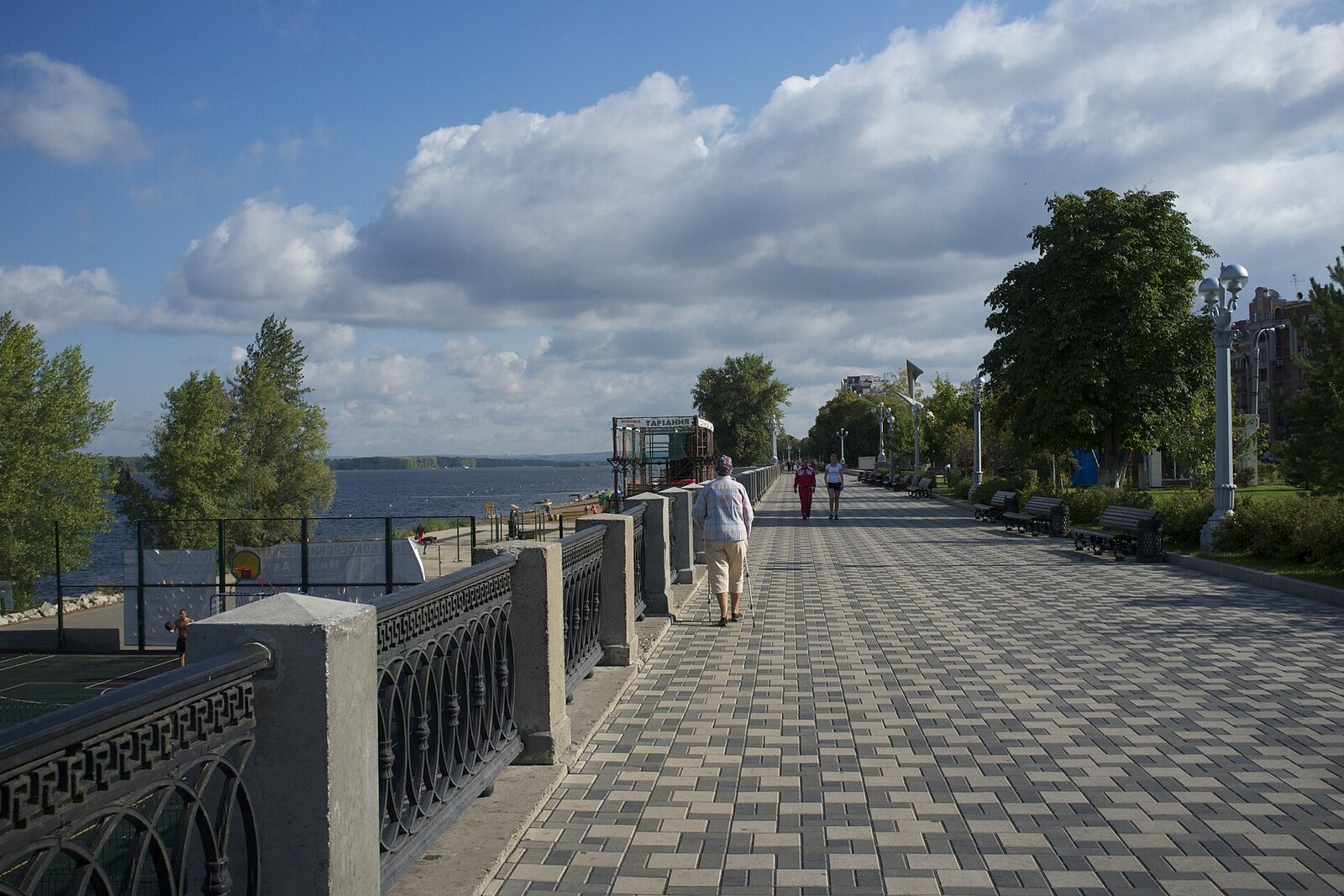
Look around first
What to notice
- Alley of the Solovetsky Cabin Boys
- Granite stele
- Stone peakless sailor cap
- Memorial pylons
The story of the place
From Nekrasovsky Descent toward the river terminal stretches the Alley of the Solovetsky Cabin Boys. Today people stroll here and make their way to the beach. During the war years, a wooden Kuibyshev River Terminal stood along this stretch of riverbank, with passenger piers lining the water. From here, around seven hundred teenagers from Kuibyshev Oblast departed between nineteen forty-two and nineteen forty-four.
The navy lacked specialists: adult sailors were transferred to the naval infantry, while ship crews needed radio operators, helmsmen, engine mechanics, and electricians. Nikolai Kuznetsov, the People’s Commissar of the Navy—then the term for a minister—ordered the opening of a school for cabin boys on the Solovetsky Islands. Cabin boys were teenagers trained for naval service. The recruits were mainly fifteen- and sixteen-year-old volunteers; preference was given to children from orphanages, boys under guardianship, and children of military personnel.
Rem Eskov, a teenager from Kuibyshev, sought to be sent to the front. He received an official referral from the Komsomol, but forged his parents’ consent: without their signature, a minor would not have been accepted. In July nineteen forty-two, the first group of three hundred boys left Kuibyshev.
They found no ready-made school on the Solovetsky Islands. The teenagers felled trees, uprooted stumps, and broke up rocky ground for dugouts. Each held fifty people, with three-tier bunks and one stove. Then classes began, lasting ten to twelve hours a day. A year later, the graduates were assigned to combat ships with no allowance made for their age.
Eskov asked to serve in the Baltic Sea and became an antiaircraft gunner on naval armored boat number five hundred six. During one battle, boxes in the artillery magazine caught fire. Eskov stopped feeding shells into the turret and put out the fire. At first, the commander reprimanded him for stopping the firing, then saw the charred boxes and understood: the sixteen-year-old sailor had prevented the ammunition from exploding and saved the boat and its crew. Eskov received Ushakov Medal number two. He served until nineteen fifty, returned to Kuibyshev, and took a job as a lathe operator at a factory.
Far from all the cabin boys who left from here returned home. One survivor, ship electrician Yuri Zaitsev, headed the city council of cabin-boy veterans. In nineteen eighty-eight, he wrote to the city executive committee and proposed naming this stretch of riverbank the Alley of the Solovetsky Cabin Boys. The name was approved the following year, and in nineteen ninety-two a granite stele with a peakless sailor cap was installed here. The pylons were intended to bear the surnames of all seven hundred Kuibyshev boys, but only four hundred twenty-seven names could be established, and the full list was abandoned.
Nekrasovsky Descent itself took its name from the street: the former Predtechenskaya Street was named in nineteen twenty-five after the poet Nikolai Nekrasov, whose name was chosen because of his sympathy for the oppressed; he had never been to Samara. The wooden river terminal was demolished in nineteen seventy-four. The piers were moved, while the beginning of the alley remained where the teenagers boarded vessels and left the city.
Useful on site
Open public space; some sections may be restricted because of seasonal work and weather.
Checked: June 24, 2026. Check the official source before visiting.On the open stretch, take the wind and the condition of the pavement into account. If the descent is inconvenient, the river’s main connection with the city’s terrain can be seen in full from above.