 Guide On Map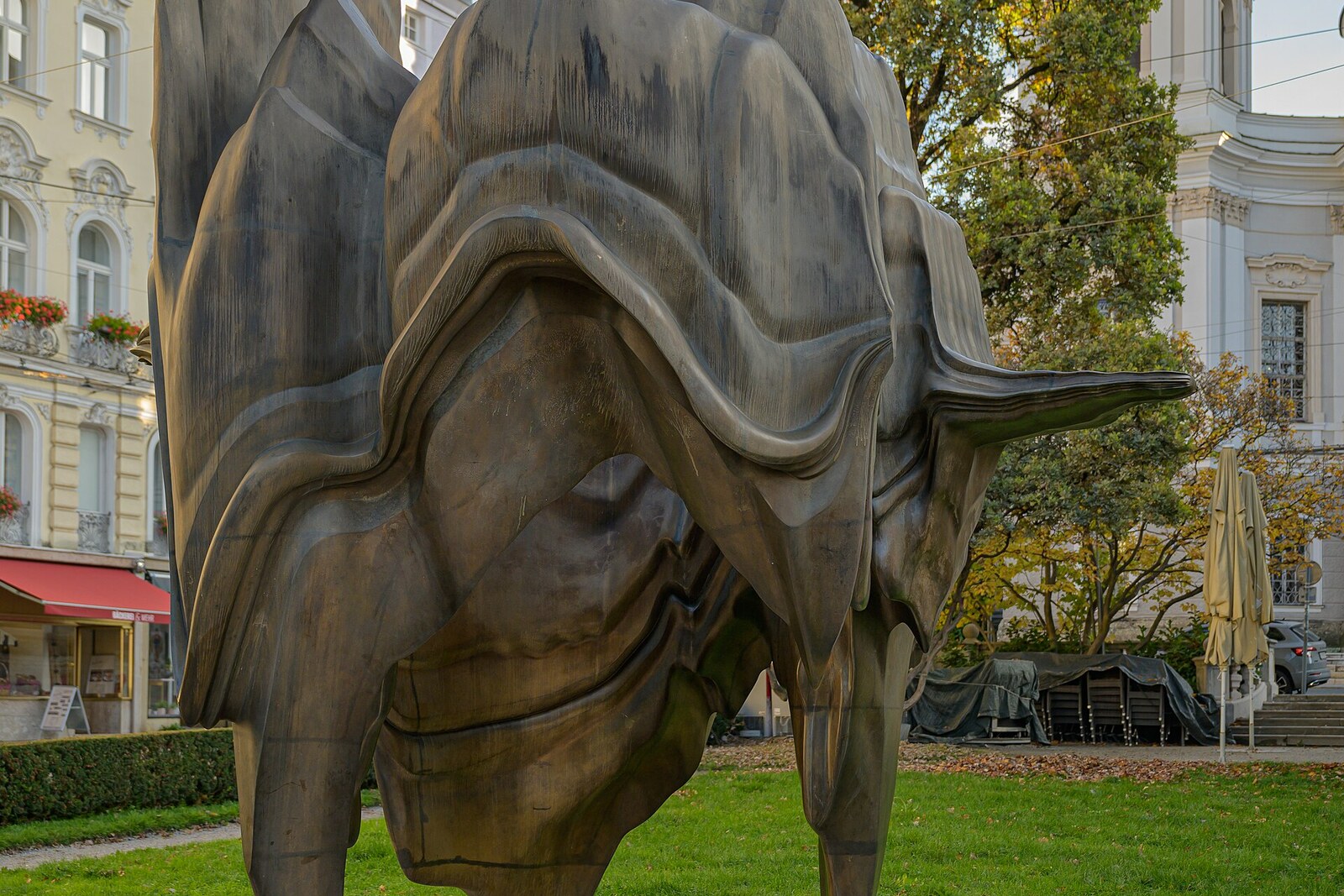
Look around first
What to notice
- Green island
- Roadway
- Facade of Holy Trinity Church
- Makartplatz address plaques
The story of the place
Cars, trolleybuses, and bicycles circle a green island in the middle of Makartplatz. At the beginning of the twentieth century, an entire house was demolished for this route. It stood in the center of today’s roadway, directly in front of Holy Trinity Church, and townspeople pawned belongings there when they urgently needed money.
The institution was established by the Salzburg Prince-Archbishop Jakob Ernst von Liechtenstein-Kastelkorn. In seventeen forty-seven, shortly before his death, he left thirty-three thousand guilders for the Charitable Pawnshop. He chose the number in memory of the thirty-three years of Christ’s earthly life. The archbishop wanted to give less affluent residents an alternative to moneylenders: a person brought clothing, tableware, or another valuable object and received a loan at a low interest rate. For an ordinary pledge, they received three quarters of its appraised value; for jewelry, half. If the debt could not be repaid, the items were auctioned twice a year.
The archbishop also set aside twenty thousand guilders for a new building, but died before work began. His successor bought an old house for the fund in what was then Hannibalgarten—the name of this part of today’s square. The house was already standing here when Holy Trinity Church was built. Its facade was therefore designed for a narrow street with a building opposite. Eighteenth-century parishioners did not have the spacious view across today’s roadway.
In nineteen seven, city officials decided to route a rail line here, nicknamed the “Yellow Electric.” The pawnshop obstructed the turn for traffic, so it was demolished. The office moved to Linzer Gasse, continued lending money against pledges, and closed for good in nineteen forty-three. The building’s marble portal, with the founder’s coat of arms and a pelican feeding its chicks with its own blood, was preserved. In nineteen fifty-one, the portal was incorporated into a savings bank building on Alter Markt.
By the time of the demolition, the square was already called Makartplatz. In May eighteen seventy-nine, the city council named it after Salzburg native Hans Makart, an artist whose paintings and decorative ensembles shaped the taste of imperial Vienna. The decision came at the height of his fame: only a few days earlier, Makart had organized a procession for the silver wedding anniversary of Franz Joseph I and Elisabeth, distributing about fourteen thousand participants among twenty-nine festive floats and historical groups. The Salzburg councilors managed to honor their forty-year-old fellow townsman during his lifetime.
There is no monument to Makart here. His surname remains on the address plaques, the pawnshop portal stands on the other bank, and the roadway now runs across the place where people once handed over belongings as pledges.
Useful on site
Makartplatz and Caldera are accessible as open urban space; Mozart Residence has separate museum hours and events.
Checked: June 26, 2026. Check the official source before visiting.The sculpture can be viewed from different sides and from inside; the Mozart museum is a separate visit with its own schedule.