 Guide On Map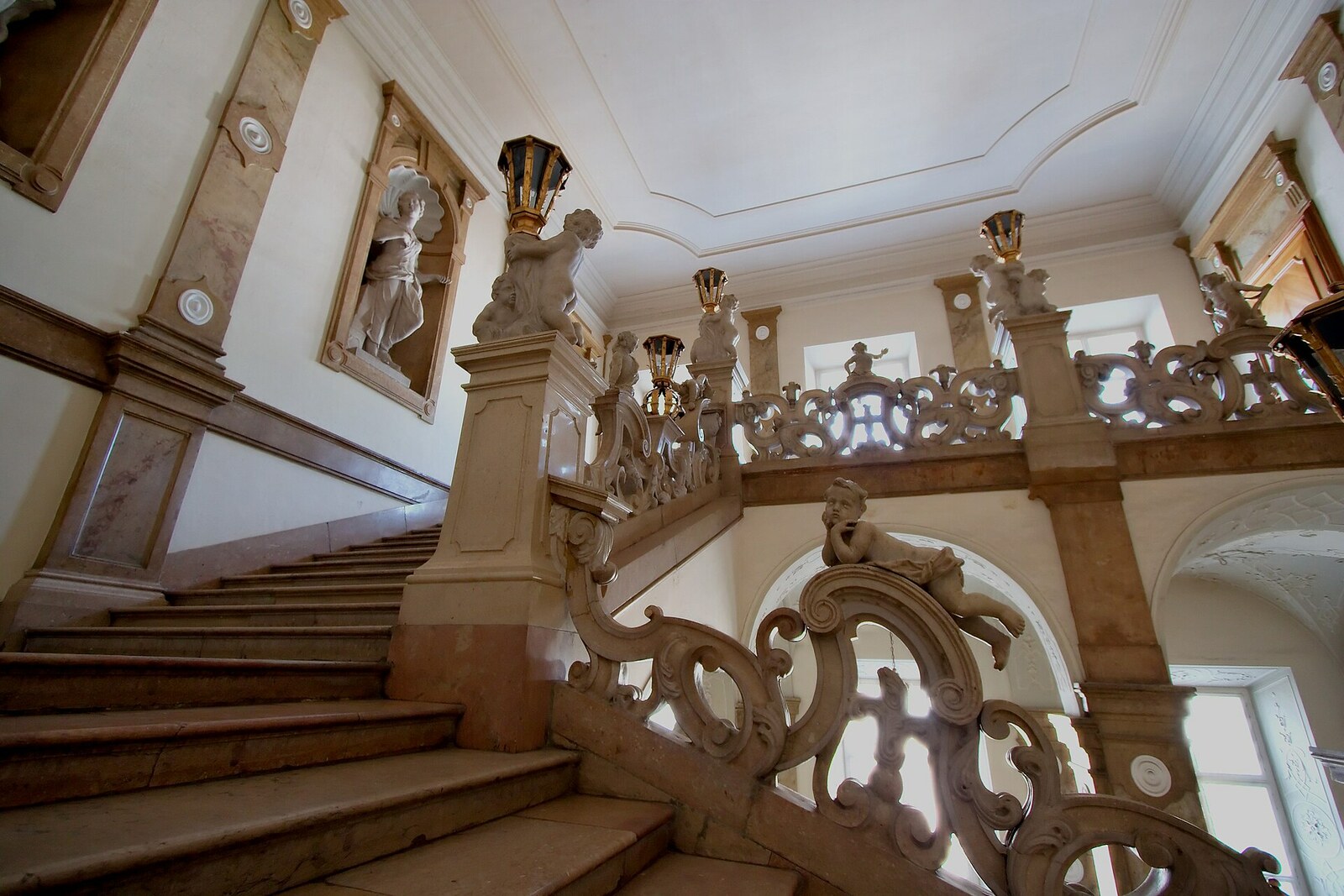
Look around first
What to notice
- The palace’s garden facade
- The southern part of the garden wing
- Angel Staircase
The story of the place
The garden facade and Angel Staircase belong to a palace whose present appearance took shape after later reconstructions and a fire. Beneath the southern garden wing, the underground part of an earlier building has survived, and beneath the staircase archaeologists found an old cobbled street pavement, which was then covered with earth again for preservation. The city administration now works in these halls, and marriages are registered in the Marble Hall.
In sixteen oh six, Salzburg's prince-archbishop Wolf Dietrich von Raitenau ordered a country palace built beyond the city fortifications for Salome Alt and their children. The prince-archbishop simultaneously headed the local church and governed an independent principality. A Catholic prelate could not marry, yet he did not hide his family: Salome sat beside him at the court table, and he publicly called her his wife.
Salome was the daughter of a wealthy merchant and city councilor. Her relatives owned houses, traded, and held offices in Salzburg. But Salome's own position, and that of her fifteen children, depended on one man's decisions. Wolf Dietrich tried unsuccessfully to obtain the pope's permission to marry. He then secured noble status from the emperor for Salome and the children, and provided them with property.
The palace became the principal of these acquisitions. Wolf Dietrich called it Altenau Palace: the name combined Salome's surname, Alt, with a designation for the river floodplain by the Salzach. Beyond the city walls, the family gained a separate house, courtyard, and land. This palace established the status that the church would not allow to be secured by marriage.
Everything held together while Wolf Dietrich remained prince-archbishop. In sixteen eleven, Salzburg's dispute with Bavaria over the sale of salt escalated into war. Bavarian troops entered the principality. Wolf Dietrich tried to flee, but gout made him slow-moving, and he was captured. He was deposed and confined in Hohensalzburg Fortress.
Salome was also detained, then released. She left for her relatives in the city of Wels. From exile, she sent Wolf Dietrich notes hidden in pies. When the correspondence was discovered, the conditions of his imprisonment were made stricter. He remained in the fortress until his death in sixteen seventeen. Salome bought a house in Wels and lived there until sixteen thirty-three.
Meanwhile, the new prince-archbishop Marcus Sittikus, the prisoner’s cousin and successor, expelled Salome's children from Altenau Palace. He then removed her surname from the palace's name. Altenau was replaced by Mirabell Palace, a name usually translated as “beautiful view.” The family home became the residence of the following archbishops.
The present appearance of the palace came after later reconstructions and a fire. The almost unaltered basement of Salome's house survives beneath the southern part of the garden wing. Beneath the Angel Staircase, archaeologists also found a cobbled street pavement from sixteen oh six, at a depth of about seventy centimeters. They documented it and covered it with earth again for preservation.
Since nineteen forty-seven, the palace has housed the city administration. In the Marble Hall, created later, civil registry office staff register marriages. The family for whom the first palace was built never received a marriage record here.
Useful on site
The palace and Angel Staircase are usually accessible during daytime hours on weekdays/Saturdays; Sundays, holidays, and events may close access.
Checked: June 26, 2026. Check the official source before visiting.If entry is closed because of an event, view the palace facade from outside; a visit to the Marble Hall is planned separately.