 Guide On Map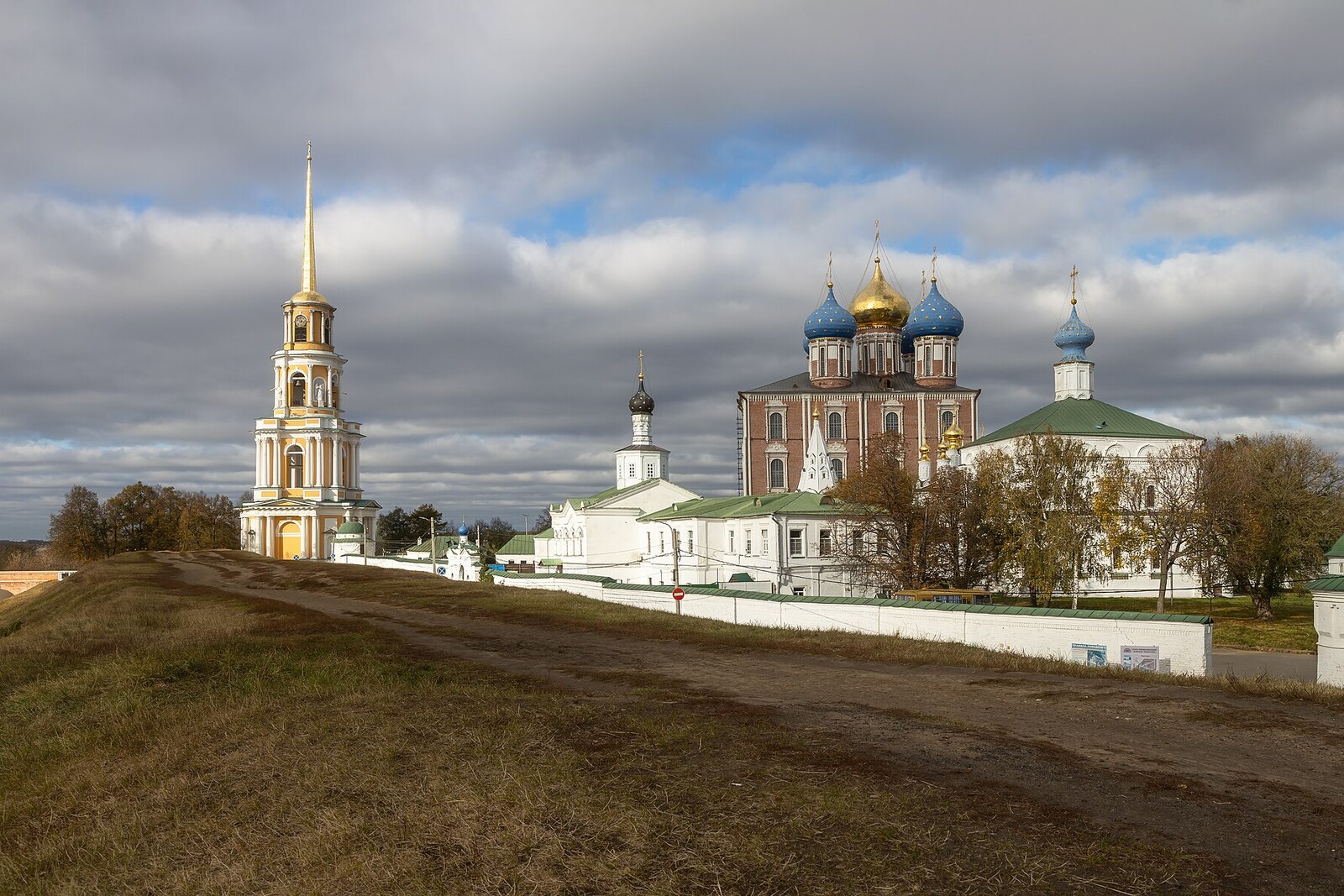
Look around first
What to notice
- The grassy crest of the rampart
- The hollow of the moat
- The slopes of the fortification
- Glebovsky Bridge
The story of the place
The line of the Kremlin's fortifications ran here. The grassy rampart still rises above the hollow of the former moat, and Glebovsky Bridge crosses this break in the terrain. No walls, gates, or fortress guns remain, but the earth itself has preserved the form of the old defense.
The grassy crest is separated from the city by a deep hollow. In fifteen twenty-one, a wooden wall stood on the rampart, below it lay a water-filled moat, and the fortress could be reached by a bridge leading to the gate. This narrow passage once allowed a few defenders to stop an army before which Moscow had retreated not long before.
Mehmed Giray, the khan of Crimea, was returning from a major campaign. Vasili III, the sovereign of Moscow, had not managed to gather enough forces and gave the khan a charter recognizing himself as his tributary. With this document, Mehmed Giray approached Pereyaslavl-Ryazansky and demanded provisions. The city was commanded by Ivan Khabar Simsky, a Moscow voivode sent to hold the recently annexed Ryazan Land. The khan ordered him to appear before him as the subordinate of a tributary.
Khabar replied that he knew nothing of such dependence and asked to see the original charter. The khan's envoy brought the scroll to the gate. The voivode took it behind the wall and refused to return it.
The besiegers then decided to use the only passage across the moat. Several prisoners were allowed to flee toward the gate, and a crowd of warriors came up to the bridge behind them. They demanded that the fugitives be handed over and hoped to kill the guards amid the confusion. The moat and rampart prevented them from getting around the gate from the side, so everything was decided on the narrow approach.
Johann Jordan, a German in Russian service who was responsible here for the fortress guns, did not wait for orders and fired at those gathered before the gate. The attackers retreated. Mehmed Giray demanded that the gunner be handed over, but Khabar spared his life and refused the khan once again.
Soon the khan lifted the siege: word had come from his own domains of an attack by Astrakhan detachments. The seized charter was taken to Moscow and destroyed, so the promise to pay tribute was left without a document. Khabar was elevated to the boyars; Jordan remained in service.
The wooden wall, gate, and guns are no longer here. What remain are the earth on which the defenders stood and the hollow of the former moat, which compelled the khan's warriors in fifteen twenty-one to gather beneath a single shot.
Useful on site
An open earthen site; access depends on the condition of the path and the weather.
Checked: June 24, 2026. Check the official source before visiting.Do not climb the slippery slope or take shortcuts: water and worn tracks erode the embankment.