 Guide On Map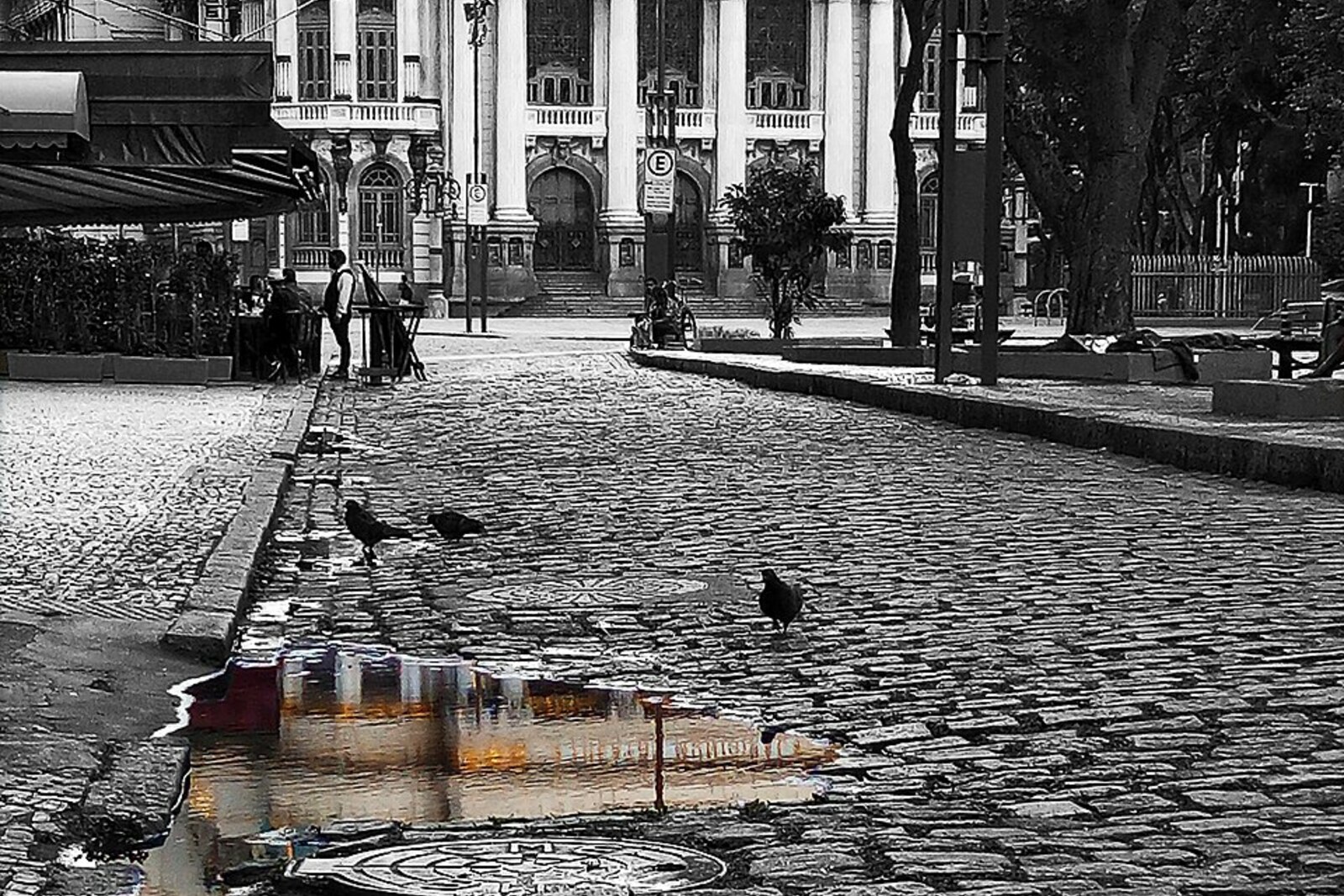
Look around first
What to notice
- The façade of Theatro Municipal
- Cine Odeon
- Cinelândia Square
- Avenida Rio Branco
The story of the place
The square and Rio Branco Avenue, laid out as a new urban arterial, converge at the ceremonial façade of Theatro Municipal. Before them, this site was occupied by the women’s Ajuda Convent; later, a large hall was built here, intended for touring seasons and costly productions. Today, its own orchestra, choir, and ballet work inside it, and people still come to the square for opera, concerts, and dance performances.
At one edge of the square stands Theatro Municipal; at the other, Cine Odeon has survived. Between these buildings lies the origin of the word “Cinelândia”—“land of cinema.”
In the early nineteen twenties, the Spanish immigrant Francisco Serrador already ran a vast network of movie theaters and made money from film distribution. After a long trip through Europe and the United States, he conceived of bringing together movie theaters, stages, a hotel, cafés, and shops in one district—modeled on Broadway in New York.
Serrador chose the site where the women’s Ajuda Convent had once stood. In nineteen twenty-five, Cine Capitólio, Cine Glória, and Cine Império opened here; a year later, Cine Odeon followed. Other theaters appeared next. The name “Cinelândia” arose from their number: people came here, chose a film on the spot, and moved from one poster to another. Most of these movie theaters later closed or changed their purpose. Cine Odeon, which turned one hundred years old in two thousand twenty-six, remains the only operating movie theater of old Cinelândia.
Theatro Municipal appeared before Serrador’s district. Arthur Azevedo, a playwright and newspaper theater critic, campaigned for it because he wanted to create a permanent Brazilian company supported by the city. He wrote comedies for local actors and saw that private impresarios were more willing to pay for profitable foreign touring productions: Brazilian authors and performers had neither their own stage nor a steady salary.
From eighteen ninety-four onward, Azevedo ran a weekly campaign in the newspapers. He proposed taking the Comédie-Française—a French state theater with permanent actors and a repertory—as a model. City councilors passed a law: ten percent of the revenue from foreign drama companies was to be collected to pay for the building and the maintenance of a Brazilian company. The money came in, but construction did not begin. Azevedo publicly demanded an accounting of the money and continued writing.
Only Mayor Pereira Passos returned to the project. At first, he wanted to adapt the old Teatro São Pedro, but no agreement could be reached with the building’s owner. The new theater was then built here, beside the newly laid-out Avenida Central—today’s Avenida Rio Branco.
However, Passos refused to maintain a permanent drama company. The enormous hall was intended to be leased to whichever entrepreneur paid the rent. Azevedo immediately understood the consequence: such a stage was better suited to costly operas and large foreign productions than to the daily work of Brazilian actors. He nevertheless followed the construction, inspected the nearly finished building, and pronounced it magnificent. The playwright died nine months before the opening.
On July fourteenth, nineteen oh nine, works by Brazilian composers were performed on the first program, and the national company named after Arthur Azevedo staged Coelho Neto’s play “Bonança.” The press achieved this by demanding that the evening be given to local artists. Two months later, the city leased the theater to an entrepreneur for commercial seasons.
Later, the theater acquired its own orchestra, choir, and ballet. They still make up its permanent ensembles: operas, concerts, and ballet performances are staged here. The drama company for which Azevedo began the entire campaign is not among them.
Useful on site
The square is accessible as a public space all day; entry to Theatro Municipal depends on performances, tours, and the current program.
Checked: June 17, 2026. Check the official source before visiting.The finale works entirely outdoors; plan a tour or performance inside the theater as a separate visit.