 Guide On Map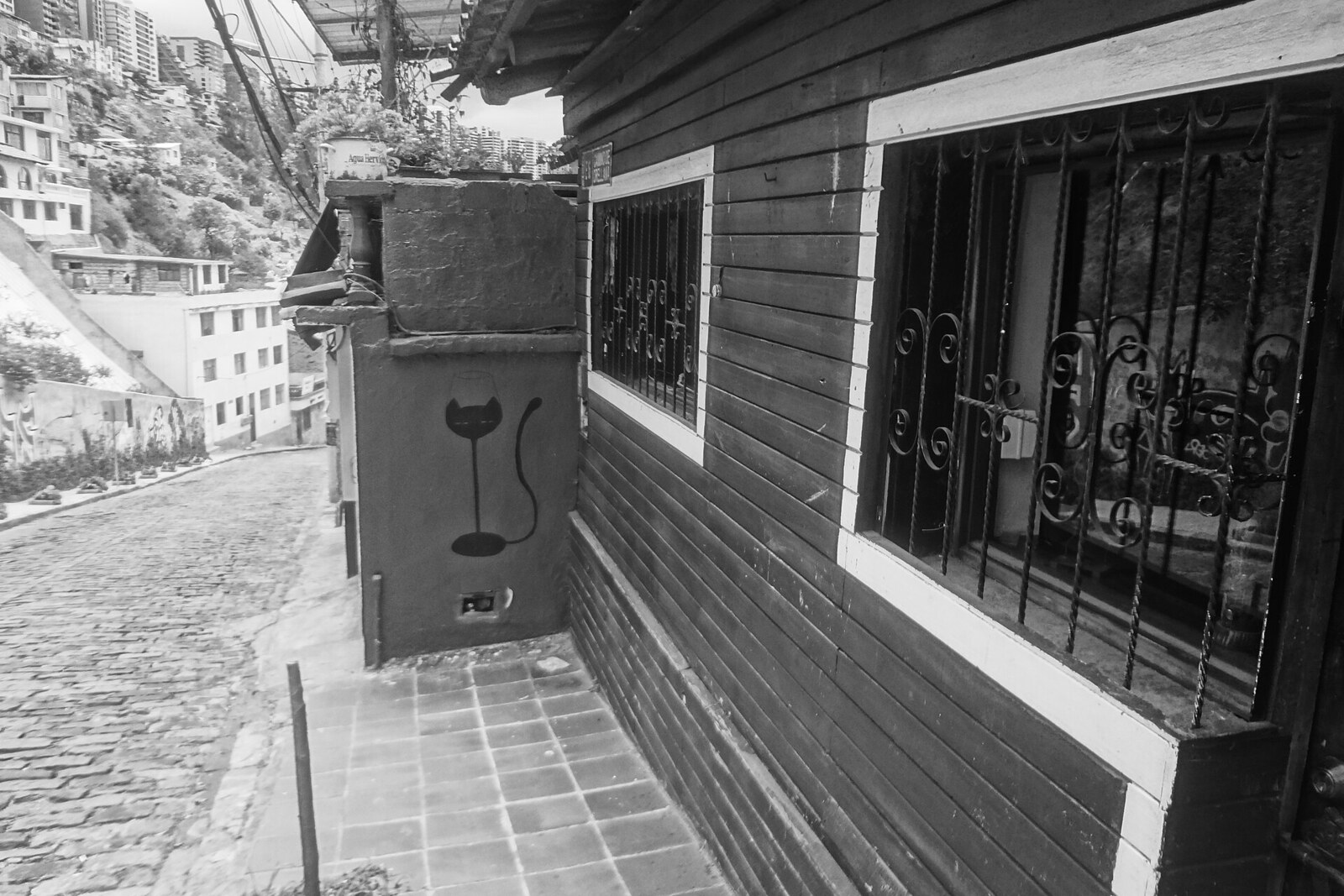
Look around first
What to notice
- Street sign
- Façade of the sanctuary
- The street’s descending line
- The carved retablo in the sanctuary
The story of the place
This street is named after Leonardo Tejada, an Ecuadorian painter and woodcarver. His documented work in Guápulo is in the neighboring Guápulo Sanctuary: Leonardo helped create the main carved wall behind the altar—the retablo.
In nineteen twenty-nine, a fire destroyed the former retablo together with the image of Our Lady of Guápulo. For Guápulo, it was a second loss: the fire of eighteen thirty-nine had already destroyed both the altar wall and the venerated statue. After the new disaster, residents began a public restoration campaign. The central object of the sanctuary had to be created anew; the former master had left only a charred space.
The Tejada brothers, Miguel Ángel and Leonardo, took on the work. Woodcarving was their profession. Their father, Virgilio, worked as a cabinetmaker and designed furniture, while Leonardo entered the School of Fine Arts already trained in working with wood. Miguel Ángel became one of the finest church woodcarvers of his time; Leonardo combined the family craft with training as a painter and sculptor.
The brothers found their reference point in Guápulo itself. In one of Miguel de Santiago’s seventeenth-century canvases, the old retablo appeared in the background. The painting, made to tell the story of a miracle, helped restore the lost form after the fire. Miguel Ángel designed and carved the new structure, while Leonardo contributed to its artistic design. The retablo was unveiled on October nineteenth, nineteen forty-one.
Later, Leonardo became known as a painter and master of woodcut printing, and his name was increasingly placed first even when the brothers’ joint works were mentioned. Only his name remained on the street sign. In the Guápulo Sanctuary, the post-fire retablo created by both Tejadas survives.
Useful on site
The street is accessible as urban space; cafés, bars, and workshops keep their own schedules, with many more active in the evening. Check the specific place before visiting.
Checked: June 30, 2026. Check the official source before visiting.The street remains residential, so do not look into courtyards or workshops without an invitation. Local projects may not have regular hours; arrange a purchase, class, or visit directly with the owners.