 Guide On Map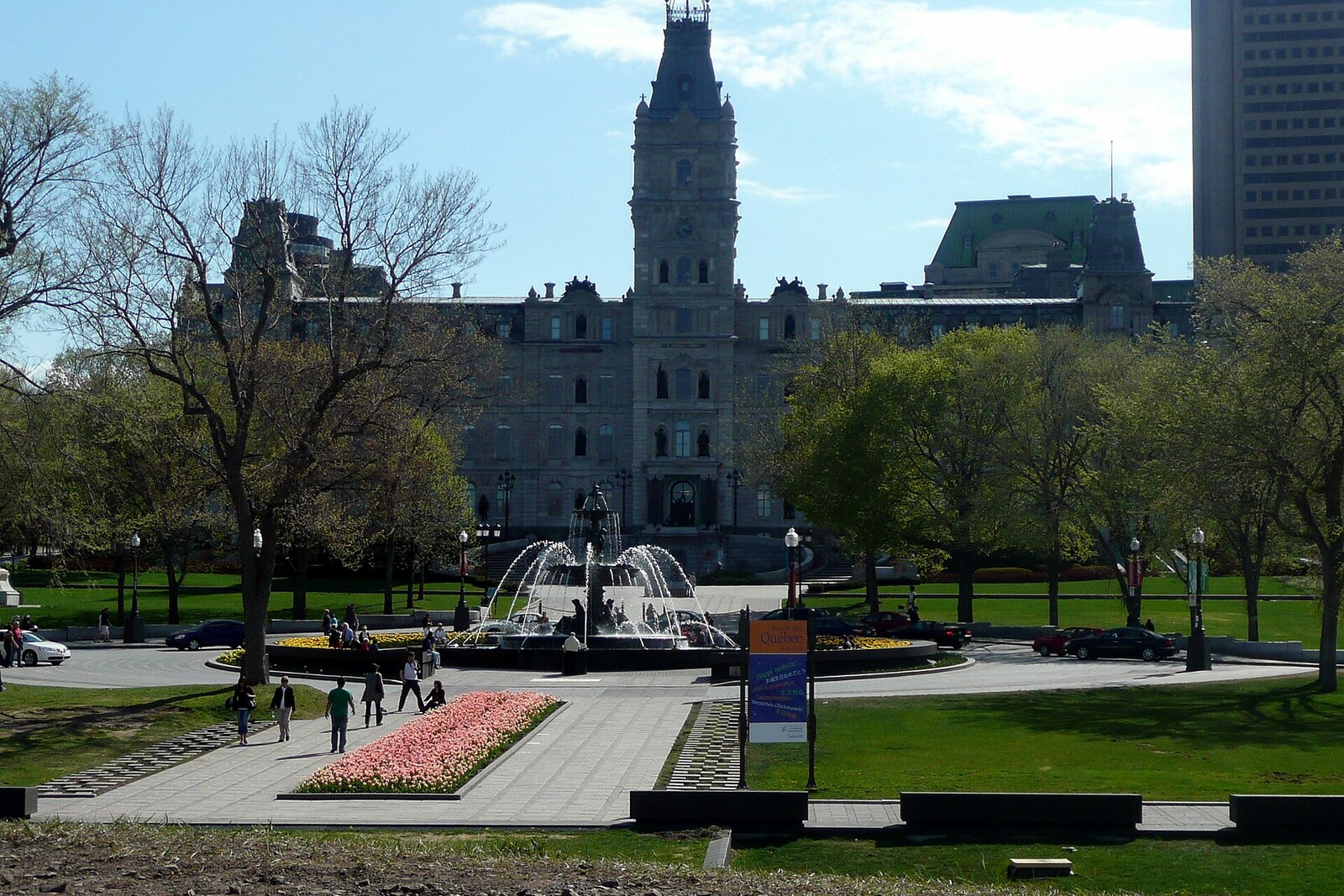
Look around first
What to notice
- Stone façade
- Central tower
- South façade
- Memorial plaque
The story of the place
On the morning of May eighth, nineteen eighty-four, twenty-five-year-old Canadian Armed Forces Corporal Denis Lortie entered a side door of the Parliament Building. He was in military uniform, carrying a submachine gun, and intended to kill Québec Premier René Lévesque along with the members of Lévesque's party.
Lortie climbed the main staircase to the Blue Room—the name given to the National Assembly of Québec chamber because of the color of its walls. Here, elected members debate and pass laws, approve spending, and hold the government accountable. That morning, they had not yet taken their seats. Staff, however, were already preparing a committee meeting at which the expenses of the Chief Electoral Officer of Québec were to be examined.
Lortie shot people he encountered along the way. He killed three: Georges Boyer, a parliamentary page who prepared the rooms and delivered documents to members; Roger Lefrançois, an employee of the Chief Electoral Officer of Québec; and Camille Lepage, a parliamentary messenger. Another thirteen people were wounded. By the time the attacker burst into the empty Blue Room, his intended victims still were not there.
René Jalbert, the parliamentary sergeant-at-arms, entered after him. This ancient office combines ceremony with a quite literal duty: the sergeant-at-arms carries the parliamentary mace into the chamber and is responsible for members' security during sittings. Jalbert was a retired major who had served in the Second World War and the Korean War, but this chamber was now his workplace.
Bullets had already left marks in the wall. Jalbert approached Lortie and persuaded him to release the staff members nearby. He then suggested going down to his office in the basement. Jalbert deliberately remained alone beside a man armed with a submachine gun, a pistol, and a knife. The negotiations lasted about four hours. Eventually, Lortie laid down his weapons and surrendered to the police. He was later sentenced to life imprisonment. Jalbert received the Cross of Valour—Canada's highest civilian award for courage.
Sittings were interrupted, but the work the dead men had been preparing that morning was not canceled. Two weeks later, the director of the Chief Electoral Officer of Québec returned to the Blue Room to discuss those very expenses. Beginning his speech, he named Roger Lefrançois and said that his employee had been killed on the spot where he was now standing.
A memorial plaque is mounted on the building's south façade, on the Grande Allée side. It bears the names of Georges Boyer, Roger Lefrançois, and Camille Lepage, and beside them names René Jalbert, who led the attacker out of the chamber and secured his surrender.
Useful on site
External viewing is available daily. Indoor visits and tours are free, but depend on the schedule of the National Assembly of Québec, security screening, and registration; as of the date checked, assembly halls are closed to guided visits until fall 2026.
Checked: June 30, 2026. Check the official source before visiting.First, study the building from the outside, from bottom to top. The paintings, memorial plaque, and chambers are inside; they can be seen only during a separately arranged visit.