 Guide On Map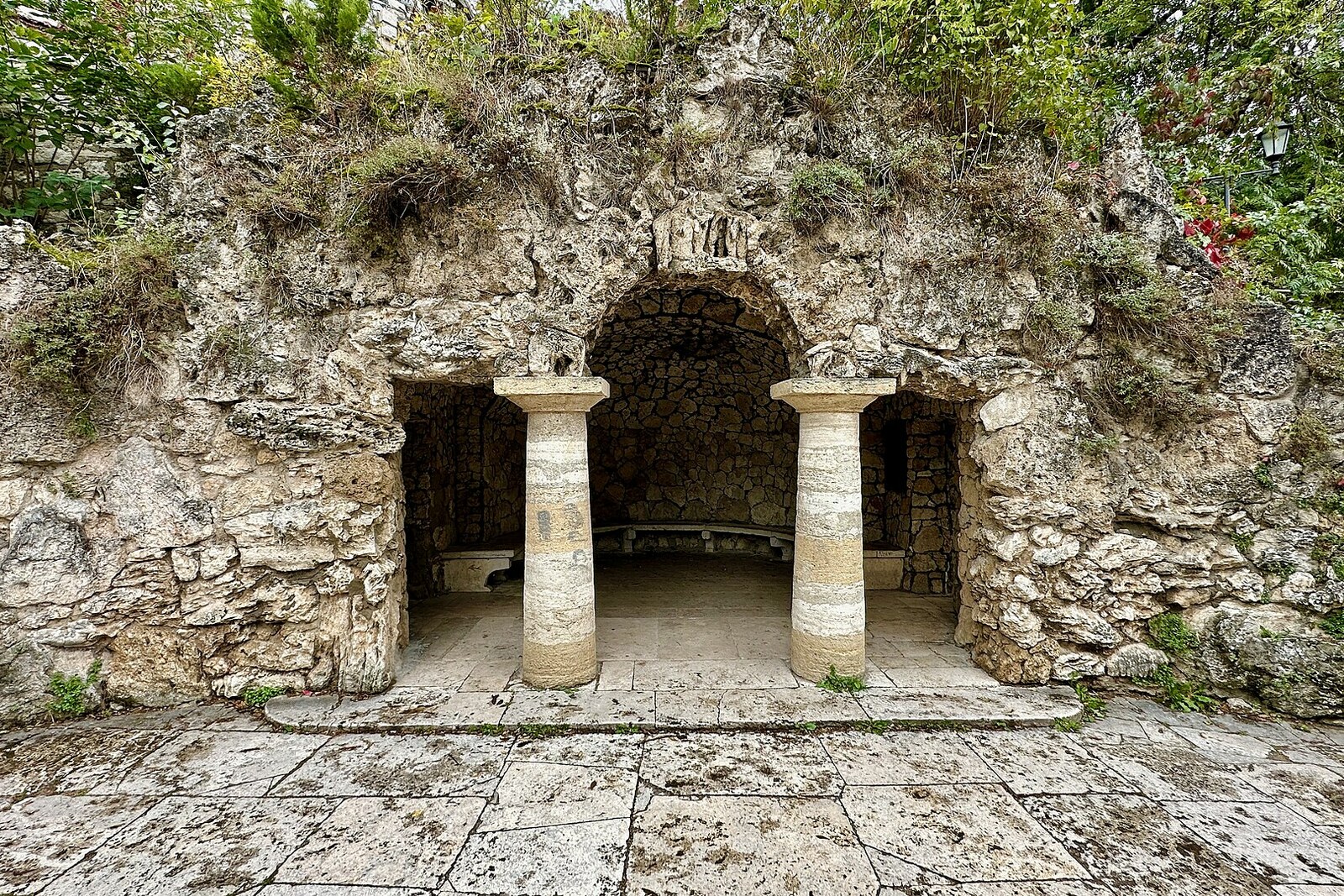
Look around first
What to notice
- Stone vault
- Semicircular stone bench
- Columns at the entrance
- Memorial plaque
The story of the place
Giuseppe Bernardazzi and his brother created a park grotto here in memory of the Mount Elbrus expedition, in which Kilar Khashirov alone reached the eastern summit. Beneath the stone vault, the rounded bench and the columns at the entrance remain, while cast-iron plaques telling the story of the expedition were to be placed nearby. They intended to mount a stone image of the two-peaked Mount Elbrus above the grotto, but this part of the plan was never carried out. General Georgy Emmanuel chose for the grotto the name of Diana, the Roman goddess of the hunt, and copies of the plaques removed later are kept in the Pyatigorsk Museum of Local Lore.
At the beginning of July eighteen forty-one, paper lanterns were being glued together in the apartment of the army lieutenant Mikhail Lermontov. Young officers decided to give Pyatigorsk a subscription ball: each participant paid their share, and they had no city money. They chose this artificial cave and the semicircular area in front of it as the venue.
Lermontov designed a huge chandelier for the grotto from three hoops, placed one above another and entwined with flowers. The organizers made about two thousand multicolored lanterns. They rented Persian carpets and shawls from shops, obtained red cloth from regimental stores, and the proprietor of the Naitaki hotel took charge of dinner and wine. According to a later recollection by the officer Aleksey Arnoldi, renting the fabrics alone cost about fifteen hundred rubles.
The subscribers quarreled over the guest list. Prince Vladimir Golitsyn, a colonel and the habitual organizer of resort entertainments, wanted to bring two ladies of his own choosing. The organizers admitted only mutual acquaintances and refused him. Golitsyn withdrew from the subscription and began preparing his own ball in Kazyonny Garden. Lermontov and his companions continued working without him.
On July eighth, according to the calendar then in use, carpets covered the stone walls, shawls were joined beneath the vault, and the chandelier was hung in the center. A military orchestra was placed on the platform above the grotto. They danced outside, while uninvited spectators stood around the enclosed circle. The ball lasted until morning; Arnoldi remembered that Lermontov danced a great deal. A week later, the poet died. Golitsyn did open his separate celebration, but Lermontov's close friends and the ladies acquainted with them did not come, and the ball was unsuccessful.
The grotto itself appeared ten years before this quarrel. In eighteen twenty-nine, General Georgy Emmanuel led a military-scientific expedition to Mount Elbrus. The scientists and officers turned back, while the guide Kilar Khashirov alone reached the eastern summit. The artist Giuseppe Bernardazzi, who took part in the expedition, later built a commemorative cave here together with his brother. It was intended to be called Elbrus Grotto, crowned with a white-stone model of the double-peaked mountain, with cast-iron plaques at the entrance telling the story of the expedition in Russian and Arabic.
The model of the summit could not be made. Emmanuel ordered the structure to be given an antique name: Diana was the Roman goddess of the hunt. This choice suited the fashion of classicism for gods and muses in parks. Its proximity to the women's section of the Lermontov Baths gave rise to a resort legend that Diana rested in the cool caves after bathing.
The cast-iron plaques about Mount Elbrus were removed in nineteen oh nine; copies of them are in the Pyatigorsk Museum of Local Lore. A semicircular stone bench has survived in the grotto, while another plaque hangs on the inner wall, installed in nineteen sixty-one. It recalls not the expedition for which the grotto was built, but Lermontov's last ball.
Useful on site
An open park site with no ticket office; there are no formal visiting hours.
Checked: July 12, 2026. Check the official source before visiting.Listen to the story at the entrance or inside, if there is room; do not linger in the passage, and step carefully on the wet stone.