 Guide On Map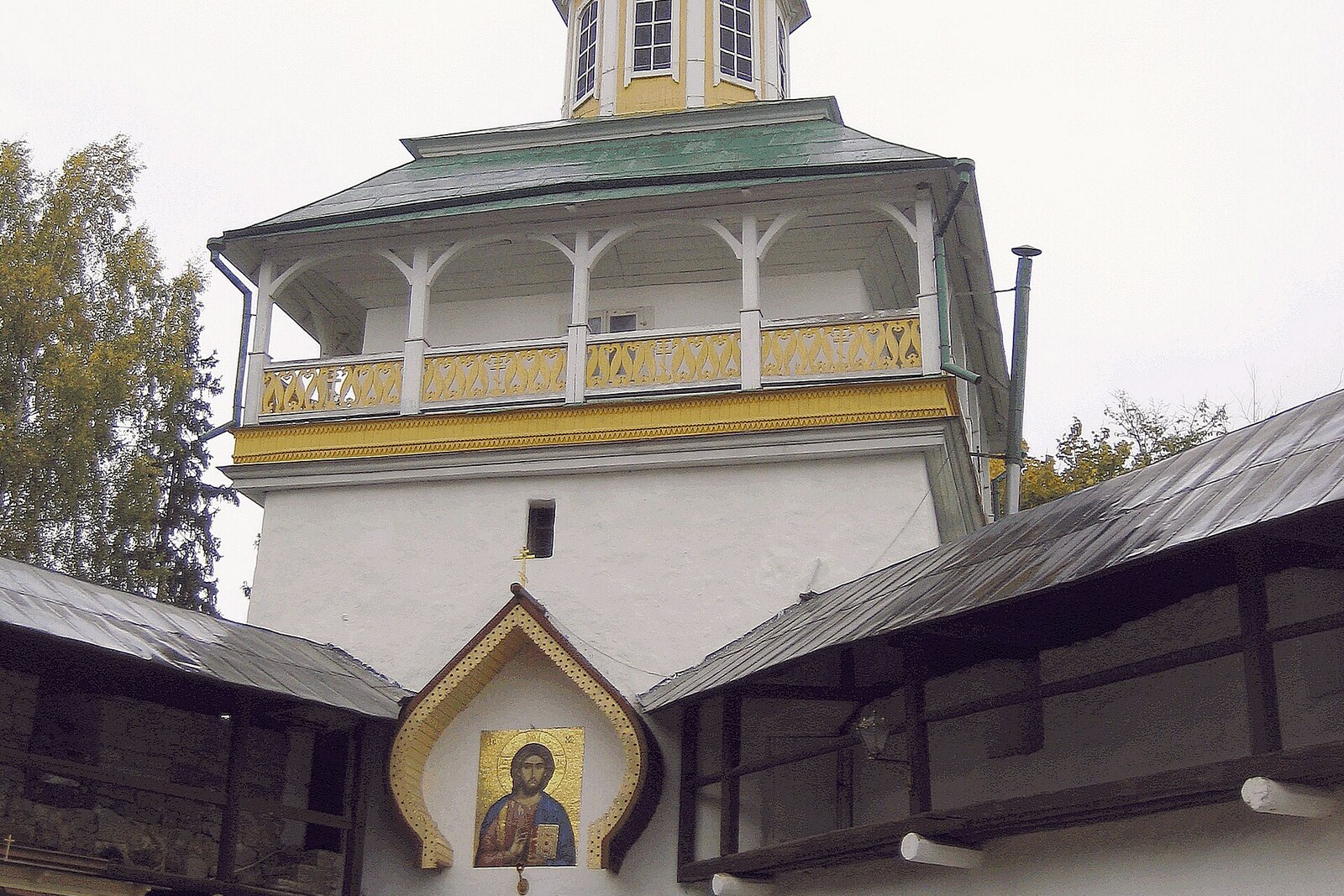
Look around first
What to notice
- Petrovskaya Tower
- Holy Gates
- Stone courtyard beyond the gates
- Cross above the dome
The story of the place
Petrovskaya Tower rises above the passage into the Pskov-Caves Monastery; its dome is now topped by a cross, and people enter the monastery below every day. Once, the stone entrance stood inside an earthen defensive line with a ditch, an embankment, a palisade, and five bastions. The monastery itself was a large estate with arable fields, orchards, and watermills, able to supply people traveling through Pechory. The double-headed eagle installed above the tower in recognition of its earlier service was removed after the revolution.
The stone tower above the monastery's main gates was built by sixteen sixty-four—three decades before the first visit of Peter the First. The tsar did not build it from scratch. These gates are called Holy because they lead onto the consecrated grounds of the Pskov-Caves Monastery. At the same time, the passage was the most dangerous gap in the fortress wall. Beyond the gates began a courtyard enclosed by stone: a detachment that broke through would come under fire from three towers at once—the present-day Petrovskaya Tower, Prison Tower, and Nikolskaya Tower.
In sixteen ninety-seven, Peter traveled through Pechory to Western Europe. He inspected the fortress, spent the night at the monastery, and took flour and hardtack for the journey. The Pskov-Caves Monastery could supply the traveling tsar: it owned arable fields, orchards, and watermills.
Four years later, Peter returned with a different task. After the Russian army's defeat at Narva, he expected Swedish forces to advance toward Pskov and wanted to delay them at the border line. In July seventeen oh one, the tsar personally established a battery at these gates—a raised earthen platform for cannons. By his order, soldiers, the monastic brethren, and local residents dug a ditch around the old walls, piled up an embankment, erected a palisade, and built five bastions. The stone passage remained inside the new earthen fortress.
On July thirteenth, seventeen oh three, the Swedish commandant Skytte approached the monastery with a detachment of about two thousand men. His soldiers fired cannons at the walls and tried to break down the iron entrance gates. The cannons positioned on Peter's bastions thwarted the assault. Then Ivan Nazimov—an old serving nobleman who had been recalled from retirement and appointed to command the Pechory garrison—led the cavalry into a counterattack together with Mikhail Zybin's dragoons. Skytte's detachment retreated with losses. Two days later, Nazimov and Zybin defeated another Swedish detachment moving toward the monastery. This was the last battle at the walls of Pechory Fortress.
The tower was named Petrovskaya in memory of Peter the First, who reinforced the entrance here and turned it into an artillery position. After the Great Northern War, the tsar ordered a double-headed eagle installed above the tower in recognition of the monastery fortress's service. The eagle was removed after the revolution; now a cross once again stands above the dome. Peter's name has remained above the passage through which people enter the Pskov-Caves Monastery every day.
Useful on site
The monastery grounds are open daily from the start of the morning service until the end of the evening service; tours of the grounds are available daily 09:00–17:00 by advance booking. Checked 2026-06-24.
Checked: June 24, 2026. Check the official source before visiting.Before entering, bring your clothing into line with the monastery's requirements and follow the brethren's instructions. Photography inside may be restricted.