 Guide On Map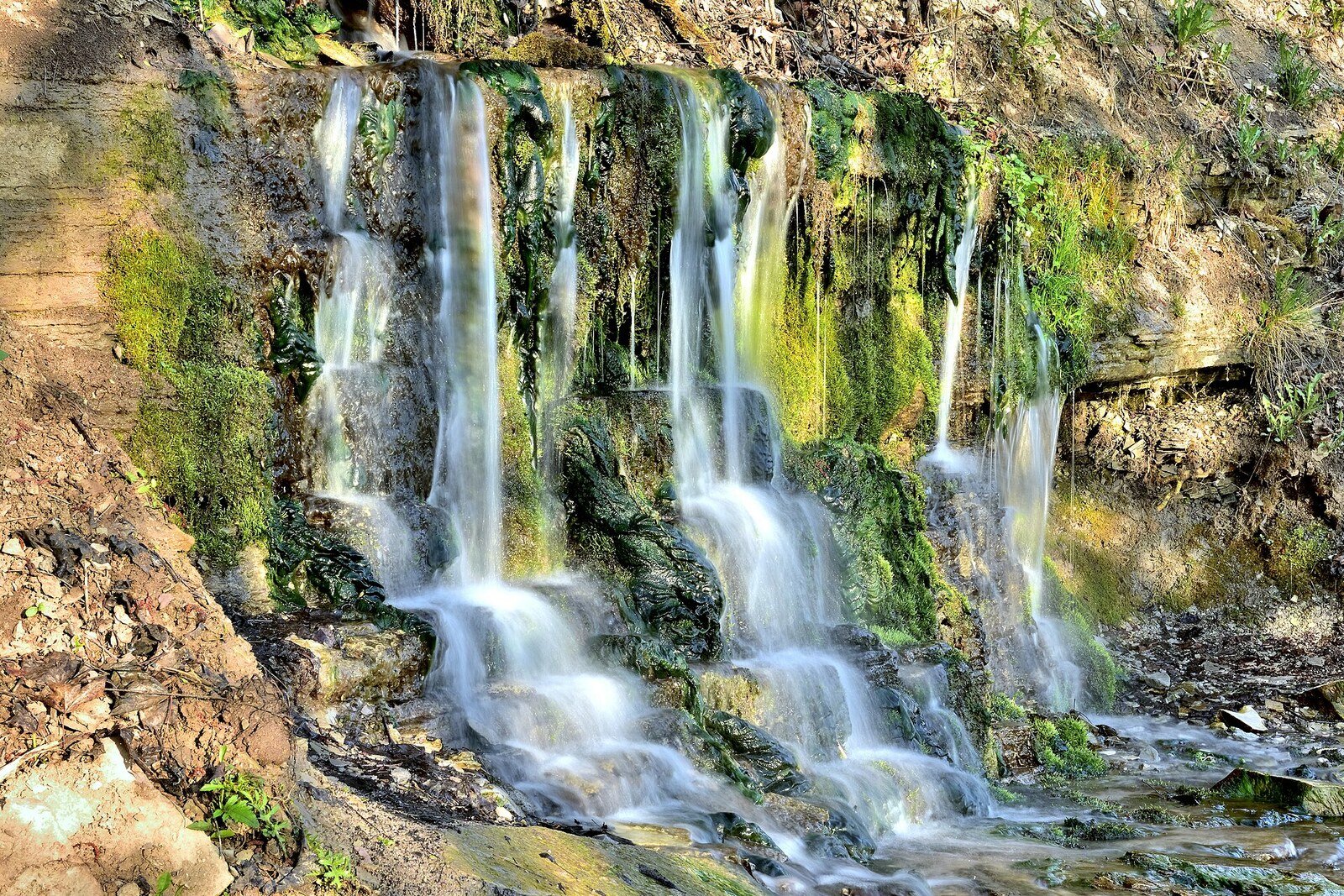
Look around first
What to notice
- Limestone masonry of the estate
- Streams of the springs
- Gorodishchenskoye Lake
- Limestone slope
The story of the place
The stone remains by the water are all that survives of miller Panov's estate. At the beginning of the twentieth century, his house and watermill stood here. The heritage register preserved the owner's surname and occupation; no detailed biography of Panov remains. He made his living by grinding grain: he directed the flow onto the wheel, while the people of Izborsk brought him what they had grown in their fields. The pressure of the springs provided the miller with an income and turned his neighbors' grain into flour.
The mill stood until nineteen forty-seven. It was then demolished; published information does not say who exactly made this decision. Grinding at the springs ceased, the wooden buildings disappeared, and only limestone masonry remained of the estate. In the nineteen seventies, land-reclamation workers drained the nearby swamps under a local plan. After that, the springs gradually lost their former strength. Now the number and force of the streams depend noticeably on whether the year has been dry or rainy.
Water emerges on this very slope because of the valley's structure. An underground flow moves through cracks in limestone and dolomite, and where the slope has cut through these layers, it comes to the surface. This produces from twelve to fifteen separate streams. Within a few dozen meters, they flow into Gorodishchenskoye Lake, which lies beneath the old hillfort and is named after it. From the lake, the water flows along the Skhodnitsa River to Malskoye Lake, then along the Obdekh River to Pskov Lake. Thus, the lake served the residents of the ancient settlement as part of a water route, while for Panov, the same difference in elevation provided a place for a watermill wheel.
The name Slovenskiye Springs was first recorded in the seventeenth century: in the Book of the Great Map, Izborsk is described as a town standing on Slovenskiye Springs. Later, an explanation arose that they were named after Prince Sloven, the legendary founder of the settlement and father of Izbor, to whom tradition attributes the town's present name. There is no historical evidence that Sloven existed. Old documents record the variants “Slovenskiye” and “Slavenskiye,” but do not say whom the creators of the name had in mind.
Another name for the springs, Twelve Apostles Springs, is explained by a local legend. After a bloody siege of the old hillfort, the water supposedly turned red with the blood of the dead and began to run dry. One surviving young Christian man tried to understand how to bring the water back. In a dream, an angel ordered him to lead the people of Izborsk to the springs, repent, and name the streams in honor of the twelve apostles. The young man passed the command on to the others; the residents came here and obeyed it, after which the water, according to the legend, returned. The origin of this legend is unknown, and it must not be taken as an account of an actual siege. The name of the Twelve Apostles has remained, although there can be more than twelve water outlets. During Bright Week, the springs are still blessed on the feast day of the Icon of the Mother of God “Life-Giving Spring.”
Useful on site
Open natural site; plan around daylight and the condition of the descent. Checked 2026-06-24.
Checked: June 24, 2026. Check the official source before visiting.The stones by the water can be wet and slippery; do not approach the edge for a photograph. Do not count on the spring as a guaranteed safe source of drinking water.