 Guide On Map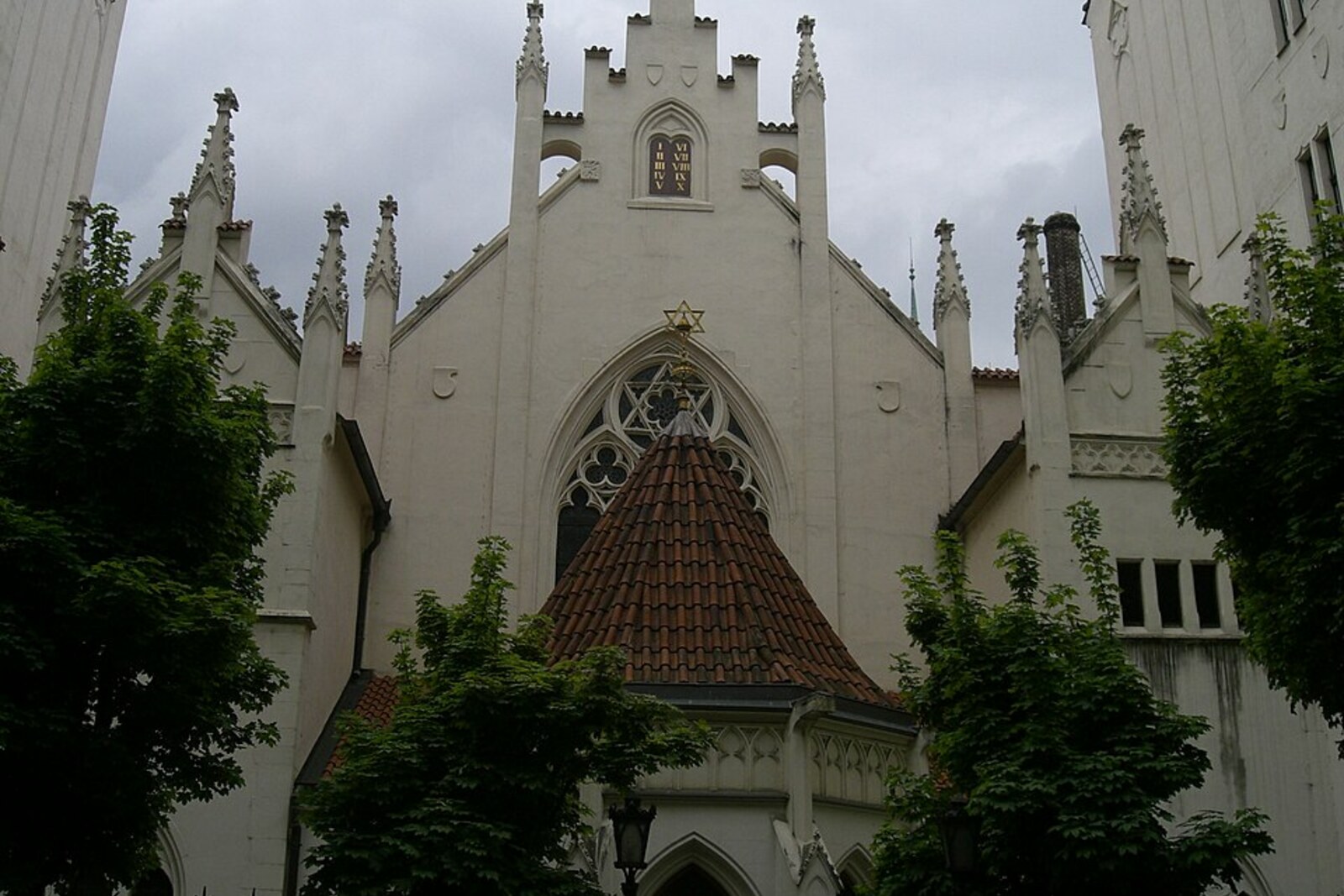
Look around first
What to notice
- Curtain in front of the ark
- Cover for a Torah scroll
- Embroidered names of Mordechai Maisel and Frumet
The story of the place
Within these walls, a private house of prayer was opened right away to the entire Prague Jewish Community. At the end of the sixteenth century, it was the ghetto's largest synagogue. An exhibition of the Jewish Museum in Prague now operates here, and in front of the ark, a curtain is visible and an embroidered cover for a Torah scroll is kept.
On March first, sixteen oh one, Mordechai Maisel determined the fate of this synagogue in his will. Twelve days later, he died. Maisel left two houses to his nephews and the synagogue to the Prague Jewish Community. He had not forgotten his heirs: the building was deliberately transferred to the community.
Maisel made his living through trade and lending. His clients included aristocrats and members of the imperial family; from a modest Prague family, he rose to become one of the city's leading financiers. Emperor Rudolf II appointed him a court Jew—the term for a Jewish entrepreneur who served the court—and granted him rare personal privileges. Maisel was allowed to build his own synagogue and freely bequeath property.
He conceived the private house of prayer so that the whole community could use it. In fifteen ninety-two, Maisel opened the ghetto's largest synagogue here. Together with his wife Frumet, he gave it a curtain for the ark, where Torah scrolls are kept, and an embroidered woven cover for one of the scrolls. These objects were intended specifically for this hall.
After Maisel's death, Rudolf II ordered the confiscation of all the assets of his former financier. The emperor's grant of the right to bequeath property no longer protected the will. Maisel's relatives began to sue the treasury. In sixteen sixty-four, the descendants of his nephews secured the return of the property and also demanded that the synagogue be handed over to them, although Maisel had explicitly left it to the community.
The heirs' dispute with the community led to violence. Officials closed the synagogue and removed its furnishings, including the fabrics donated by Maisel and Frumet. For nearly thirty years, the curtain and the cover were kept outside the Jewish Town.
In sixteen eighty-nine, a fire destroyed the synagogue's vaults and most of the objects kept here. The fire did not reach the removed fabrics. Later, Shmuel Tausk, the new head of the Jewish Town, paid for their return. The cover was restored in sixteen ninety-nine, and the curtain in seventeen sixty-seven.
Today, the building belongs to the Prague Jewish Community—the very community to which Maisel bequeathed it. The Jewish Museum in Prague has installed an exhibition here, and inside once again are the curtain in front of the ark and the cover for a Torah scroll bearing the names of Mordechai Maisel and Frumet.
Useful on site
Seasonal hours of the Jewish Museum in Prague; closed Sat and Jewish holidays.
Checked: June 26, 2026. Check the official source before visiting.The contents of the museum exhibition may change, so do not base your visit around a single object. Even from outside, compare the building's private name with its public history.