 Guide On Map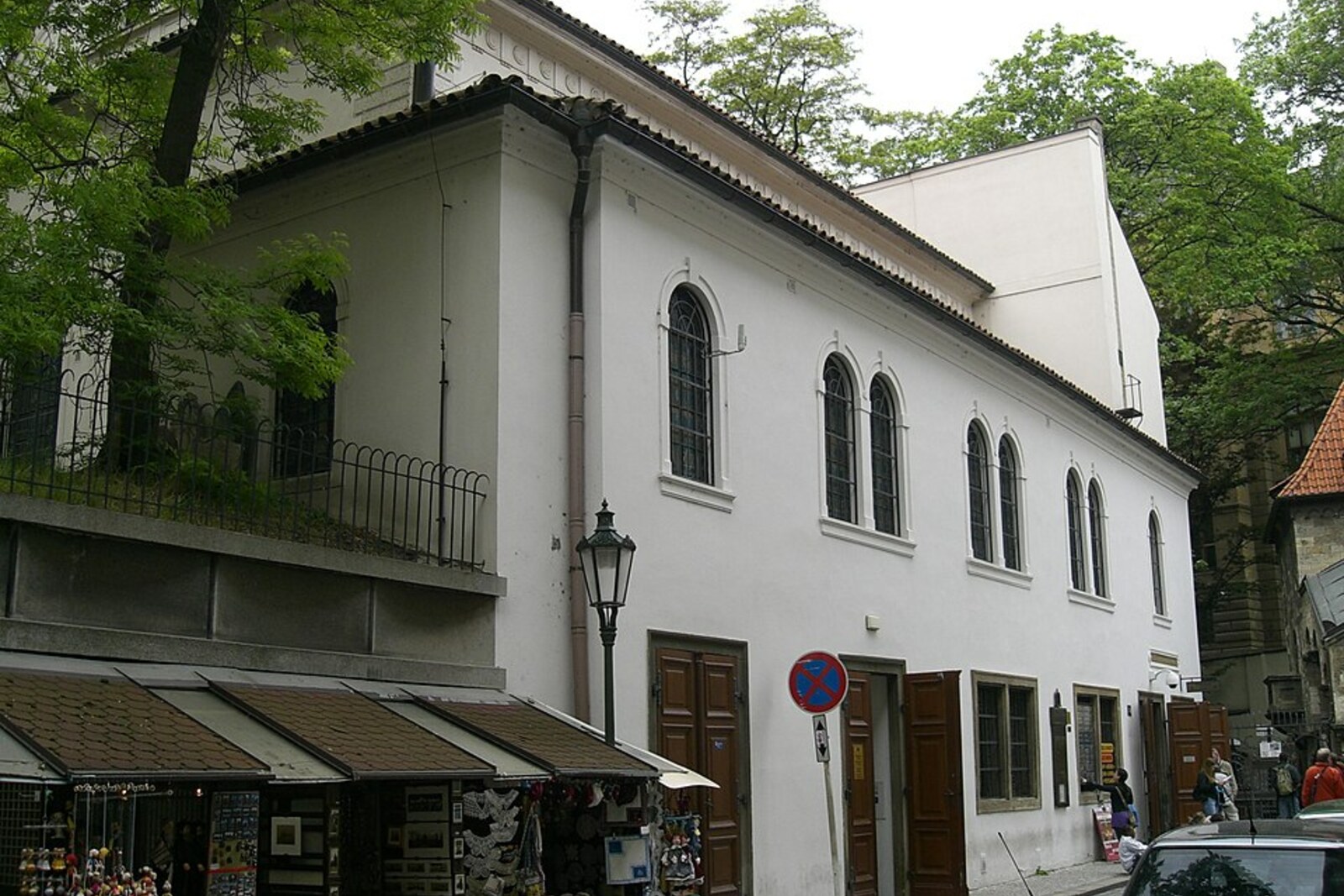
Look around first
What to notice
- The synagogue’s unified volume
- The facade of the large prayer hall
- The nearby cemetery wall
The story of the place
Klausen Synagogue stands alone, although its name preserves the memory of three buildings. In the seventies of the sixteenth century, Mordechai Maisel paid for two small synagogues and a private school here. Different people ran these separate houses for prayer and study—klausen—and Rabbi Judah Loew headed the school. In the fire of sixteen eighty-nine, all three buildings burned down. Shlomo Halish Kohen, who organized the rebuilding, brought together one large prayer hall in their place. Construction was completed five years later, but the old name was retained. That is why the name still contains the three lost klausens.
The new hall became the largest synagogue in Prague’s Jewish Town and the community’s second main synagogue. Its rabbis conducted services here, and members of the Chevra Kadisha, which worked nearby at the Old Jewish Cemetery, prayed here. But this room was given its present museum role by people who themselves were not allowed to see it open as a museum.
After Jewish worship was banned in September nineteen forty-one, books, textiles, silver ritual objects, and archives from the closed communities of Czechia and Moravia began to be brought to Prague. After lengthy negotiations, the Prague Jewish Community received permission to register these arrivals as the Central Jewish Museum. German institutions controlled the work, while Jewish specialists used it to document and preserve objects that had lost their owners.
The community invited Josef Polák, an experienced museum worker who had previously been dismissed from a state institution because of his Jewish background, to lead the collection. Polák insisted that the objects should not lie there as anonymous cargo: staff photographed them and recorded their former community, purpose, and provenance. He conceived several permanent exhibitions, but he had time to carry out almost completely only one—here.
František Zelenka, an architect and theater designer, designed the space. After nineteen thirty-nine, theaters stopped offering him work because of his background, and the community hired him to oversee its buildings. Together with Polák, he arranged silver objects and textiles in Klausen Synagogue so that they explained the course of the Jewish year, family rituals, and everyday life. The exhibition was completed in April nineteen forty-three. During the occupation, the museum was not opened to ordinary visitors.
Three months later, Zelenka was sent to the Terezín ghetto; in the autumn of the following year, he probably died on the way to Auschwitz. The Gestapo arrested Polák in August nineteen forty-four. He was last seen in Auschwitz in January of the following year, and then all trace of him disappeared.
After the war, the exhibition was opened to the public. Exhibitions about holidays, rituals, and family life returned to this hall again and remained here until the summer of two thousand twenty-four. The building is now opened only for individual exhibitions and concerts, and the permanent exhibition was removed before the renovation. After it, the museum intends to place here once again an account of Jewish customs and traditions—the same subject that Polák and Zelenka laid out across this hall in the spring of nineteen forty-three.
Useful on site
Closed for renovation; reopening is planned no later than 2028.
Checked: June 26, 2026. Check the official source before visiting.If the interior is accessible, view the images in order: their sequence of assistance, from visiting the sick to the memorial meal, is important. Check exhibition restrictions on site.