 Guide On Map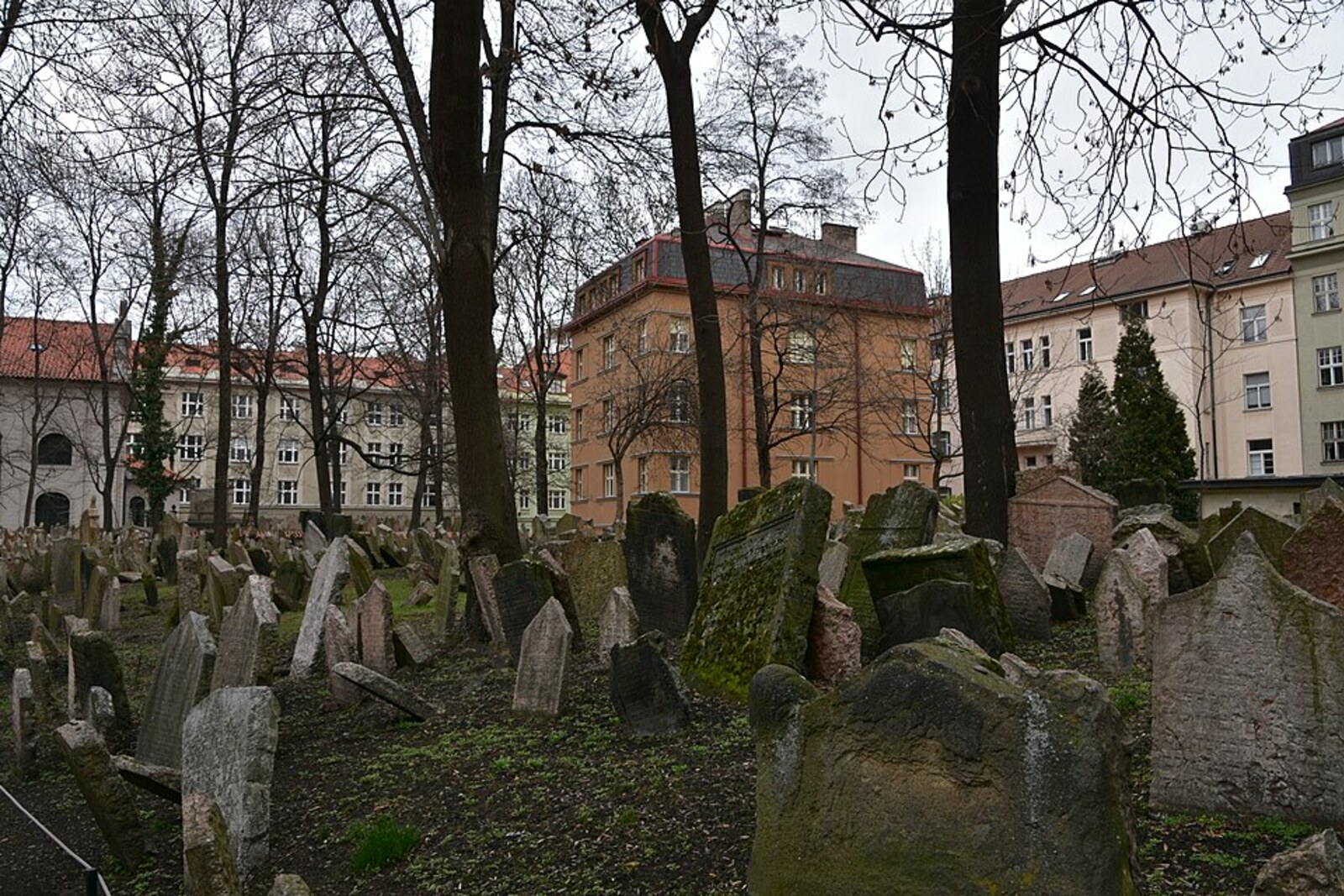
Look around first
What to notice
- Gravestones
- Tightly packed rows of stones
- Carved names
The story of the place
In fifteen sixty-four, burials in this cemetery depended on two hospital attendants. The Prague Jewish Community had not yet recovered from a recent expulsion: some people had left, many had died, and there was no one else to bury the dead. The two remaining attendants lived off burial fees and demanded enormous payment from relatives to carry a body out of the house and bring it here. The founding charter also accused them of making merry on the way to the grave. Families without money had to wait many days for a burial.
Eliezer Ashkenazi—a rabbi and physician who sought a dignified burial for every member of the community—undertook to put an end to this. Together with a group of Prague Jews, he created the Chevra Kadisha—a holy burial brotherhood. Its members visited the sick, stayed with the dying, prepared the body, carried it to the cemetery, and buried it. Community leaders set a payment for this work, but the brothers made it a condition that the money go into a common charitable fund rather than become their personal income.
The wealthy contributed more, while a poor person was to be buried whether or not they could pay. The same fund provided aid to those in need and bought land to enlarge the cemetery. Thus, a decision made because of two paid gravediggers gave Prague a burial brotherhood whose charter later became a model for Jewish communities in many cities across Europe.
Adjacent plots could be bought only from time to time, and Jewish custom forbade disturbing earlier graves. When there was once again no room left, the Prague Jewish Community brought soil here and laid out a new row of burials above the old one. Earlier gravestones were raised onto the newly formed surface so that the names of the dead would remain visible. Researchers estimate that in some places there are as many as ten burial layers beneath the ground.
Burials here stopped in seventeen eighty-seven, when Emperor Joseph II banned cemeteries inside residential districts. More than twelve thousand stones remain on the surface, but there are considerably more people buried here. The slabs stand at one present-day level, while the people whose names are carved on them lie at different levels—sometimes several burials deeper.
Useful on site
Seasonal hours Jewish Museum Prague; Sat and Jewish holidays closed.
Checked: June 26, 2026. Check the official source before visiting.Stay on the marked path and do not touch the stones or the notes that have been left behind. In narrow sections, let other visitors pass and watch your step.