 Guide On Map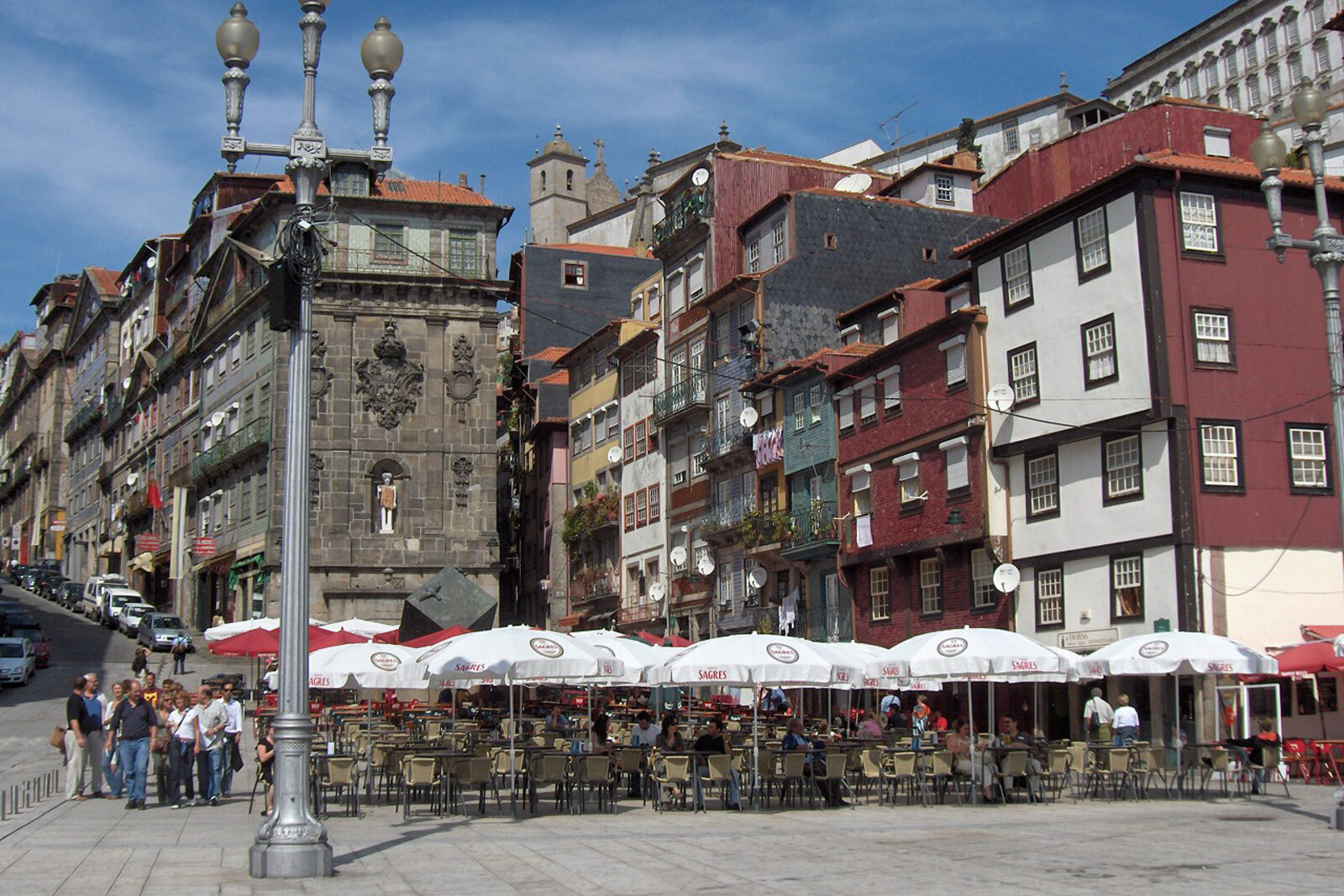
Look around first
What to notice
- The fountain with the sculpture “O Cubo”
- Three stone blocks from the old water reservoir
- Restaurant tables
The story of the place
On March seventeenth, thirteen eighty-nine, King João I sent an order to Porto's city governors. All fresh fish arriving in the city had first to be brought to Praça da Ribeira. The king listed the means of delivery in detail: by boat, on pack animals, and even on porters' shoulders. Selling the catch anywhere else was forbidden.
Fishermen tried to sell their goods as quickly as possible: they themselves, boatmen, porters, and women resellers who bought the catch for further sale all lived on this income. The royal order brought everyone here—to the quay on the Douro, where officials could register the fish, collect the required payments, and only then allow it to reach buyers. This is the first known document in which the square is called Ribeira: the name came from the landing place on the riverbank.
The arrangement lasted for a long time. In fourteen oh one, the city council again reminded people that women resellers had the right to trade fish only in Ribeira. By the middle of the eighteenth century, two small buildings for handling the catch stood here. In one, the House of Braganza's share was collected; in the other, the Crown's. Where the fish had to be taken depended on the fishing grounds. Payment was made in fish, and then the fisherman still gave a tithe to his parish. In seventeen fifty-eight, a local priest calculated that, after all the levies, some catches left the fisherman with little more than half.
Water was no less necessary for the quay itself than a place for trade. Vessels replenished their supplies here, while porters and sellers used the public fountain. When the old fountain was moved to the city gates, water carriers began to obstruct the passage; townspeople complained about the crowd around the water. Trade, duties, unloading, and traffic up Rua dos Mercadores—the Merchants' Street—converged within a few dozen meters.
In seventeen ninety-three, a court ordered the fish market moved to Cordoaria. After a fire, it briefly returned to Ribeira, but in eighteen thirty-seven the city council again sent the sellers elsewhere—to Santa Clara Monastery near Guindais. The two buildings for fish duties and the market rows have not survived.
A fountain with the sculpture “O Cubo” now stands in the center of the square. José Rodrigues incorporated into its basin three stone blocks from an old water reservoir, found by archaeologists about a meter beneath the paving. Fish is no longer registered here or sold from baskets: restaurant tables stand all around. Beneath the bronze cube remain the stones of the water basin, which was why vessels moored at the market.
Useful on site
Step away from the densest flow of people near the establishments: the square's overall layout is easier to see from the open edge by the water.