 Guide On Map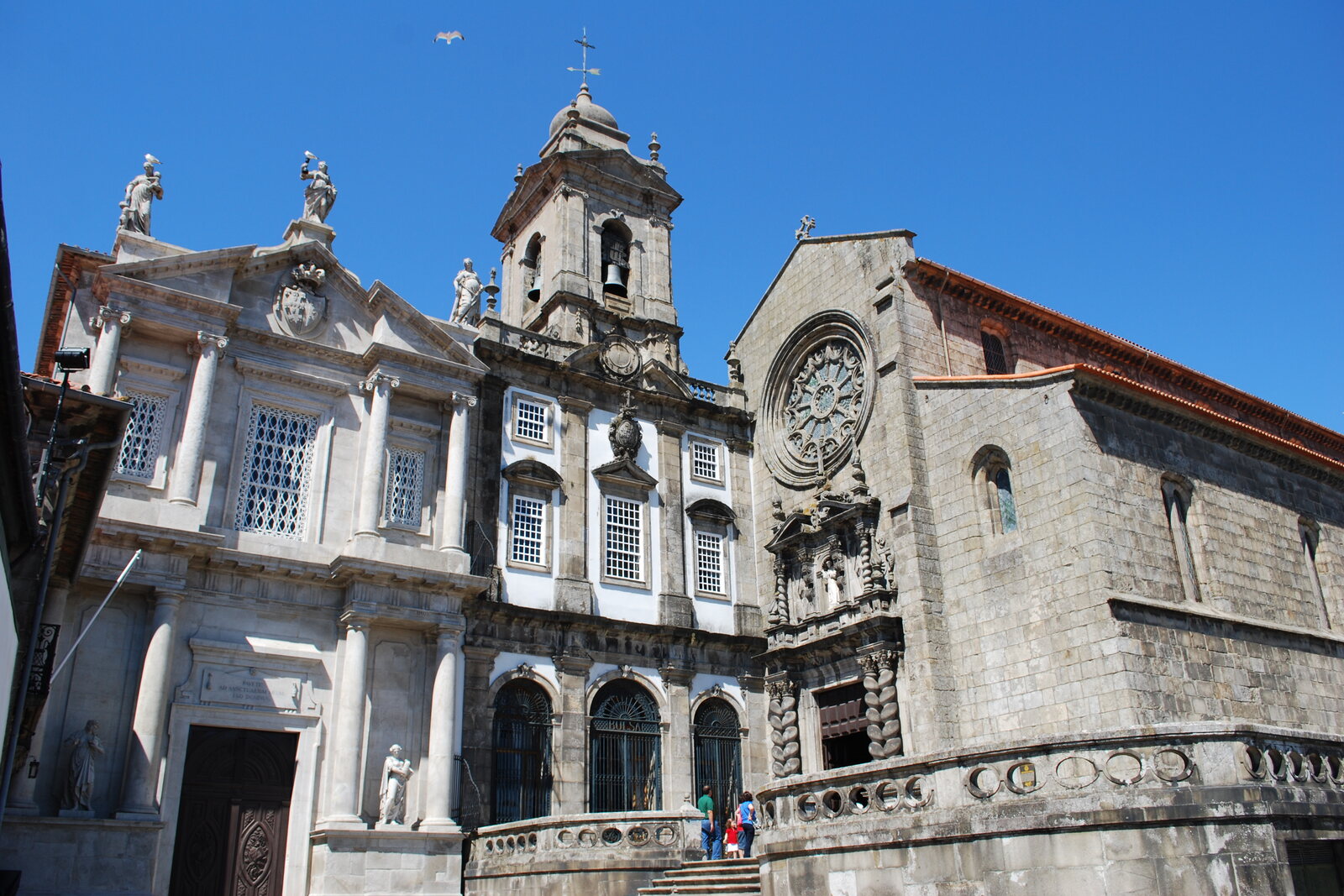
Look around first
What to notice
- Gothic naves
- Gothic vaults
- Gilded carving on the Baroque altars
The story of the place
In eighteen thirty-nine, a street was to be run through this church. The City Council wanted to create a convenient route from the market square of São Domingos to the Douro: raw materials were delivered to Porto by river, and finished goods were shipped out. The direct route was blocked by the active parish Church of São Nicolau. The planners shifted the line toward the former Franciscan church, which almost no one was using at the time.
A few years earlier, the Portuguese government had dissolved the male monastic orders. The Franciscans left their monastery, which had been damaged in a fire after the siege of Porto, and the surviving church was occupied by the city customs house. Goods that did not fit in other storage facilities were piled beneath the Gothic vaults, among Baroque altars with gilded carving. To the designers of the street project, it was a vacant utility space that could be dismantled.
The name remained from its former owners. Saint Francis of Assisi, an Italian preacher of the early thirteenth century, required his followers to live without communal property and to go and preach to townspeople. His brothers settled by Porto’s riverside suburb, where newcomers, poor people, and people living on daily wages were found. The church they built was named after Francis: São Francisco.
Demolition was prevented by the brothers of the Third Order of Saint Francis—laypeople who had their own church, hospital, and charitable institutions nearby. They wanted to reclaim the old monastic church for worship. The brothers appealed to Queen Maria II, on whose decision the fate of the project depended. They attached thousands of signatures from Porto residents to the petition and offered to take the church under their administration and pay for repairs from the order’s funds.
The Queen agreed. The customs house removed its goods, and in April of that same year the brothers of the Third Order received the church. They preserved the Gothic naves together with the later gilded carving, and they still run the Church of São Francisco and its museum. Rua de Ferreira Borges was built after all, but its route did not pass through this church.
Useful on site
The interior makes up the main part of the experience, but check admission separately; during a service, visiting may be inappropriate.