 Guide On Map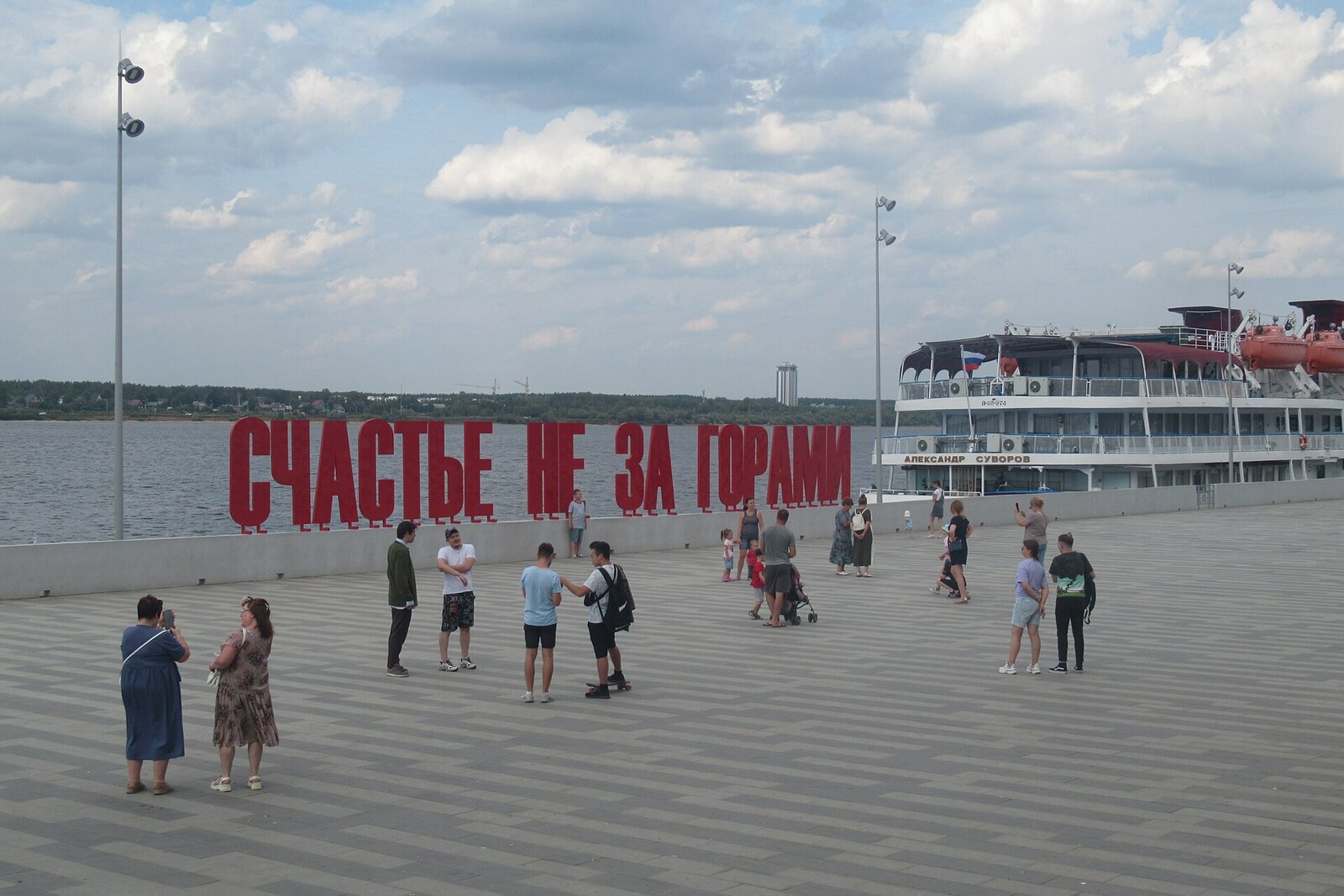
Look around first
What to notice
- Red metal letters
- The Kama River beyond the parapet
- A plaque with the author's name
The story of the place
The red metal inscription is assembled from separate letters at the very edge of the lower level, above the Kama River. Its first version was made of plywood and appeared not on a city embankment, but in a field outside Moscow for a festival of landscape objects. Wood could not withstand flooding and damage, so it was replaced with metal. A small plaque with the author's name stands by the letters.
By the red letters on the lower level of the embankment, people frame their shots so that the Kama River remains behind the phrase. A photographer did not invent this framing. In two thousand nine, curator Marat Guelman was looking for a place for an artwork by Boris Matrosov and decided to install it by the river. A museum of contemporary art was opening in the former Perm River Station at the time, and the inscription was part of its summer exhibition. Guelman explained the choice with a play on words: happiness was not just around the corner, but across the river.
The phrase itself appeared four years earlier. Matrosov made large plywood letters for a festival of landscape objects in a field outside Moscow. The inscription stood on the horizon and promised visitors that what they desired was very close. It was not that first version that was brought to Perm; a duplicate was made instead. It was intended to remain here only for the duration of the exhibition.
But that very summer, newlyweds began taking photographs by the letters. The inscription then appeared in the opening titles of the series Realnye Patsany, in a music video, and in the film The Geographer Drank His Globe Away. The Kama River, the red line of text, and a person standing before it came together as a ready-made portrait of the city. The temporary exhibit remained on the parapet, while its image made its way onto postcards, magnets, clothing, and chocolate wrappers.
Matrosov learned of this use from a gift bag. A museum representative offered Matrosov the option of transferring the work to the city free of charge and brought Perm souvenirs; among them, the artist found goods bearing his inscription. He had previously not asked for a fee for the installation. Now he asked to be notified of commercial use and to be paid small royalties. The correspondence dragged on. A year later, an acquaintance showed Matrosov chocolate wrappers with the same image, and the artist consulted a lawyer. It turned out that the famous letters were listed on neither the museum's books nor among city property: they were already making money on souvenirs, yet on paper they remained ownerless.
In two thousand seventeen, the object was accepted into municipal ownership. One year later, a plaque bearing the author's name was installed beside it; Matrosov himself came to the ceremony. Meanwhile, the old plywood letters suffered from flooding and damage. After further repairs and the reconstruction of the piers, they were replaced by metal letters, while keeping the red color and the original phrase.
The current inscription is no longer the temporary duplicate installed here in two thousand nine. The Kama River still remains behind it, and the small plaque by the letters records what had long been absent from magnets and chocolate wrappers: “author Boris Matrosov.”
Useful on site
Open urban space; access depends on the condition of the embankment, flooding, and local works.
Checked: June 24, 2026. Check the official source before visiting.Do not use the inscription as your only landmark: access to it may depend on the water level and work on the embankment. If the lower level is closed, view the site from an accessible upper point.