 Guide On Map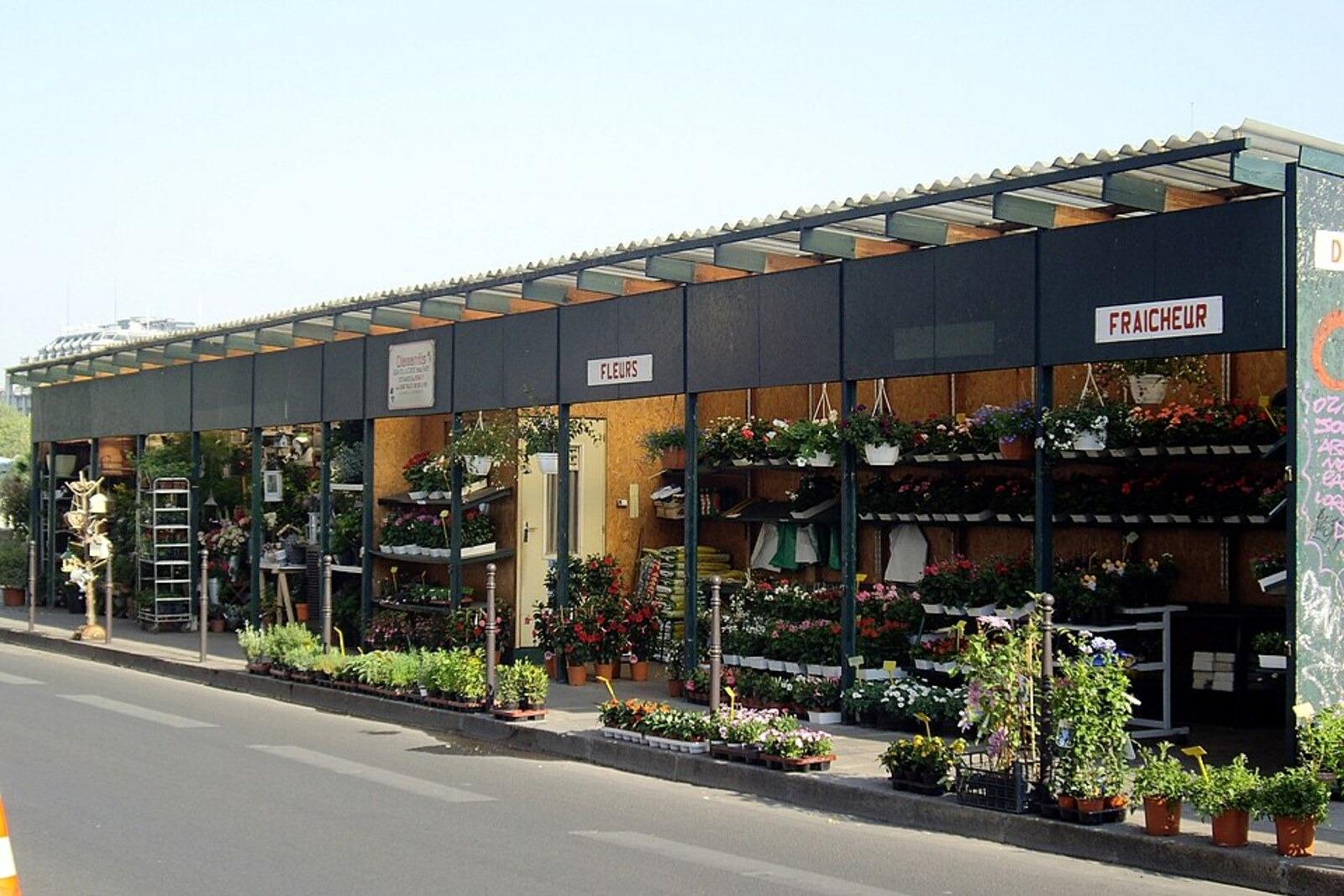
Look around first
What to notice
- Metal pavilions
- Plant stalls
- The market-name sign
The story of the place
Under the metal pavilions, flowers, seedlings, and houseplants are sold. Napoleon brought the vendors here: in eighteen oh eight, he transferred to Paris a vacant plot beside the then-new Quai Desaix and ordered the flower and shrub market moved here from Quai de la Mégisserie, on the other bank of the Seine. The city had to create an open-air marketplace at its own expense. The market opened in August of the following year. The present iron canopies are newer: they were built in the early nineteen twenties after the construction of the metro.
The royal name appeared thanks to two visits separated by sixty-six years. In May nineteen forty-eight, twenty-two-year-old Princess Elizabeth, the direct heir to the British throne, came here. She had recently married Philip and, during her first official trip to Paris, was learning the role of representative of her father, King George VI: she spoke before French leaders, attended receptions, and learned to live by the schedule of a future monarch. A walk through the flower market was her personal choice within that program.
Four years later, Elizabeth became queen. When she walked between the stalls in nineteen forty-eight, the market was simply called Marché aux Fleurs de la Cité—the flower market of Île de la Cité. Paris authorities remembered her attachment to this place.
In June two thousand fourteen, Elizabeth came to France for celebrations marking the seventieth anniversary of the Allied landings in Normandy and asked to visit the market again. For the queen, it was her last official visit to Paris. The city's new mayor, Anne Hidalgo, decided to name the market in her honor. Paris usually waits five years after a person's death before giving that person's name to a city feature; a rare exception was made for the living Elizabeth.
On June seventh, the queen returned beneath these pavilions with President François Hollande and Anne Hidalgo, and unveiled the sign reading “Queen Elizabeth II Flower Market” herself. The former name was not abolished: the name of the woman who had first come here as a princess was added to the designation of the flower market. The sign she unveiled on her last visit to Paris remains above the market chosen for her on that first visit.
Useful on site
The selection of open stalls changes, but the layout of the pavilions is visible even when there is no trading. Do not get in the way of vendors unloading plants, and keep the passages between the rows clear.