 Guide On Map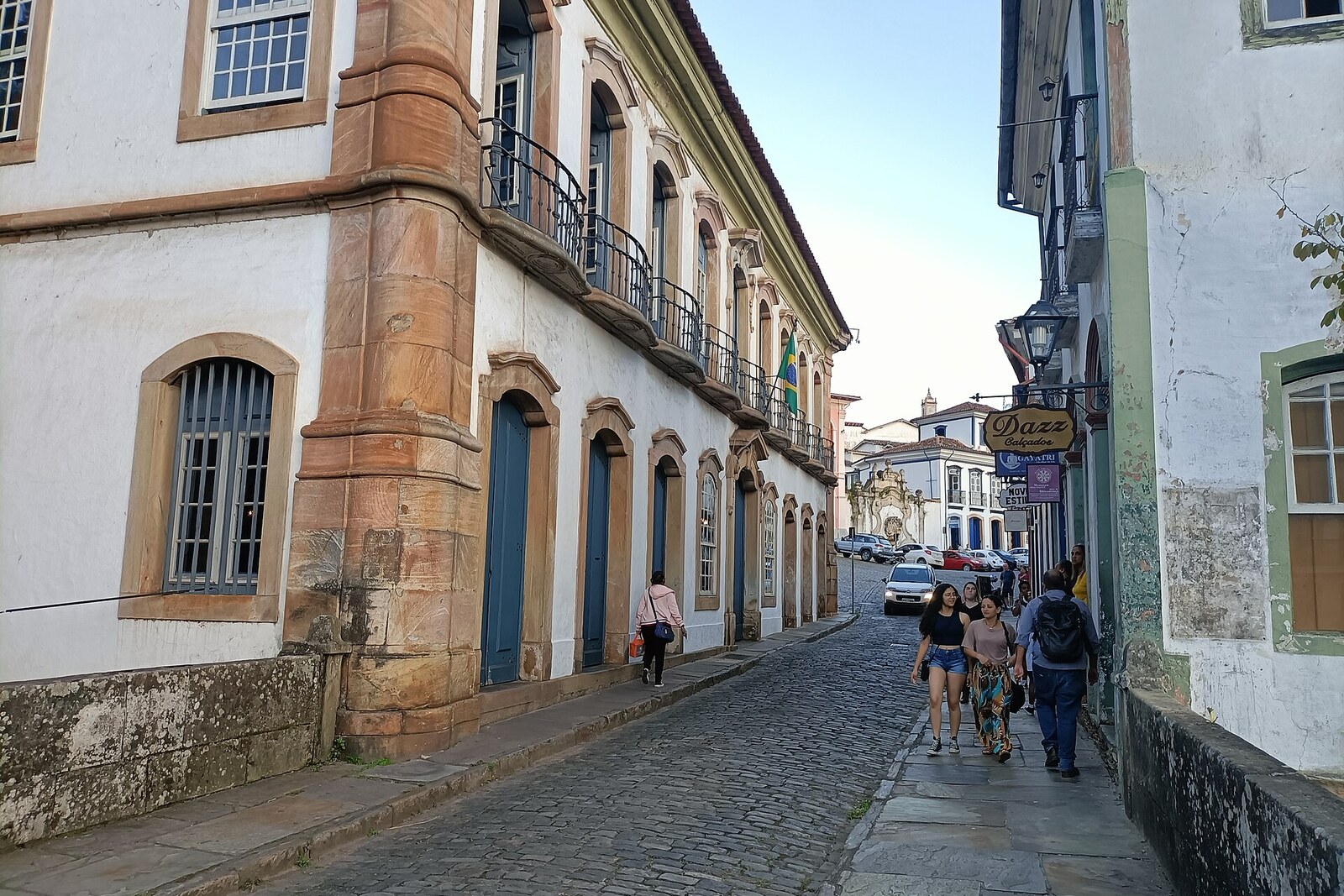
Look around first
What to notice
- Stone facade
- Upper residential floor
- Lower floor of the former office
- Account books
The story of the place
The owner’s living quarters were arranged upstairs, while the lower floor was left for the office; under one roof, the stone mansion combined a private home and an accounting business. Here, clerks balanced the books, accepted payments, and recorded debts while the house was the center for collecting duties and the ten-percent tax. It was later administered by the province’s financial department, and today its rooms are occupied by a museum of money and taxation.
In seventeen seventy-six, the Portuguese merchant João Rodrigues de Macedo secured the right to collect two major taxes in Vila Rica and on the roads throughout the Captaincy of Minas Gerais. Such people were called contractors. The Portuguese Crown put tax collection up for auction, and the winner promised the treasury a sum agreed in advance. If he managed to collect more from residents, the difference became his profit. If he collected less, he made up the shortfall from his own property.
Macedo collected entry duties on goods and a ten-percent tax. He grew rich from these operations and, between seventeen eighty-two and seventeen eighty-four, built this stone mansion. He set aside the upper floor for his own rooms and placed his office below: here, clerks kept the books, accepted payments, and recorded debts. Originally, the building was called Casa dos Contos (the House of Contracts).
Macedo’s calculation did not add up. His own debtors did not repay enormous sums, while his obligations to the royal treasury continued to grow. Historians still cannot name the exact cause of his ruin: the surviving accounts show both inflated prices for tax contracts, difficulties with collection, and payment delays lasting many years.
Macedo tried to settle his debt with what his business consisted of. He offered the Royal Treasury Board his account books, promissory notes, and rights of claim: let the officials themselves collect money from those who owed him and reduce his debt. In seventeen ninety-seven, he leased them the mansion’s lower floor. The rent was also credited toward the arrears. Now, where his clerks had once collected taxes for their owner’s profit, officials were auditing his own accounts.
That proved insufficient. In eighteen oh three–eighteen oh four, the treasury took the entire mansion in payment of the debt. Macedo lost both his office and his living quarters, and the Royal Treasury Board housed the Minas Gerais revenue and expenditure administration here. The building received its current name from that office: Casa dos Contos.
Today, it houses a museum of money and taxation, while the mansion itself still belongs to the federal financial department. Officials also included Macedo’s papers in the archive. Among them survives a list of his debts drawn up in seventeen ninety-two: the name of the man who built the house for his accounting business remained in his own accounts.
Useful on site
Tue–Sat 10:00–18:00; Sun best planned for 10:00–14:00; Mon closed; free admission.
Checked: June 24, 2026. Check the official source before visiting.Even an exterior view conveys the ambitions of a private house. Inside, distinguish between the confirmed history of the building and cautious museum attributions of individual rooms.