 Guide On Map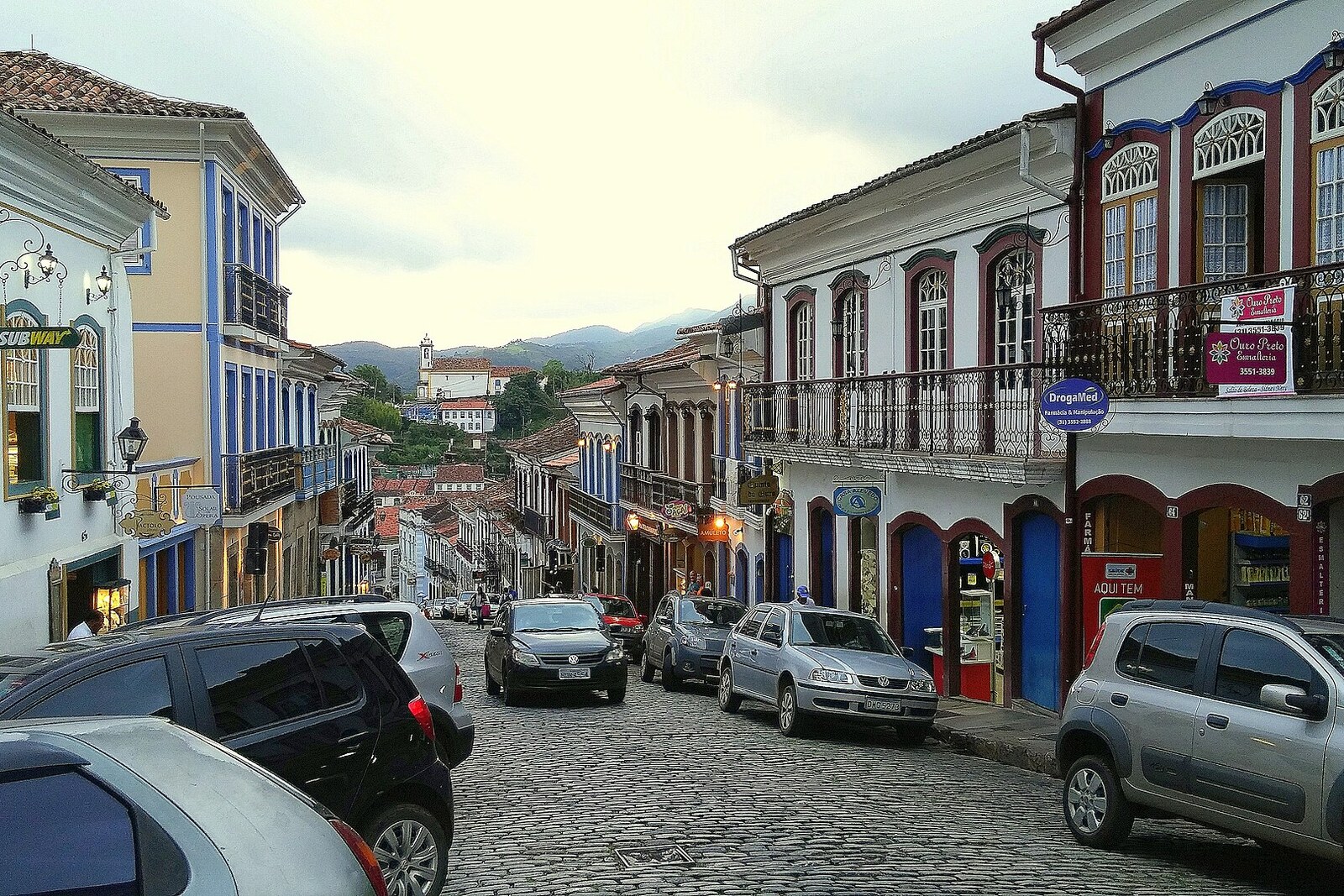
Look around first
What to notice
- The “Rua Conde de Bobadela” sign
- Two-story house No. 59
- A row of old houses
- Shop windows
The story of the place
Today, the old houses on Rua Direita contain cafés, hotels, jewelry shops, and craft shops. The name did not promise a straight line. In Portuguese towns, “rua direita” was the name given to the main road between the most important points. Here, it linked the upper square to the parish church of Our Lady of the Pillar along a slope relatively convenient for people and goods. Since the seventeen twenties, wealthy families of Vila Rica settled along this route.
The street signs bear another name—Rua Conde de Bobadela. It honors António Gomes Freire de Andrade, the Portuguese governor of Minas Gerais in the middle of the eighteenth century and the first Count of Bobadela. Under him, the Palácio dos Governadores, bridges, roads, and fountains were built in Vila Rica.
His nephew Francisco de Paula Freire de Andrade lived in a house on this street. He commanded the regular cavalry of Minas Gerais—the Crown-paid dragoons, who were supposed to suppress rebellions. Francisco’s rank, pay, and position depended on the very service against which he agreed to turn his soldiers.
The conspirators needed precisely him. Tiradentes, a junior officer and advocate of the uprising, could seek supporters, but without a commander the dragoons would have remained the main force against the rebels. Francisco hesitated at first, then joined them and made his house available for secret meetings. His agreement convinced the others: they expected the regiment to obey its commander.
On December twenty-sixth, seventeen eighty-eight, the last of the December meetings took place in this house. The conspirators agreed to begin the uprising after the derrama—the forced collection of the accumulated gold tax. Francisco was to prepare the cavalry and send the conspirators word with the coded phrase about “the day of the christening.” On receiving it, detachments from other districts would have moved toward Vila Rica.
A denunciation revealed to the governor both the participants’ names and the coded signal. The collection was canceled, so the order that was to have been sent from the house on Rua Direita was never sent. Francisco did not raise his regiment. He was arrested, and his death sentence was commuted to lifelong exile in Angola; there, the former commander died without returning to Vila Rica.
The two-story house has survived. It is now number fifty-nine, while in the eighteenth century it was listed as the seventh house on Rua Direita. After his arrest, its owner never returned here.
Useful on site
An open city street, accessible around the clock; shops and cafés keep their own schedules.
Checked: June 24, 2026. Check the official source before visiting.Watch the façades change from the public street. Do not treat the basement paintings as an exhibition freely open to visitors: do not try to enter the house without explicit permission.