 Guide On Map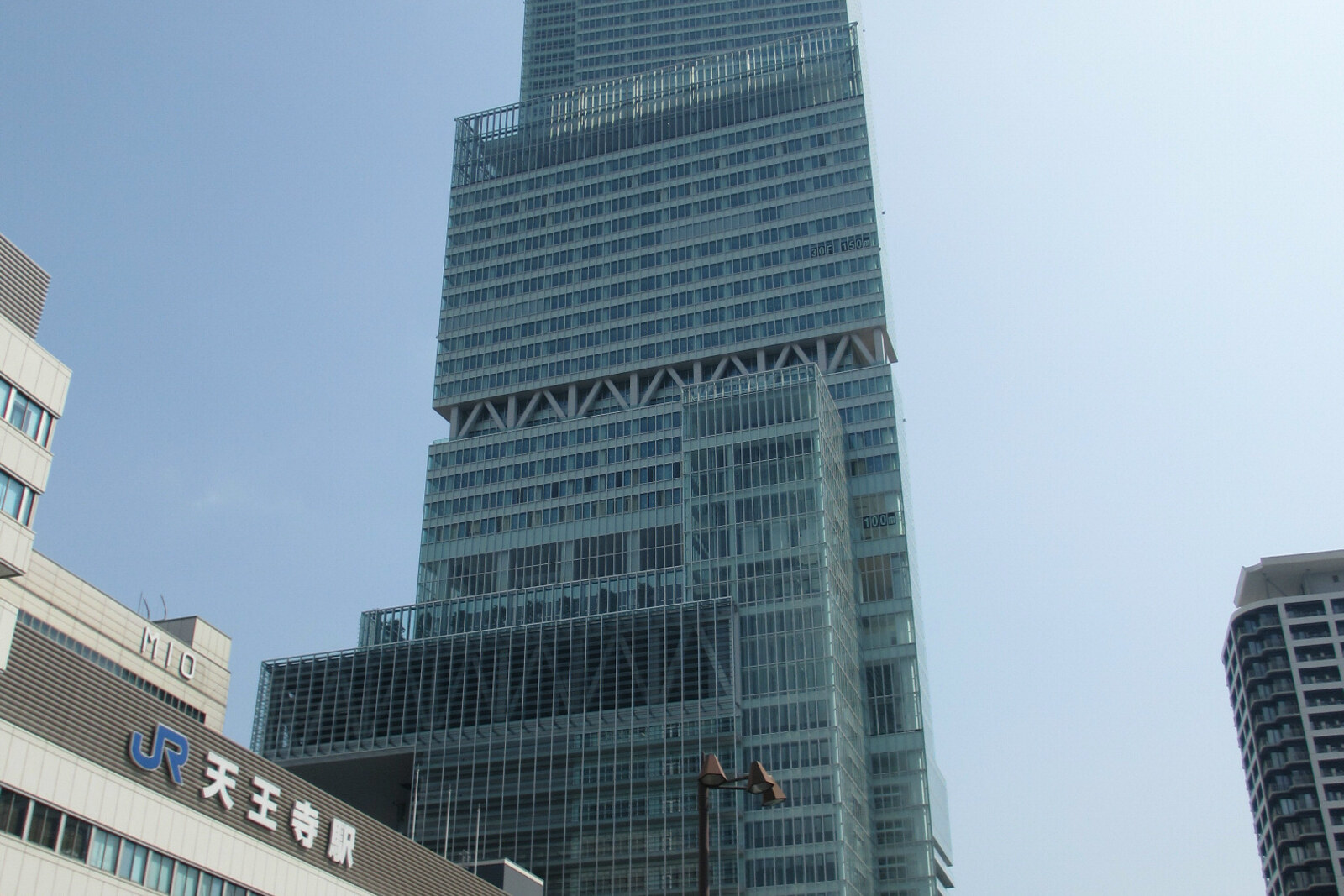
Look around first
What to notice
- Three glass volumes
- The tower's setbacks
- The glass of the observation deck
- A sign with the number “three hundred”
The story of the place
Three glass volumes set back in steps rise above the railway platforms of Osaka-Abenobashi Station; at the top, the transparent walls of the observation deck and a sign with the number three hundred can be seen. A department store occupies the bottom, with the museum and offices operating above it, then the hotel, while the upper floors are open for a rise above the city. The platforms beneath the tower remain where Kintetsu had been sending passengers south and east for almost a century.
In two thousand six, Kensuke Nakanobo, head of terminal-development planning at the railway company Kintetsu, explained the main problem with this address: many passengers passed through Abeno and Tennoji, but they had almost no reason to stay. The company owned Osaka-Abenobashi Station and the department store above it. The original plan was simply to replace its weathered west wing.
For Kintetsu, this was its own working yard. The company made money from trains, retail, and hotels, and now intended to invest about one hundred thirty billion yen in a single site. Building a large department store alone would not solve the problem: extra retail floors did not yet turn a transfer station into a place people deliberately traveled to. The planners decided to place offices and a hotel above the store—uses the district lacked—and a museum between them. An observation deck was to appear at the top.
The limit on the decision changed unexpectedly. When the project began to be discussed, flight rules near Osaka International Airport meant that nothing higher than two hundred eighty meters could be built here. In the spring of two thousand seven, the restrictions were revised, and this very site fell outside the prohibited zone. Kintetsu employees decided to use the newly available height in full: surpass Yokohama Landmark Tower and bring the building to an even three hundred meters.
So an ordinary replacement of part of a department store became the group's largest bet. The lower floors were assigned to the store, the middle ones to the museum and offices, the upper ones to the hotel, and the final three to the observation deck. Different tenants needed floors of different sizes, so the tower is assembled from three glass volumes set back in steps. This silhouette followed the business decision of Nakanobo and his colleagues: instead of one enormous sales floor, they sold companies work addresses, travelers rooms, and visitors a rise above Osaka.
The complex fully opened in March two thousand fourteen. Until two thousand twenty-three, it remained Japan's tallest building, and more than two hundred million people visited it in its first five years. The station did not move anywhere: the railway platforms are directly beneath the tower, in the same place where Kintetsu had gathered passengers for journeys south and east for almost a century.
While the steel frame was rising and reached its first one hundred meters, the company replaced the working name Abenobashi Terminal Building Tower Wing with ABENO HARUKAS. Abeno is the name of the district. “Harukas” is an old Japanese word from The Tales of Ise, meaning “to clarify” and “to make the heart brighter.” At the summit, it was translated into a literal feature: the observation deck was named HARUKAS 300.
The planners' entire calculation still fits under this name: trains below, the department store at ground level, the museum and offices in the middle, the hotel above, and the sixtieth floor open to visitors. The final twenty meters above the former aviation limit are occupied by the glass of the observation deck and a sign with the number “three hundred.”
Useful on site
An urban stop on the route; if you plan to go inside, check the schedule and visiting rules on the location's official website.
Checked: date not specified. Check the official source before visiting.The finale also works from outside, especially when the glass reflects the evening light. Plan a trip up to the observation floors separately and check the current access procedure.