 Guide On Map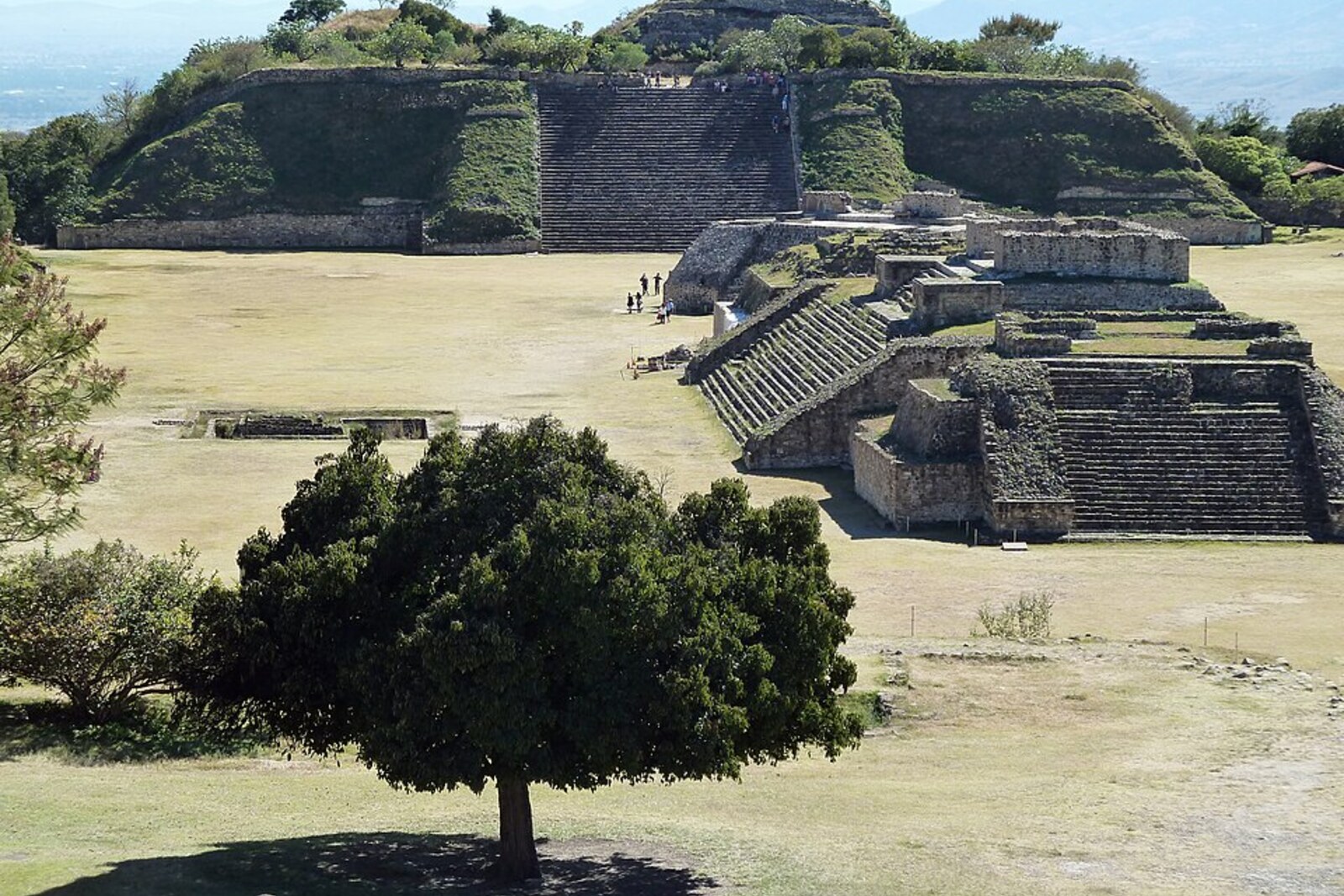
Look around first
What to notice
- The open rectangular plaza
- Temple platforms
- Stone stairways
- Residential terraces on the slopes
The story of the place
At the mountain’s summit lies an open rectangle nearly three hundred meters long and about one hundred eighty meters wide; temple platforms rise along its sides, while residential terraces stretch below on the slopes. Houses stood on the ledges so that the top could remain a place for shared rituals and gatherings, where many city residents could come together at once. Local limestone and sandstone were used for the stairways and platforms, the stone was laid in clay mortar, and the floor was covered with light-colored lime plaster. Ceremonies were held here, and decisions were made for the whole city.
Around five hundred BCE, settlers from different communities in the Oaxaca Valley began laying out a new city on this mountain. No one recorded their names. They were farmers, craftspeople, and builders who needed a safe place amid constant raids and clashes between neighboring communities.
The height made defense easier, but it came at a cost. There was not enough good arable land on the summit, and rainfall was insufficient for a reliable corn harvest. Food was grown on the slopes and in the valley, then carried up here and exchanged for goods made by the city’s craftspeople. Settling at the top meant depending on neighbors, roads, and a shared supply system.
The first major undertaking was the creation of the Main Plaza. The residents leveled the mountaintop and left its best part open, placing homes on terraces below. For platforms and stairways, they quarried local limestone and sandstone, laid down large rubble, and probably carried finer fill in baskets. Masons built walls with clay mortar, burned lime, and covered the floor with light-colored plaster. People of different means and trades took part in this construction: the scale of the work far exceeded anything the valley’s communities had built before.
The resulting space was intended for shared rituals and large gatherings. A substantial part of the city’s population could be present at once between the temple platforms. In this way, people who had come from different communities took part in one ceremony and recognized the decisions of one urban center. In return for their labor and dependence on food deliveries, they received a fortified settlement and access to exchange throughout the valley. Two centuries later, about five thousand people already lived here.
Their descendants did not preserve the plaza in its original form. As the city grew, they expanded it, demolished early buildings, and buried the remains. No later than the first century CE, three buildings lay beneath a new floor; archaeologists consider the largest, measuring about eighteen by eighteen meters, to have been a temple platform. Destroying the old temples freed space for a plaza designed for a far more populous city.
The present level rectangle, about three hundred meters long and about one hundred eighty meters wide, was created by those settlers and the generations that followed. Buried early buildings remain beneath the open space, while residential terraces still descend the slopes: the homes stood below, and the residents gave the summit over to shared gatherings.
Useful on site
The archaeological zone is usually open daily 8:00-17:00, with last entry at 16:00.
Opening hours by day
Stop at several points: the plaza’s composition changes more than it seems when you pass through quickly.