 Guide On Map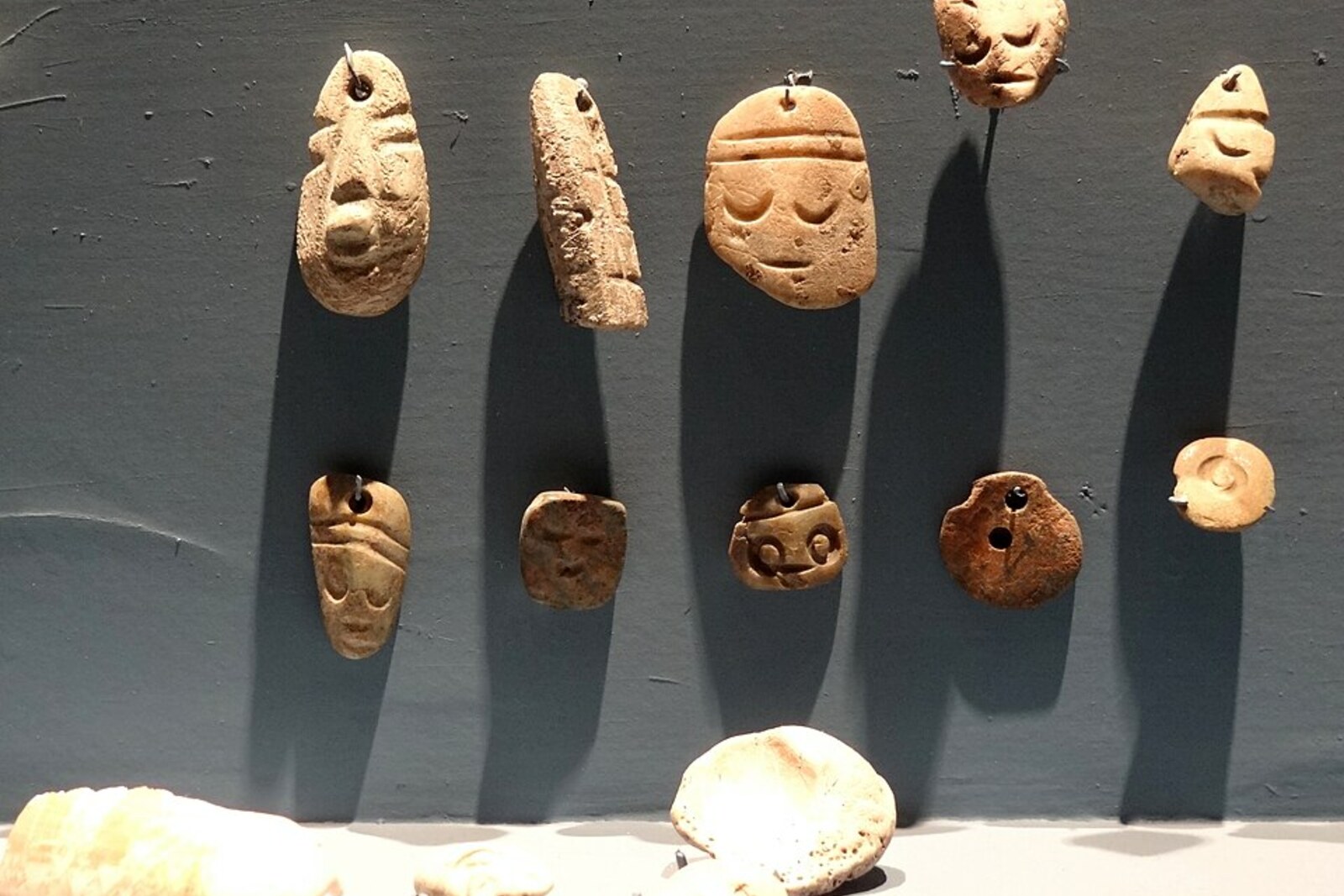
Look around first
What to notice
- Skulls with circular and oval openings
- Carved stelae
- Ceramic vessels
- Shell objects
The story of the place
The halls by the entrance to the ruins bring together traces of everyday life in the ancient city: objects from residential complexes where rooms surrounded inner courtyards and pottery was fired in some rooms. The dead were buried beneath the floors, so the human remains in the display cases are connected with domestic space, not only with ritual. Particularly striking are the skulls with circular and oval openings, beside ceramics, stelae, and shell objects.
The current museum at the entrance to the ruins opened in the autumn of nineteen ninety-four. The curators assembled about six hundred fifty finds from Monte Albán here: carved stelae, ceramics, shells, and human remains. This is the museum of the archaeological site itself, so the objects are kept near the homes and tombs from which they were recovered. The famous gold ornaments from Tomb Seven are elsewhere—in the Museum of the Cultures of Oaxaca, in the former monastery of Santo Domingo.
One reason human bones are displayed here began with an ordinary road project. In nineteen ninety-one, the National Institute of Anthropology and History planned to widen the access road to Monte Albán and the parking area. Twelve ancient residential complexes stood in the path of construction. The archaeologist Ernesto González Licón led the rescue excavations: his task was to preserve the homes or at least recover all possible information from them before the machinery arrived.
Ten months were allocated for the work. Almost the entire budget came from the institute's Oaxaca center, with a small part provided by the road authority. But at the site of the future parking area, a bulldozer had already removed the upper part of the ancient structures. Information about their final period of existence was lost. González mapped what had survived and proposed rerouting the road. Most of the homes were preserved; only two complexes in the El Pitayo area fell under the road.
The buildings excavated near the parking area belonged to families who lived between the urban elite and the poorest inhabitants of the slopes. Rooms surrounded inner courtyards, some contained pottery-firing ovens, and the dead were buried beneath the floors. In one such home, archaeologists found the remains of four adults—men and women. All four had their skulls opened during their lifetimes.
The physical anthropologist Lourdes Márquez Morfín joined González. From the edges of the openings, she determined whether new bone had had time to grow. If an edge had grown over, the person had survived the operation; an unhealed cut could mean death during the intervention or soon afterward. Later, Márquez and González studied the remains of almost one thousand inhabitants of Monte Albán. Among them were twelve trepanned skulls—the largest known series of this kind in Mesoamerica. Only two patients lived long enough after the operation. One underwent several interventions and died after the fifth. Why Zapotec specialists from the local ancient people made holes in skulls has not been established precisely. They may have treated the effects of injuries or diseases; a ritual reason is also possible. The bones do not allow a single answer to be chosen. They do, however, show the procedure itself: the upper part of the skull was scraped or drilled, and some people returned afterward to life in their homes.
Nothing remains of the upper layer of the homes at the parking area. In the museum's bone hall, skulls with circular and oval openings lie beside one another—a trace of the inhabitants archaeologists found while laying out the current access road to Monte Albán.
Useful on site
The museum is usually open daily 10:00-16:00; check INAH/SIC before your trip.
Opening hours by day
Read the labels describing where the objects came from: not everything found in one tomb belongs to the same time.