 Guide On Map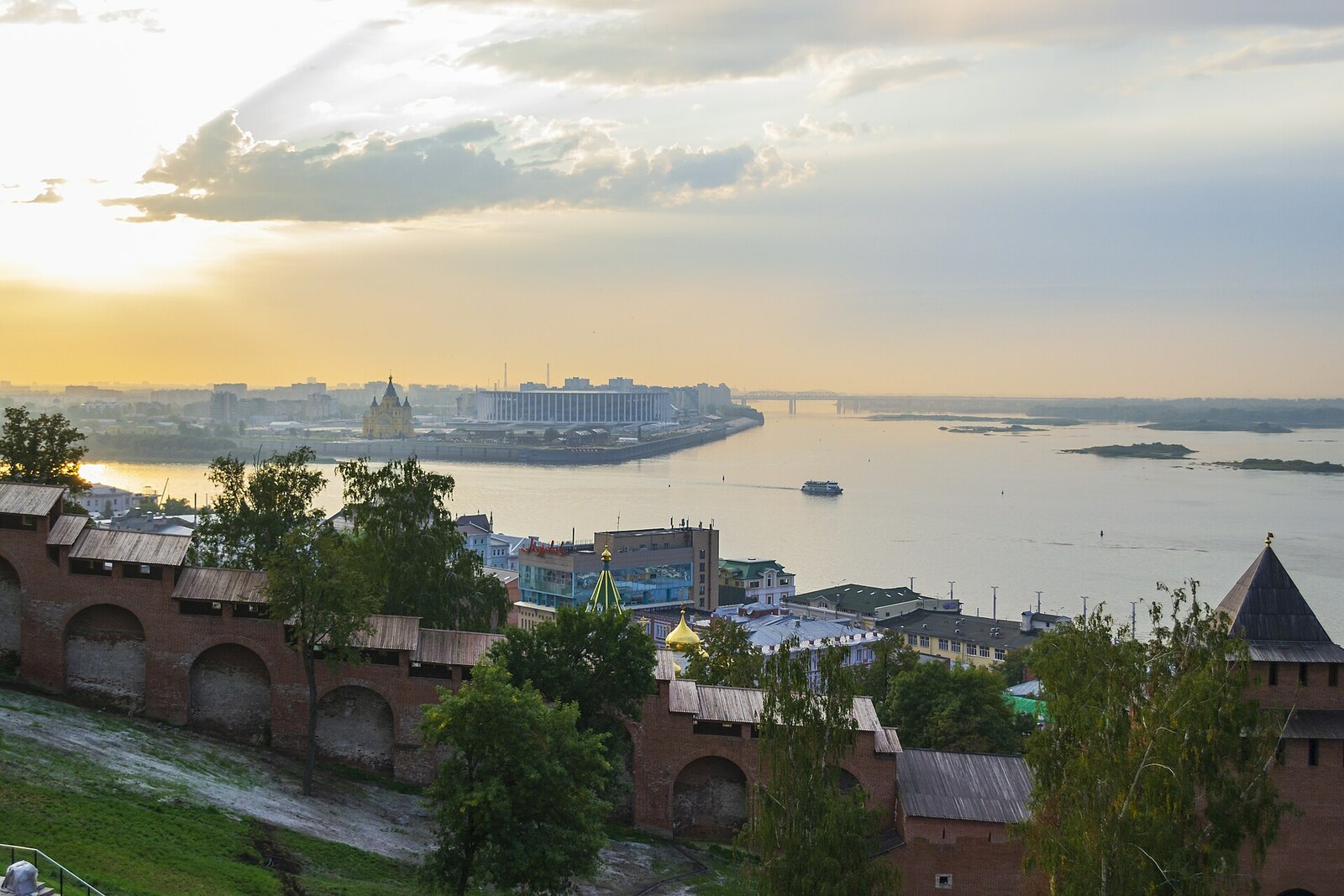
Look around first
What to notice
- Passage arch
- Side gates
- The tower's crenellations and roof
- Glass doors of the museum exhibition
The story of the place
Ivanovskaya Tower was placed at the lower end of the main road through the Nizhny Novgorod Kremlin. Goods from the Volga piers were hauled along Ivanovsky Descent, through the tower gates, and onward to the Moscow Highway. That is why the main passageway, side gates, and an exit onto a wood-and-earth platform with large cannons were arranged here: the defenders protected trade, the piers, and vessels on the Volga.
The name came from below, from the Church of the Nativity of John the Baptist. John the Baptist was a Christian prophet who announced Christ's coming and baptized him. The present stone church was consecrated in sixteen eighty-three, but its earlier wooden predecessor stood here before that and gave its name to the tower, the gates, and the descent.
By the end of the nineteenth century, the military had vacated the tower. In eighteen eighty-seven, the provincial archival commission moved in: old papers were sorted through in the former guardrooms, and museum objects were stored there. At the turn of the century, Nizhny Novgorod Social Democrats also used the tower—for clandestine meetings, overnight stays, a party archive, and meetings with members of the Sormovo circles. This activity was confirmed by people who came here.
The dispute began over one visitor. Pavel Vishnevsky, who served as the tower commandant from eighteen ninety-nine to nineteen oh two, remembered a bald man with a checkered coat over his arm. The guest examined old documents about bonded servitude and then set off on a steamboat. A quarter of a century later, Pavel came to think that the companion had called this man Vladimir Ilyin—one of Lenin's pseudonyms.
Pavel's brother, the archivist Ivan Vishnevsky, seized on the memory for the tower itself. In the mid-nineteen twenties, it remained without proper repairs. Vishnevsky wanted to link its restoration to the anniversary of the Nizhny Novgorod party organization: if Lenin had really visited here, it would have been easier to obtain money for the work. For an archivist, this was a risky way to persuade others. He earned his living by sorting documents and understood that an unconfirmed story would damage his professional reputation.
In October nineteen twenty-seven, Vishnevsky asked Vasily Desnitsky for testimony. Desnitsky was a former member of the underground circle who, according to Pavel's account, had brought the stranger there. By then, Desnitsky was teaching literature in Leningrad. The reply arrived a few days later: in nineteen oh one, Lenin had not been in Nizhny Novgorod and could not have come to Ivanovskaya Tower together with Desnitsky. Desnitsky himself had been interested in the old charters, and the bald visitor might have been another committee member. Desnitsky confirmed the clandestine meetings and the storage of party papers, but refused to use them to support the legend about Lenin.
Vishnevsky tried to repeat the story in nineteen thirty-one, after removing some of the refuted details. No trace of the publication of his note has been found, and the planned repair of the tower did not follow then. A full restoration began in nineteen forty-nine under another program; restorers led by Svyatoslav Agafonov returned the tower's crenellations, roof, and lost height.
Now glass doors to a museum exhibition about the Nizhny Novgorod militia stand in the archway. There is no memorial plaque here about Lenin's visit: the story did not withstand a single letter from the person named as a witness.
Useful on site
The tower exhibition is open daily from 10:00 to 20:00, with the ticket office open until 19:00. The funicular is listed as operating daily from 10:00 to 21:00.
Checked: June 24, 2026. Check the official source before visiting.If the pavement is wet or the descent is difficult, view the tower from the Kremlin side and do not continue downward. To get a sense of how the gates worked, it is enough to see the slope of the road and the narrowness of the passage.