 Guide On Map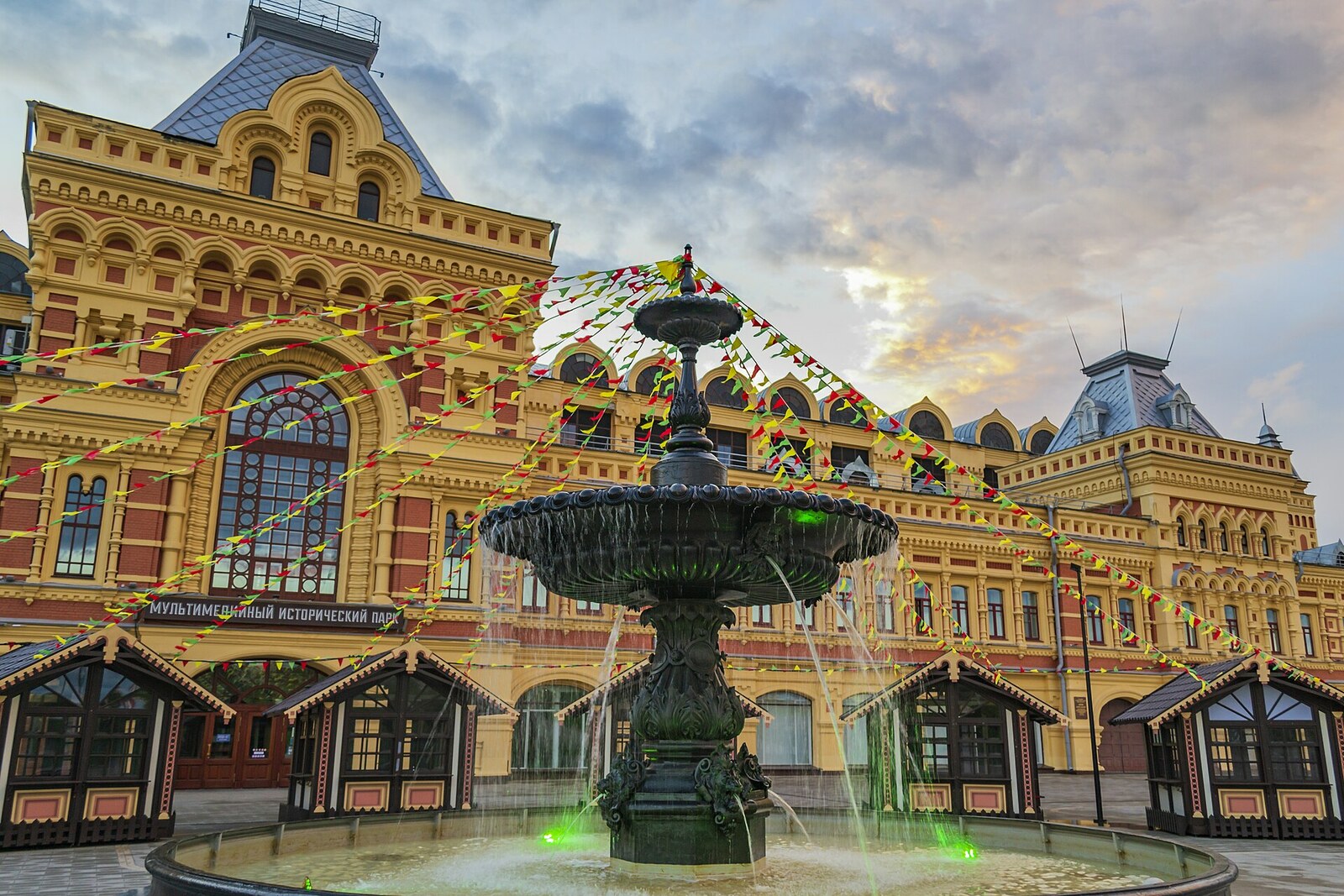
Look around first
What to notice
- Cast-iron body
- Human heads
- Lion heads
- Inscription of 1869
The story of the place
Today, Fair Square hosts celebrations, concerts, dance classes, and seasonal markets. The cast-iron fountain in the center was installed here for a very different purpose. Cast onto its body, among human and lion heads, is the inscription: “The year eighteen sixty-nine. At the expense of the fair merchants.” “At the expense” means “paid for by them.”
The fair merchants were the traders whose elected representatives managed part of the operations of this seasonal trading town. The merchants brought goods here and lived on the deals made here. They needed water for drinking and for putting out fires: losing a shop or warehouse could wipe out the capital invested in the goods.
The merchants raised money for their own fair water-supply system. Engineer Brunner was commissioned to design it, and architect Robert Kilevain supervised the work. Cast-iron pipes and two identical fountain-reservoirs were made. One was placed in front of the Main Fair House, where the merchants’ representatives conducted fair business, and the other in front of the Spassky Cathedral. The fountains marked the fair’s two main centers and at the same time became part of its water-supply network.
On August first, eighteen seventy, water was supplied through pipes six and a half versts long to the trading rows, hotels, and service buildings. The water-supply system also served the neighboring Kanavinskaya Sloboda. The merchants received a system they had paid for themselves, but as the fair grew, its capacity ceased to be enough.
By eighteen ninety-two, the water-supply system provided about half the required amount of water. It was drawn from the Oka backwater, where sewage entered. When cholera broke out in the city before the fair opened, Vasily von Anrep, a physician and professor of medicine sent here, pressed for an urgent supply of safer water. On his instructions, a temporary water-supply system was set up on the bank of the Volga River. Manufacturer Savva Morozov sent four steam engines from his enterprise for the pumps.
After the epidemic, the fair merchants invested more than eighty-one thousand rubles in rebuilding the network. Engineers laid new pipes, increased the number of fire hydrants, and brought the water supply up to the needs of the fair’s population. So continued the story written in one line on the fountain: the traders paid for a system they used themselves and had to rebuild when the original design ceased to cope.
The present Main Fair House was completed in eighteen ninety—the fountain had already stood on the square for twenty-one years by then. Its twin by the Spassky Cathedral was moved in nineteen twenty-eight. This one remained in its original place; during the most recent restoration, the pumps and utilities were replaced, while the merchants’ cast-iron inscription was preserved.
Useful on site
Open public space; access to the fountain and square may change during the setup and holding of events.
Checked: June 24, 2026. Check the official source before visiting.The fountain may be switched off, but its structure and location remain visible. Do not use water from the basin for drinking.