 Guide On Map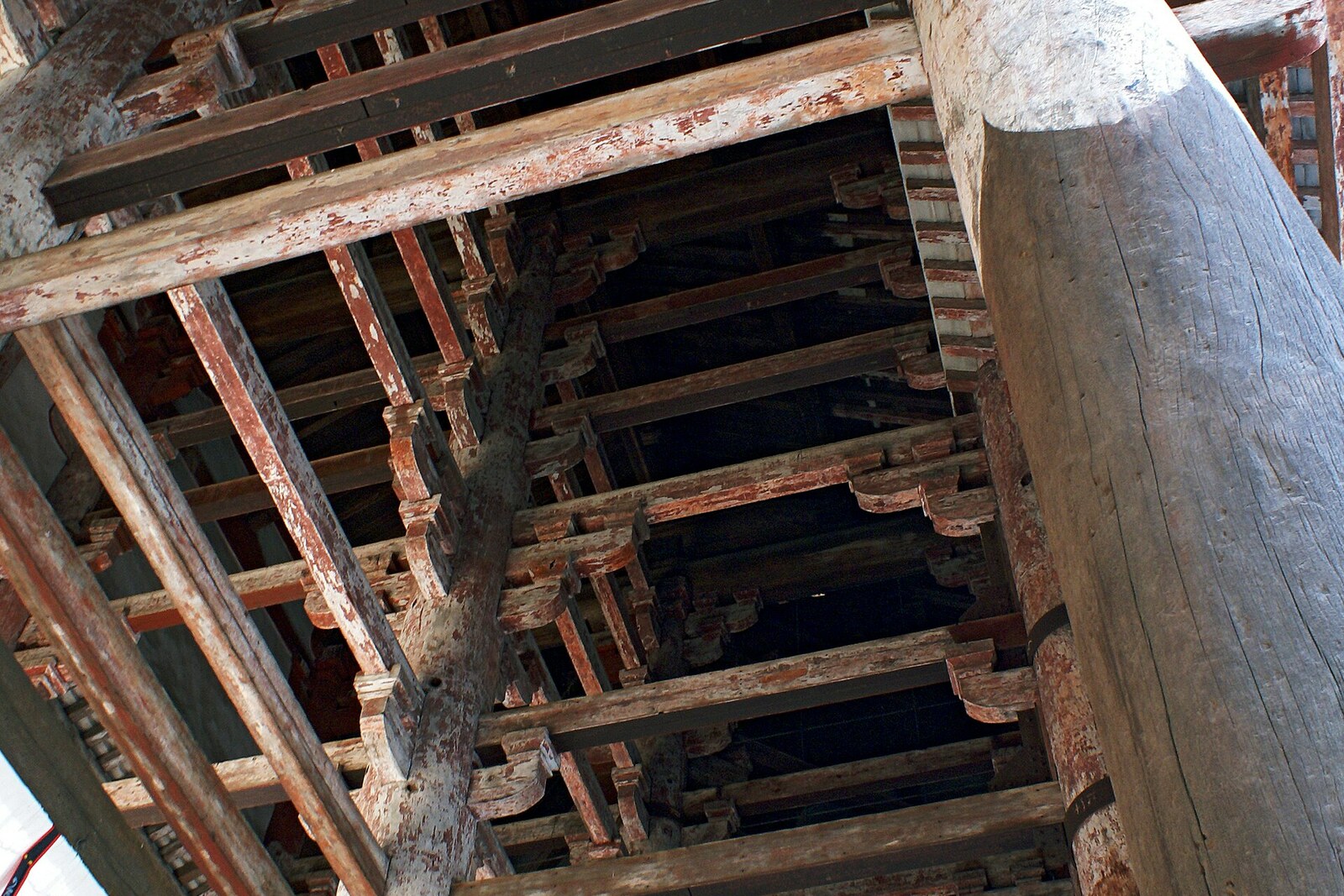
Look around first
What to notice
- Two wooden guardians
- Exposed joints beneath the roof
- Tall wooden columns
The story of the place
Nandaimon means “Great Southern Gate.” It is the main entrance to Tōdai-ji Temple: the central passage leads to the Great Buddha Hall, while two niō—giant protectors of Buddhist teaching—stand in the side bays. They face one another and guard precisely the passage between them.
The first gate on this site was built as early as the eighth century, but a typhoon later brought it down. The present building appeared after another disaster. At the end of eleven eighty, the troops of Taira no Shigehira, a commander sent to suppress the Nara temples that had risen against his clan, burned Tōdai-ji Temple’s main buildings. The monastery lost its halls and its income, while the huge statue of the Buddha remained damaged in the open air.
The reconstruction was entrusted to Chōgen, a monk about sixty years old, who was to gather money, timber, and craftsmen for the building work. He traveled around the country with subscription lists, sought donations, and secured the support of the military ruler Minamoto no Yoritomo and the imperial court. Chōgen worked on this until the end of his life—for a quarter of a century.
Before his appointment, he had visited Song China three times and seen there ways of erecting enormous wooden buildings. For Nandaimon Gate, he chose a structure later called the Great Buddha style: eighteen columns about nineteen meters high are linked by long crossbeams. The lower level was left without a ceiling, so the joints supporting the roof are visible directly above the passage. In eleven ninety-nine, the builders raised the ridge beam. The gate became one of the last parts of the reconstructed monastery.
Chōgen was especially determined that the two guardians should appear there. The commission went to four Buddhist sculptors—Unkei, Kaikei, Jōkaku, and Unkei’s eldest son, Tankei. Together with assistants, they assembled both figures at the same time from large wooden pieces. Each guardian stood more than eight meters high, and all the work took sixty-nine days.
Soon after the work began, the figure with its mouth open had already been raised in the western bay. The next day, on the eastern side of the gate, a copyist made a scroll with a Buddhist text; it was secured inside the chest of the guardian with closed lips. The document lay there for almost eight centuries.
In nineteen eighty-eight, restorers began taking the damaged figures apart for a five-year restoration. Inside, they found scrolls, inscriptions on the wood, and the names of those involved. Before this discovery, scholars debated who had worked alongside Unkei and Kaikei. The documents restored the attribution to Jōkaku and Tankei and confirmed that the two teams had worked simultaneously; it still proved impossible to determine each master’s individual contribution.
Chōgen saw Nandaimon Gate and both guardians completed in twelve oh three and died three years later. The Great Buddha Hall built under him later burned down, but the gate survived. On either side of the central passage, two figures still stand facing one another, with the record the craftsmen left about their work inside them.
Useful on site
The gate stands on the open temple axis and is accessible without a separate ticket; access to the paid areas of Tōdai-ji Temple depends on the hours of the Great Buddha Hall.
Checked: June 24, 2026. Check the official source before visiting.The guardians are visible from the passage, but the grating and deep niches conceal some details. Step to the side to examine the figures without obstructing the flow of visitors.