 Guide On Map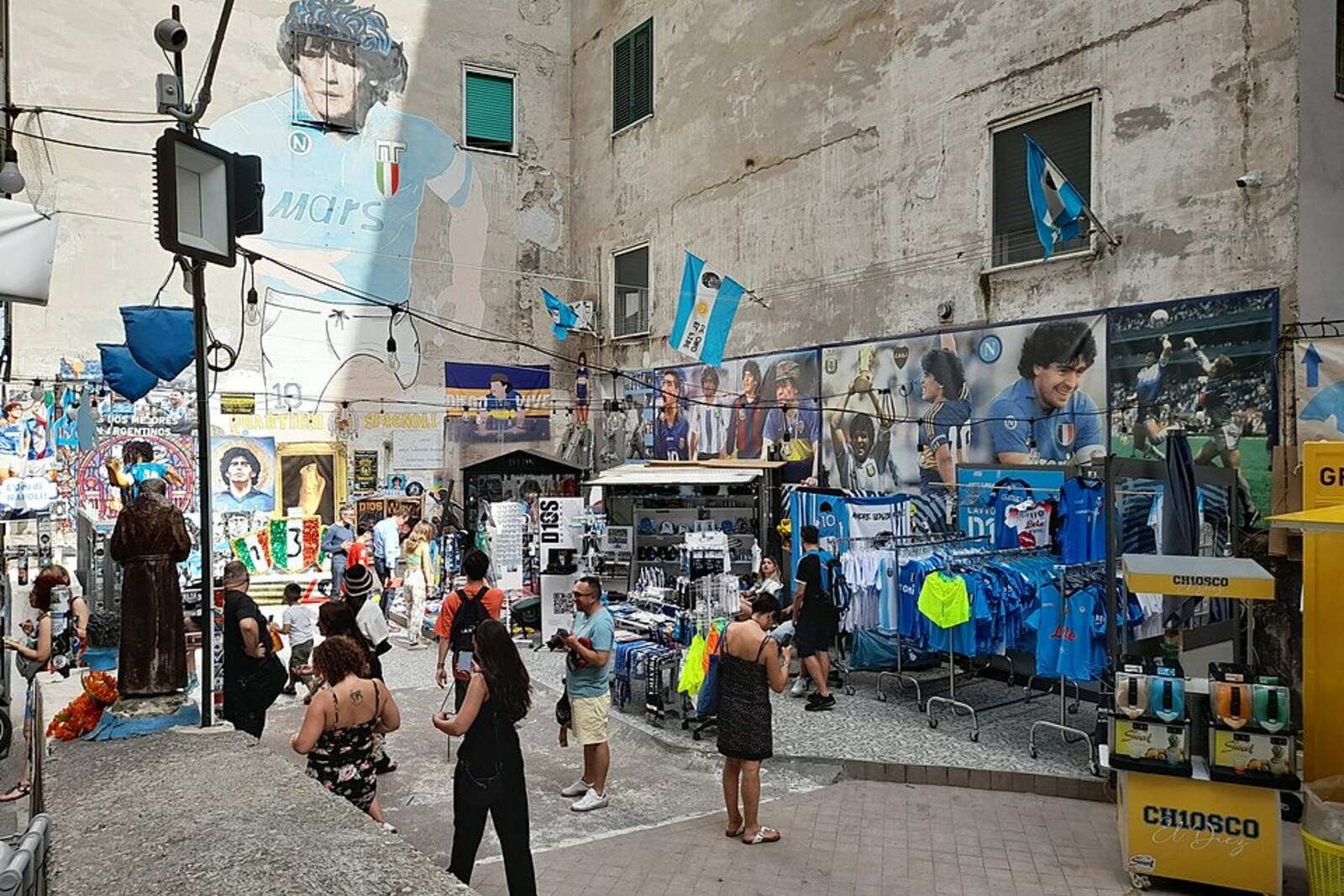
Look around first
What to notice
- Rectangular grid of narrow streets
- Added floors
- Bassi apartments with one door
The story of the place
The name “Spanish Quarter” has preserved the old military meaning of the word “quarter”: a place where soldiers were billeted. Here, “Spaniards” meant the officers and enlisted men of the Crown that owned the Kingdom of Naples in the sixteenth century.
Pedro Álvarez de Toledo, the royal viceroy who governed Naples on behalf of the monarch, wanted to separate the garrison from the townspeople. Spanish soldiers lived on their pay: some served in the fortresses, while others awaited dispatch to the next war. Billeting in residential houses constantly brought them into conflict with Neapolitans and ended in quarrels. Pedro set aside for the military the slope between Castel Sant'Elmo and Via Toledo, which was laid out under him. Builders divided it with straight intersecting streets: barracks and rental houses fit into dense blocks, while cross lanes led down to the new road and the old town.
The expansion brought income to the viceroy's family. Giovan Battista Spinelli, Duke of Castrovillari and Pedro's son-in-law, leased a substantial part of the land from Certosa di San Martino, then sublet plots to Spanish officers and soldiers. The garrison received separate housing, Spinelli received tenants, and Pedro received a military district beside the fortress.
After the lodgers came people who earned from their daily expenses: owners of taverns and inns, operators of gambling establishments, and prostitutes. A city protocol from fifteen seventy-four lists women from Valencia, Córdoba, and Toledo in one part of the Spanish Quarter. Witnesses said that they lived in many houses alongside the Spaniards; a Spanish captain responsible for order in the streets confirmed this during questioning. The women earned from the soldiers' pay, and officials long tolerated an occupation that helped keep the military from further clashes.
When the garrison disappeared, the houses were already occupied by Neapolitan families, craftspeople, and merchants. To accommodate new residents, additional floors were built above the originally low buildings, and large rooms were divided by partitions and even intermediate floors. This is how cramped dwellings appeared, including bassi—ground-floor apartments separated from the lane by a single door. Workshops, grocery shops, trattorias, and guest apartments now stand alongside them, and a stream of visitors comes here from Via Toledo.
The Spanish barracks are gone. What remain are the rectangular grid of narrow streets and Vico Sergente Maggiore. In a Spanish infantry unit, the sergeant major was the deputy commander and was responsible, among other things, for housing soldiers. The post still serves as a city address.
Useful on site
Around the clock, residential neighborhood; choose daytime and early evening for your walk, and do not disturb residents.
Checked: June 29, 2026. Check the official source before visiting.This is a residential neighborhood: keep doorways and stairways clear, do not photograph rooms through open entrances, and move to the side when a scooter appears.