 Guide On Map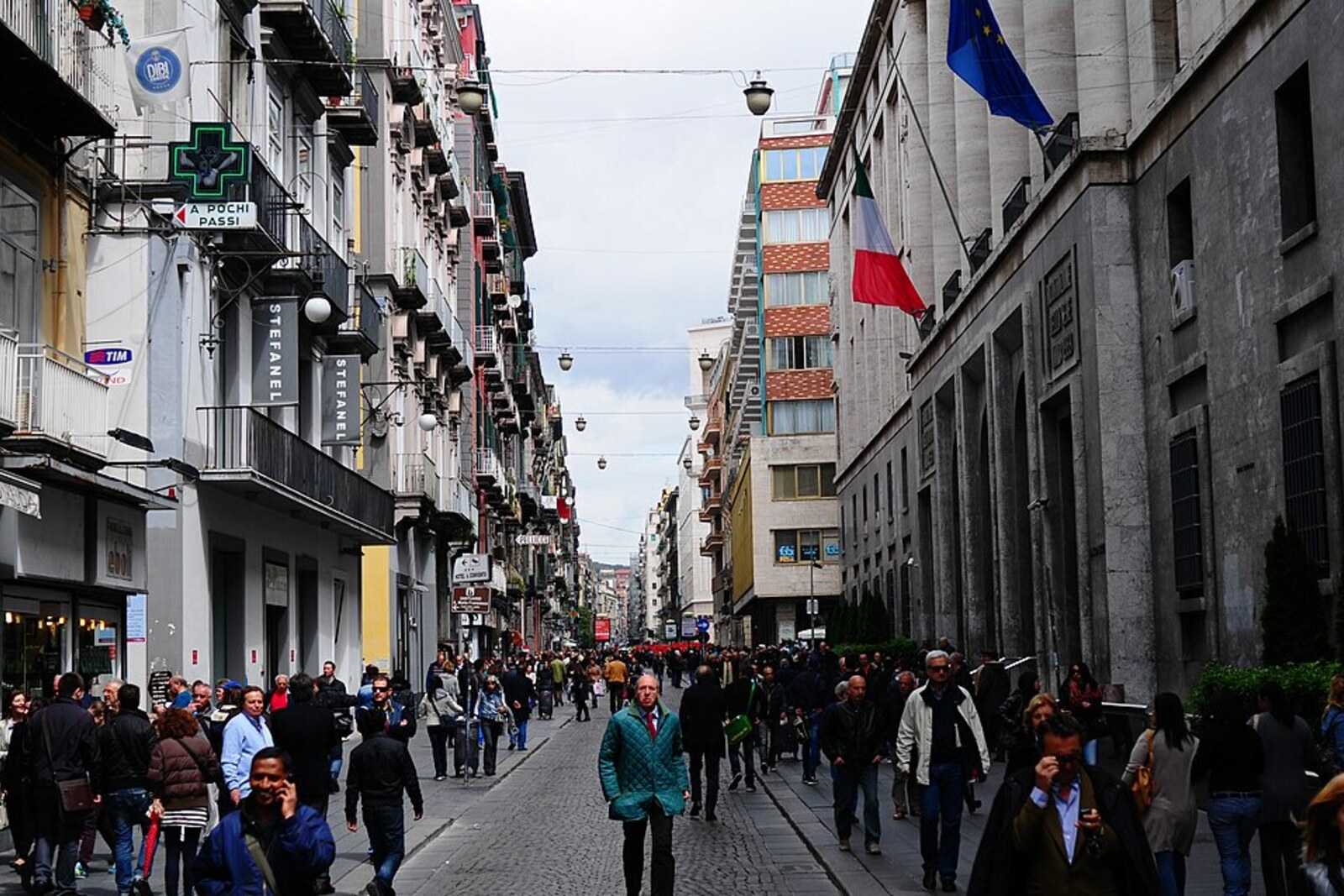
Look around first
What to notice
- Street signs reading “Via Toledo”
- The straight line of the street
- Shops along the street
The story of the place
The straight Via Toledo was laid out along the line where Naples’s western wall once ran. Beyond it began the slopes and suburbs; within, the old neighborhoods were crowded together. By the middle of the sixteenth century, provincial noblemen, merchants, the poor, Spanish courtiers, and soldiers were moving here. The city needed a new edge.
Pedro Álvarez de Toledo arrived in fifteen thirty-two as viceroy of Emperor Charles the Fifth. He sought to bring the city’s institutions under the crown and intended to rebuild Naples’s defenses. Pedro’s position depended on the emperor’s trust, and he operated amid open opponents. New taxes on everyday goods, intended in part for municipal works, had already caused serious unrest in fifteen thirty-three. Two years later, influential Neapolitan aristocrats tried to persuade the visiting Charles the Fifth to replace the viceroy. The emperor kept Pedro in office.
In fifteen thirty-six, Pedro ordered a broad road to be laid out here. The new fortifications made the old Aragonese wall unnecessary, and it was later dismantled. The street linked the Royal Gate near today’s Piazza Dante with the viceroy’s residence at the southern end of the city. Spanish soldiers were quartered nearby; they needed a direct route to the fortresses and the palace. Together with the new walls, this development increased the territory of Naples by about a third.
That is how a passage emerged along which people moved between the northern entrance, the palace, the military quarters, and the port part of the city. Houses of the nobility, institutions, and shops appeared along it. Via Toledo’s present commercial role grew out of the route onto which Pedro brought together the city’s main flows.
Toledo on street signs is the surname of this Spanish viceroy. It remained for three hundred thirty-four years, until in eighteen seventy Mayor Paolo Emilio Imbriani proposed naming the street Via Roma—in honor of the annexation of Rome to united Italy. For supporters of the change, the old name reminded them too plainly of foreign rule.
The city council split. The compromise inscription read: “Via Roma, formerly Via Toledo.” Residents formed a committee to restore the old name, historian Bartolomeo Capasso publicly spoke out against the renaming, and for a time the new signs had to be guarded at night against damage. Imbriani remained mayor for only a few more months. When he died seven years later, the author of his funeral address still had to defend his decision.
The name Via Roma lasted officially until nineteen eighty. Then the city administration of Mayor Maurizio Valenzi restored the old name. Today’s signs once again read: Via Toledo.
Useful on site
Around the clock, an open city street; the opening hours of shops and palaces depend on the particular building.
Checked: June 29, 2026. Check the official source before visiting.Look beyond the façades as well: the dense flow of people is suddenly crossed by service vehicles and scooters, especially near side streets.