 Guide On Map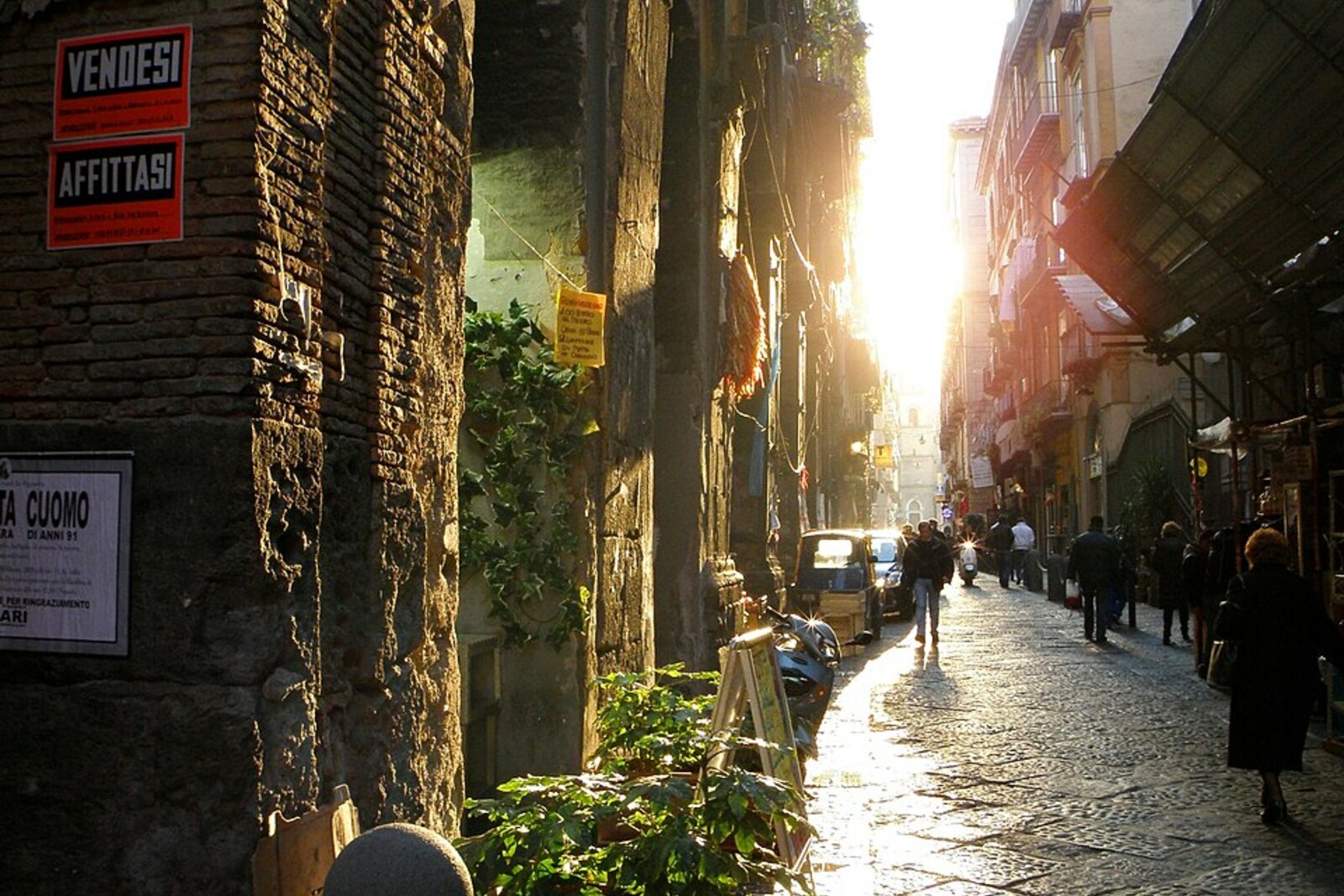
Look around first
What to notice
- The straight line of street façades
- Castel Capuano at the end of the street
- The gates of the former castle
The story of the place
The long straight street between the façades leads to the gates of a former fortress. Beyond them, rooms were converted into halls for judges and defendants, while the cellars were given over to prisoners. Private disputes, criminal charges, and arguments over taxes, currency, and measures were heard here; one board received complaints from people deprived of housing, as well as the cases of widows and guardians. At the end of the last century, the judges began to move out, and the vacated halls became home to the State Archives of Naples, with cases from the twentieth century.
The Greeks laid out Neapolis’s main street here from west to east as early as the fifth century BCE. Its current name appeared about two thousand years later. Judicial institutions were not located along the whole of Via dei Tribunali: they were brought together in Castel Capuano, the castle at the end of this straight street. There were several of them, which is why the name remained plural—the Street of the Tribunals.
In fifteen thirty-five, Emperor Charles V gave Castel Capuano to Filippo di Lannoy, Prince of Sulmona and a soldier in imperial service. His wedding was celebrated in the castle, and the new owner had time to remodel and decorate the residence. The reward lasted two years.
In fifteen thirty-seven, the Spanish viceroy Don Pedro de Toledo decided to bring Naples’s scattered courts together under one roof. Some financial and judicial officials already held sessions in Castel Capuano, while the former fortress stood by the city gates, at the end of the old thoroughfare. Don Pedro confiscated the imperial gift from Lannoy and ordered the castle adapted for judges, defendants, and prisoners.
The architects he hired removed part of the military fortifications, reshaped the interior rooms, and assigned the cellars to prisons. Five institutions were moved into the castle: civil and criminal cases, appeals, tax disputes, questions of currency and measures, and complaints over minor property damage were heard here. One of the boards heard the cases of widows, guardians of minors, and people being evicted from their homes; it also received criminal appeals from the provinces of the Kingdom of Naples. A person walked along this street, risking a home, property, or freedom, and all five paths led to one gate.
From the mid-sixteenth century, the former names gradually gave way to Via dei Tribunali. Judges remained in Castel Capuano for more than four centuries. The transfer of the institutions to a new complex began in nineteen ninety-five and proceeded in stages. The castle still closes off the street, and some of its rooms are now occupied by the State Archives of Naples, where civil and criminal cases from the twentieth century are kept.
Useful on site
The street is accessible at all times; individual churches, shops, and establishments operate independently of one another.
Checked: date not specified. Check the official source before visiting.Caravaggio and the underground cemetery can be seen only with separate admission; without it, listen to the story from the street.