 Guide On Map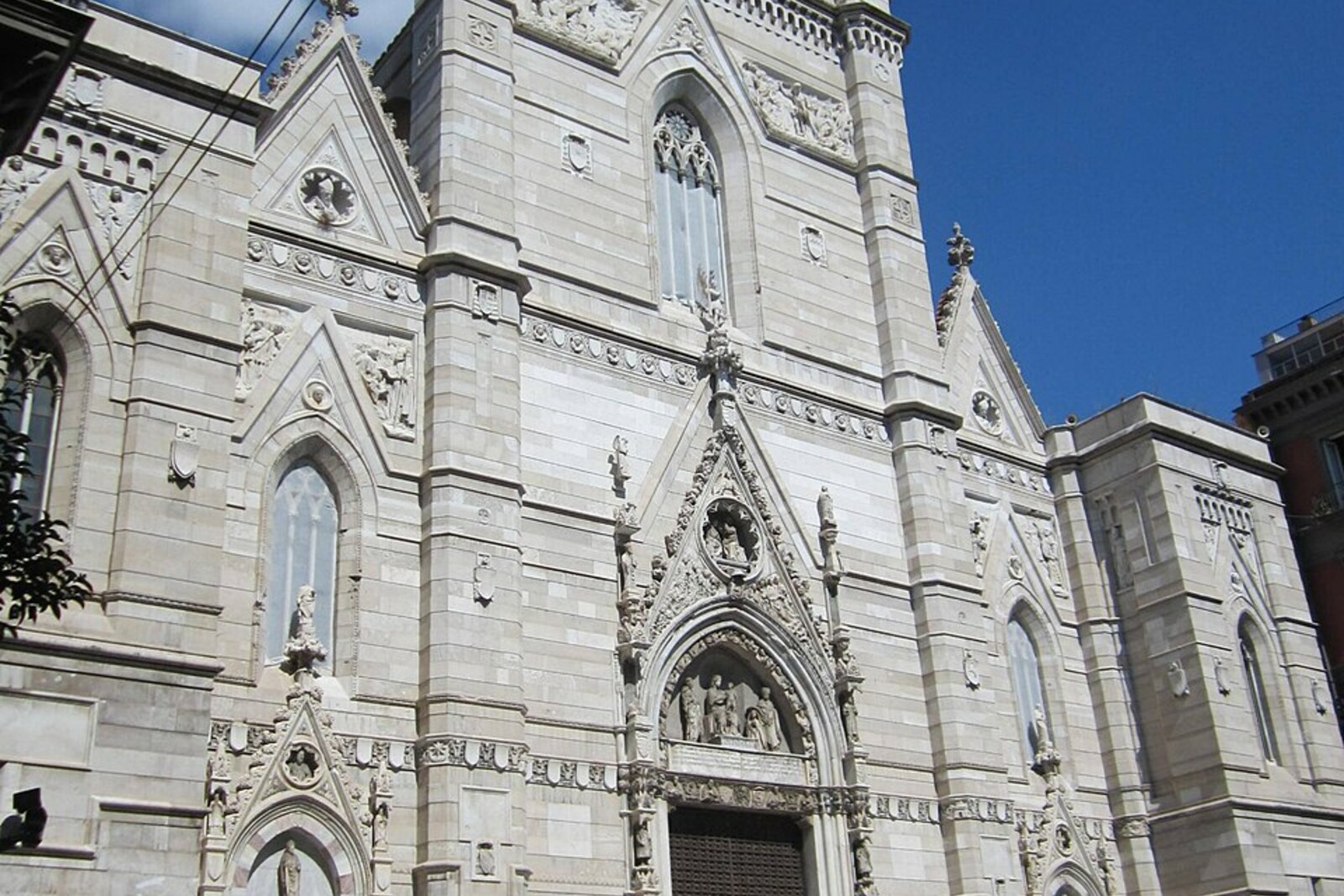
Look around first
What to notice
- The façade of Naples Cathedral
- The monumental bronze grille of the chapel
- The silver bust of Saint Januarius
- The safe behind the altar
The story of the place
Naples Cathedral is dedicated to the Assumption of the Virgin Mary and serves as the seat of the archbishop. To the right of the high altar, a monumental bronze grille separates the chapel; it was built inside the cathedral for especially venerated relics. It holds a silver image of the saint, vessels containing blood, and precious offerings. Three times a year, the vessels are shown to the faithful, who wait for their contents to become liquid.
On January thirteenth, fifteen twenty-seven, a silver bust of Saint Januarius containing part of his skull, along with ampoules of blood, was brought to the high altar of this cathedral. The notary Vincenzo de Bossis stood nearby. Before him, the city’s elected representatives were about to draw up a contract with a man who had died more than a thousand years earlier.
Saint Januarius was the bishop of Benevento. At the beginning of the fourth century, he was arrested while trying to visit an imprisoned Christian and was beheaded near Pozzuoli. The people of Naples revered Januarius as their protector, and regarded the relics kept in the cathedral as his physical presence at the meeting.
By then, the city had endured war, earthquakes, and eruptions of Mount Vesuvius. A plague epidemic was killing people by the tens of thousands. Representatives elected from the five noble districts and from the people asked the saint to intercede with God to end the plague. In return, they pledged to pay from the city treasury for a new chapel for his relics.
A vow at the altar would have been enough for such a request. The notary was needed because the representatives were undertaking a financial obligation and were securing the future chapel in advance for all the citizens of Naples. It was to be administered by representatives of the city, although it was to stand inside the cathedral.
The epidemic did not end on the day of the signing, and the promise took so long to fulfill that none of the signatories saw the completed chapel. In sixteen oh one, their successors created the secular, twelve-member Deputazione della Real Cappella del Tesoro di San Gennaro. It obtained the necessary permissions, raised funds, and began construction. Only in sixteen forty-six were the bust and the ampoules moved into the completed chapel.
Naples Cathedral itself is dedicated to the Assumption of the Virgin Mary and serves as the cathedral of the Archbishop of Naples. Yet behind the monumental bronze grille on the right is the chapel, still administered by the secular Deputazione della Real Cappella del Tesoro di San Gennaro. It keeps the bust, the ampoules, and the precious offerings brought to the saint. Three times a year, the ampoules are shown to the faithful, who await the liquefaction of the blood.
The safe behind the altar is opened with two sets of keys. One is held by the Deputazione della Real Cappella del Tesoro di San Gennaro, the other by the archbishop. The cathedral’s principal relic is not taken out without representatives of the city.
Useful on site
The square and façade are always accessible; the hours of Naples Cathedral, the Royal Chapel of the Treasure of San Gennaro, and the Museum of the Treasure of San Gennaro may differ and change because of liturgies.
Checked: date not specified. Check the official source before visiting.During a service, remain by the entrance or return later; treat the Museum of the Treasure of San Gennaro and the chapel as separate visits.