 Guide On Map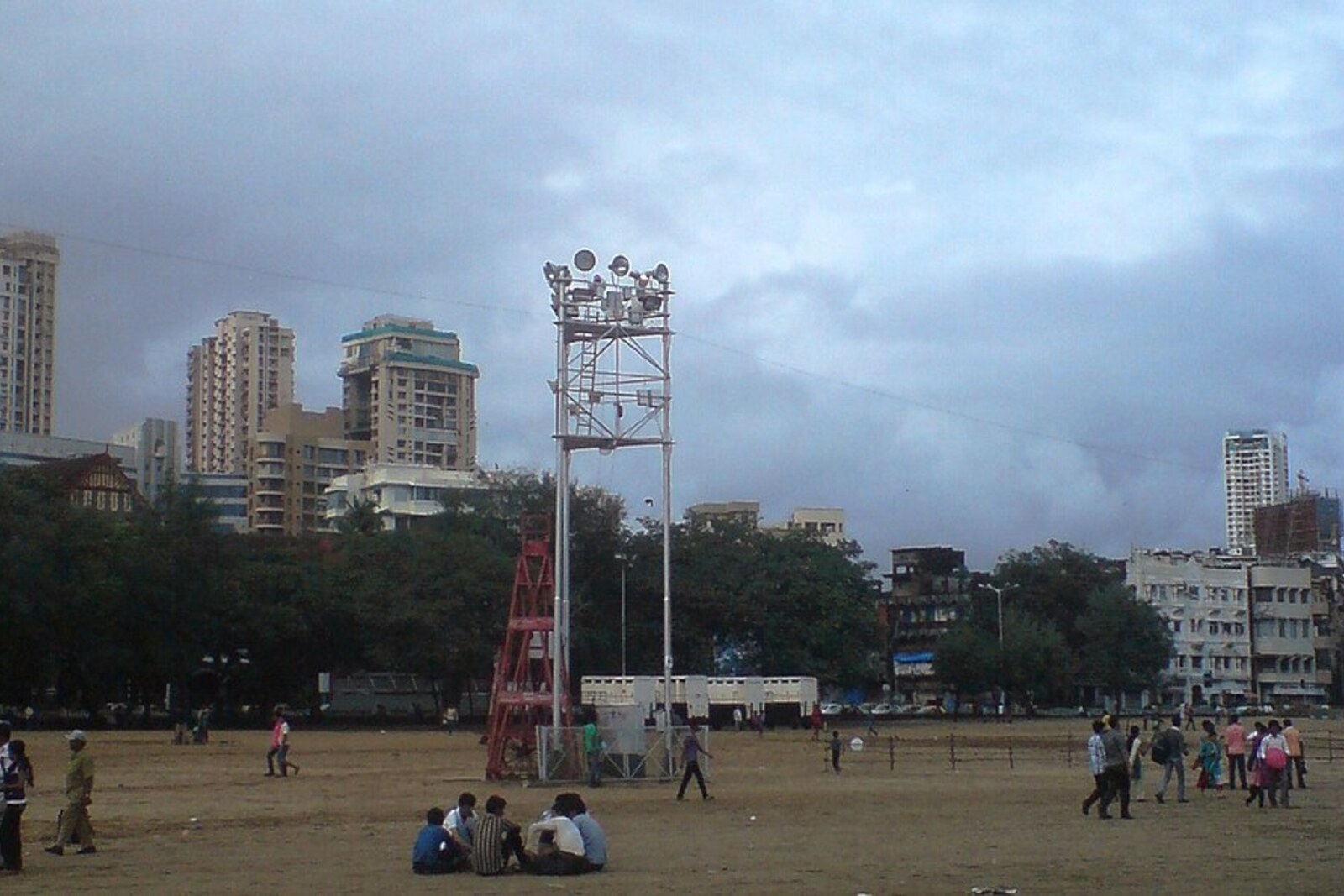
Look around first
What to notice
- Tilak's bronze statue
- Small garden by the beach
- Stretch of sand
- The sea
The story of the place
At the edge of Girgaum Chowpatty Beach stands a statue of Bal Gangadhar Tilak. On August first, nineteen twenty, his body was to be taken away from Bombay. Tilak's associate and future biographer, Narasimha Chintaman Kelkar, wanted to arrange a cremation in Pune, where Tilak had lived and worked.
Tilak earned a law degree, taught law, and then became the owner and editor of two weekly newspapers. Through the Marathi-language Kesari, he campaigned for Swaraj—self-rule for India. The newspaper gave him an income and a political platform; its articles brought the editor to the dock twice. The second trial ended in nearly six years of imprisonment in Mandalay. The honorary name Lokmanya meant “revered by the people.”
When Tilak died in a Bombay hotel, the surgeon treating him, Gopalrao Deshmukh, took Kelkar out onto the balcony. Below stood people who filled the streets from one large market to another. The official estimate counted about two hundred thousand participants. Deshmukh suggested that Kelkar first ask them whether Tilak's body could be taken to Pune. Kelkar abandoned his plan.
An ordinary crematorium could not accommodate such a crowd. Vasantrao Dabholkar, a former sheriff of Bombay, obtained permission from the British administration to build the funeral pyre directly on the sand of Girgaum Chowpatty. Permission was granted on one condition: this cremation would not set a precedent, and no others would take place here. Tilak's body was carried through the city and burned on the shore. Other deceased people were indeed not cremated on the beach.
Instead, city residents began seeking a monument exactly on the site of the pyre. Indian municipal councilors promoted the project for five years, while a committee led by the poet and independence movement participant Sarojini Naidu raised money by subscription. The sculptor Raghunath Krishna Phadke received the commission thanks to a meeting with Tilak during his lifetime: Tilak posed for him for a full hour, allowed him to take measurements, and let himself be photographed from every side, with and without a turban. On August first, nineteen thirty-three, the bronze statue was unveiled directly above the cremation site.
This stretch of sand had another connection with Tilak. The household festival of Ganesha had existed long before him. In eighteen ninety-two, Tilak urged people to move the celebrations into shared courtyards, where neighbors could gather and public lectures could be held. Just a year later, residents of Keshavji Naik Chawl in Girgaum held the oldest public celebration of Ganesha in Bombay. They first placed the small clay figure in an apartment on the first floor, then carried it out into the shared courtyard, and on the final day carried it through the neighborhood to the sea.
This is how visarjan takes place—the farewell to Ganesha, in which his image is immersed in water. Now, at the end of the festival, processions from different parts of Mumbai move toward Girgaum Chowpatty for hours. Thousands of household and public figures are brought to the shore; the largest reach the water only by dawn. The sea explains the choice of this point, while the open sand can receive processions that are too crowded for the streets of Girgaum.
The name “Chowpatty” itself probably preserves the memory of four sea channels that once reached the shore here. The channels are gone, while over time the word became a generic name in Mumbai for an urban beach.
Tilak's statue stands in a small garden at the edge of this sand. At a depth of about nine meters beneath the pedestal lies an iron box containing his turban, clothes, shoes, the book Gita Rahasya, and a biography written by Kelkar—the man who wanted to take Tilak's body to Pune.
Useful on site
Public beach and access from the promenade; conditions, barriers, and access change after rains and during festivals.
Checked: June 28, 2026. Check the official source before visiting.The beach remains a lively public space, especially crowded during festivals. Respect processions and family gatherings, do not obstruct the flow of people, and do not enter the water to continue the route.