 Guide On Map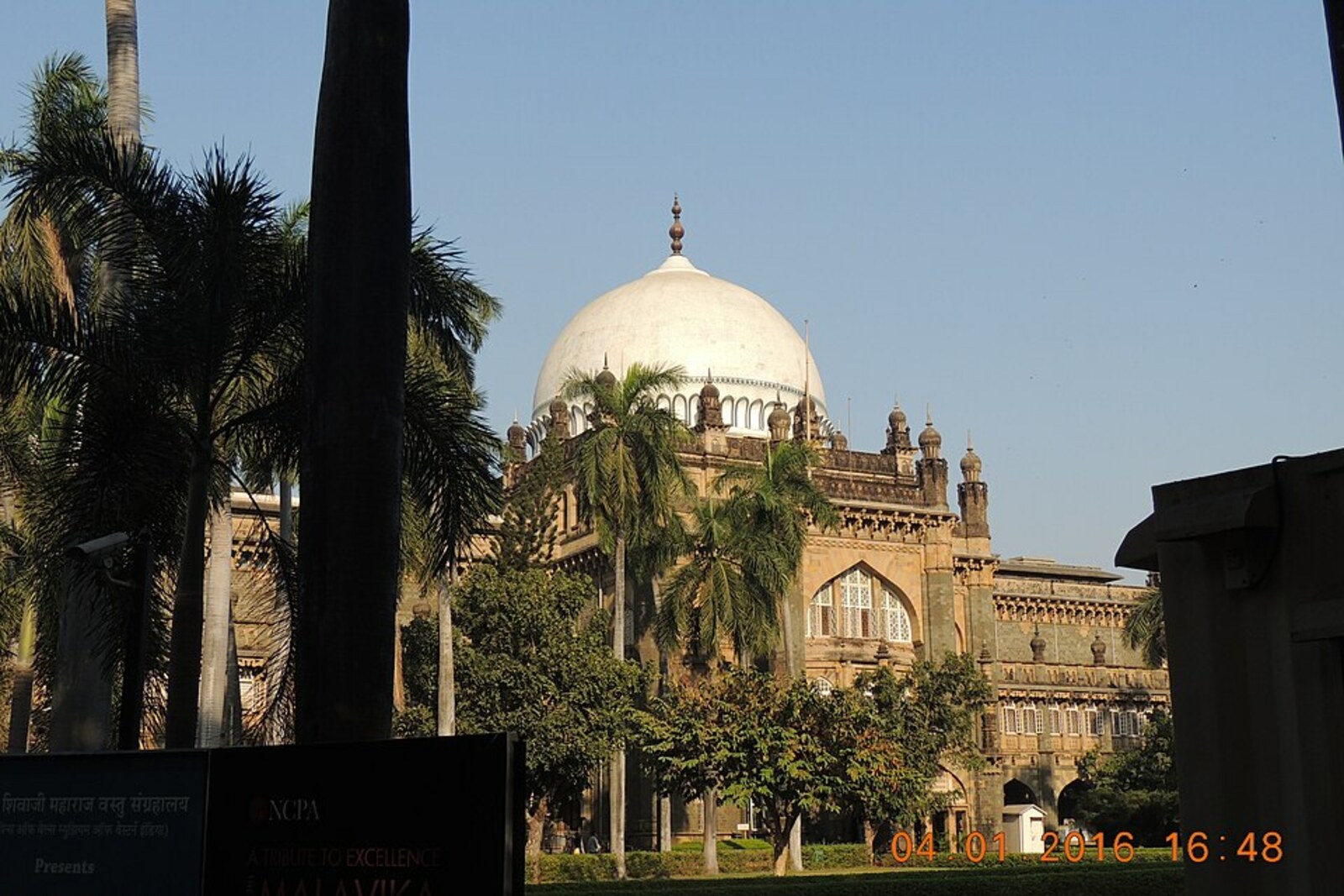
Look around first
What to notice
- Large windows
- Gallery of Sculpture
- Old museum display cases
The story of the place
Beneath the large windows are the high halls of a public museum of art, archaeology, and natural history. Bombay lawyers, entrepreneurs, and scholars secured the site on the condition that the townspeople would create an independent society and maintain the museum themselves. It was later named for Chhatrapati Shivaji Maharaj, the seventeenth-century founder of the Maratha Empire. Some old display cases still hold objects from the private collection that Navajbai Tata arranged to have transported from London and for which she provided display cases at her own expense.
The museum archive holds a photograph of what is now the Gallery of Sculpture: instead of statues, it contains rows of hospital beds. The first visitors to this building were brought here not to view antiquities, but to be treated for bullet and shrapnel wounds.
It all began with a different plan. In nineteen oh four, Bombay lawyers, entrepreneurs, and scholars secured a site from the colonial government for a public museum of art, archaeology, and natural history. The condition was strict: the townspeople had to create an independent organization and be responsible for maintaining it themselves. At a public meeting, they decided to tie the museum to the visit of the Prince of Wales, the future King George V. In nineteen oh five, the prince laid the foundation stone, and the institution was therefore given the name Prince of Wales Museum of Western India.
The person now named in the museum's title had nothing to do with its founding. Chhatrapati Shivaji Maharaj was a seventeenth-century ruler who founded the Maratha Empire; the museum, once named after a British prince, now bears his name.
By the end of nineteen fourteen, the building was nearly ready, but World War I had begun. The Bombay War Fund Committee inspected the still-empty halls and ordered wounded Indian soldiers to be admitted here. The high ceilings and large windows made it possible to air the wards. George Wittet, the architect who designed the museum, adapted the lower floors in a month to hold one hundred eight beds. Temporary facilities for doctors, a pharmacy, and an operating room were set up in the courtyard; the operating room was connected to the main building by a covered passageway. The building was named the Lady Hardinge War Hospital, in memory of the deceased wife of the then Viceroy of India.
Among the first patients were seven Indian soldiers wounded in fighting near the Persian Gulf and brought by sea from Basra. For these men, military service was a profession and a source of pay; they returned here already unable to continue it. The women's department of the city fund collected bedding and clothing: Parsi women sewed flannel items, Hindu women sewed pillowcases, and Muslim women sewed nightclothes. Bombay doctors Rowe, Bhajekar, Deshmukh, and Shirgaonkar initially treated the patients without pay.
In nineteen sixteen, the hospital was visited by Viceroy Charles Hardinge. One of the Indian soldiers had been shot in the head and lost his speech. He tried to shake Hardinge's hand, but for a long time could not explain what he wanted. The soldier's name and his later fate were not preserved in the report. The outcome for the hospital itself, however, is known: the number of beds was increased by another two hundred, and in nineteen seventeen the military took the institution onto its own maintenance. The volunteers Rowe and Bhajekar received the ranks of colonel, while the other doctors became majors. By the hospital's closure, it had admitted about twenty thousand patients and performed roughly one thousand two hundred operations. During the influenza epidemic, the building was again used as a city hospital.
Only in nineteen twenty did the trustees get the premises back. They now had to fill the former wards with what they had been built for. The industrialist and collector Sir Ratan Tata bequeathed to the museum a collection of paintings, textiles, weapons, porcelain, and Asian art that had been kept in his London home. His widow, Navajbai Tata, arranged for the collection to be transported to Bombay. It turned out that the new museum had no suitable display cases; she then ordered them at her own expense and sent them along with the exhibits. Some of these display cases still serve here today.
On January tenth, nineteen twenty-two, the former wards were opened to the public. The exact place where the hospital beds stood is known from the archival photograph: it is now the Gallery of Sculpture. The temporary operating room in the courtyard disappeared, while the museum display cases ordered by Navajbai Tata remained.
Useful on site
Officially, the museum states that it is open daily from 10:15 to 18:00; the ticket office closes at 17:45. Closed on 26 January, 1 May, 15 August, and 2 October; individual galleries may be temporarily closed.
Checked: June 30, 2026. Check the official source before visiting.The facade can be fully viewed without entering. Allow extra time for the collections; before your visit, check the museum's current rules, and do not try to cover all the galleries between two walking stops.