 Guide On Map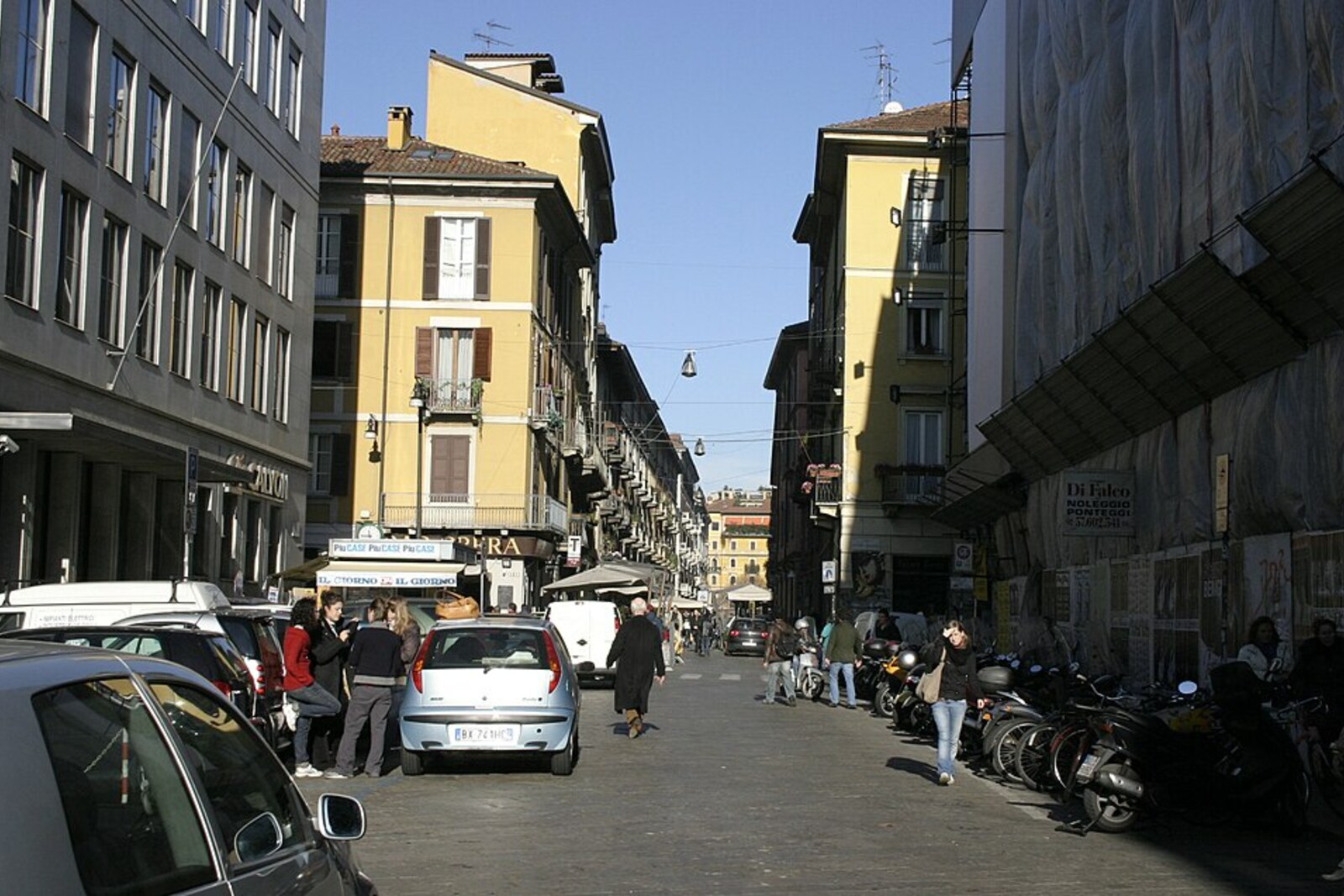
Look around first
What to notice
- Bar Jamaica sign
- Facade of number 32
- White wall tiles
- Facade of the Brera Academy of Fine Arts at number 28
The story of the place
Behind the Bar Jamaica sign at number thirty-two, a family bar that once grew out of a wine shop is still operating. The Mainini family runs it, and white tiles remain on the interior walls. In the middle of the last century, people came here not only to drink: the landlady wrote down the debts of those who had no money to pay for food.
The name “Brera” comes from the Lombard word “braida,” meaning a field or grassy plot near a city. Later, the name passed to the palazzo, the street, and the district. Via Brera acquired its artistic reputation from the people who gathered between the Brera Academy of Fine Arts at number twenty-eight and the neighboring establishments.
One of them occupied number thirty-two. The family bar, which grew out of a wine shop, is now called Bar Jamaica. After the war, Elio Mainini, the landlady’s son, wanted to attract young artists here. In nineteen forty-eight, he organized the Post-Guernica exhibition at the bar. His mother, Lina Mainini, was responsible for the more pressing side of the plan: many visitors could argue about painting, but could not pay for food. Lina wrote down their debts and fed them on credit. When artists offered paintings instead of money, she often refused, according to regulars’ recollections: she did not want to take advantage of the fact that the artist had no means of paying.
In the early fifties, Ugo Mulas began coming here—a law student earning money through private lessons and already doubting that he wanted to become a lawyer. In the evenings, he studied drawing at the Brera Academy of Fine Arts, then went on to Bar Jamaica, where artists, journalists, and photographers sat at the same tables.
Mulas did not yet own a camera. One of the regulars lent him an old camera and explained only how to set the shutter speed in sunlight and shade. The first subjects were already around him: Mulas began photographing the bar’s visitors. In nineteen fifty-four, he received his first professional assignment—a report from the Venice Biennale, an international exhibition of contemporary art. A year later, the weekly magazine Tutti printed photographs taken at Bar Jamaica. After this publication, another magazine offered Mulas permanent work, and he opened his own studio. Until nineteen seventy-two, the photographer covered every Venice Biennale, and later he created portraits of artists on the New York scene.
Bar Jamaica is still operating at number thirty-two, and the Mainini family runs it. The white wall tiles have survived inside. In photographs from nineteen fifty-three and nineteen fifty-four, Ugo Mulas’s first subjects sit against them.
Useful on site
The bar remains an operating establishment, so view the interior with respect for its visitors and staff.