 Guide On Map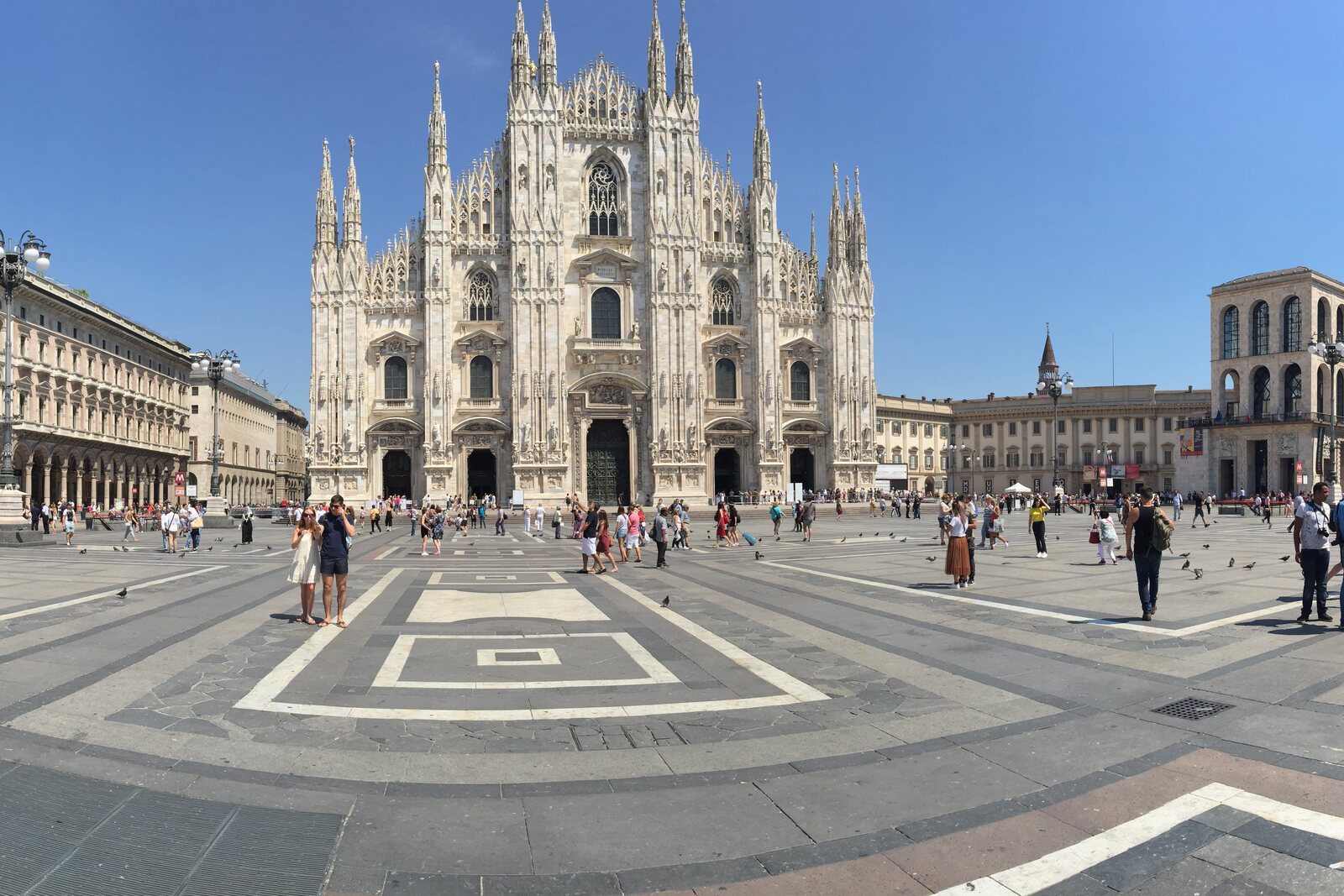
Look around first
What to notice
- High altar
- Red lamp above the altar
- Scurolo beneath the high altar
- High vault
The story of the place
Milan Cathedral serves as Milan's cathedral church, the principal church of the archdiocese, where the archbishop serves. Construction of the cathedral began in thirteen eighty-six on the site of earlier city basilicas; one of them, the Basilica of Santa Tecla, was later dismantled. Above the high altar, beneath the high vault, a red lamp burns: once a year, a painted cloud-shaped lift is raised to this point.
On October sixth, fifteen seventy-six, a barefoot man with a rope around his neck came out of Milan Cathedral. It was Carlo Borromeo, the Archbishop of Milan, seeking an end to the plague and trying to keep the city from falling apart. The rope served as a sign of penitence. Borromeo carried in his hands a wooden cross with the Holy Nail—a relic that church tradition links to Christ's crucifixion. The procession headed for Santa Maria presso San Celso.
It could begin precisely here. Milan Cathedral is the cathedral church, the principal church of the Archdiocese of Milan, and the place where the archbishop serves. Construction began in thirteen eighty-six on the site of earlier city basilicas. When the old Basilica of Santa Tecla was dismantled, the Holy Nail was moved from it to the new cathedral. Since fourteen sixty-one, the relic has been kept high above the high altar.
By autumn, the plague had already filled Milan's lazaretto. Some of the nobility and city officials left Milan. Borromeo remained. He visited the sick, gathered clergy to care for them, and spent his own fortune on aid. The Archbishop owned the Principality of Oria—a landed estate in southern Italy; he sold it, and when the money began to run short, he started borrowing.
The procession with the Holy Nail was one of his decisions. The plague was not declared over afterward. Nine days later, at Borromeo's proposal, the city imposed a general quarantine. Residents were forbidden to leave their homes, and the archbishop ordered altars set up at intersections: services were held in the street, while the confined Milanese took part from their windows. Thus Borromeo first gathered people behind the cross, then made sure they dispersed to their homes.
Milan was recognized as free of infection only on January twentieth, fifteen seventy-eight. Borromeo survived the epidemic, died in fifteen eighty-four, and was later canonized. His body was placed in a crystal and silver reliquary in the Scurolo—an underground chapel beneath the high altar of Milan Cathedral.
The Holy Nail is still above the same altar; a red lamp marks where it is kept. Once a year, the Nivola—a painted cloud-shaped lift—is raised to the relic; it reaches the vault at a height of forty-five meters. Above the altar is kept the Holy Nail that Borromeo carried out onto the plague-stricken streets, while beneath the altar lies the archbishop himself.
Useful on site
The cathedral's vertical profile is clearly visible from outside; the interior and roof require separate admission, the conditions for which are worth checking in advance.