 Guide On Map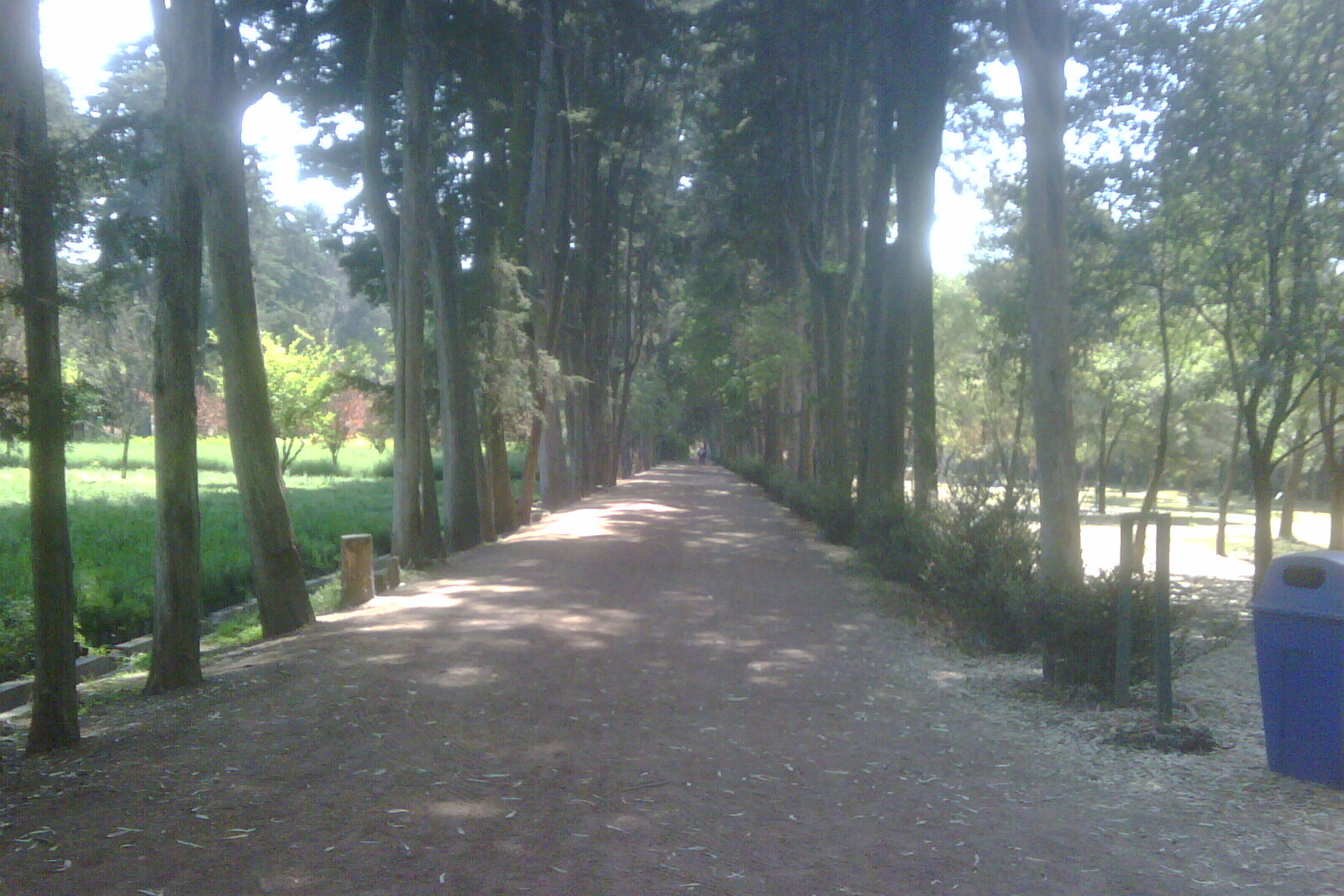
Look around first
What to notice
- Tall rows of trees
- Sowing areas
- Growing areas
- Composting areas
The story of the place
Viveros means “nurseries” in Spanish; walking and running paths run beside working beds. The tall rows of trees along the paths were planted to lessen the wind for young plants. Beyond the paths, sowing, seedling cultivation, and compost preparation continue. Schools, institutions, and city greening programs receive planting material from here.
During the Mexican Revolution, Victoriano Huerta, who took the presidency after a military coup, demanded the best trees from here. He wanted to transplant them to his ranch in Azcapotzalco. The nursery’s founder, Miguel Ángel de Quevedo, refused to give them up. After threats, he had to leave for Europe. He was not leaving behind a state-owned garden: Quevedo paid for the land and the first plantings himself.
He earned his living as a civil engineer. Quevedo designed hydraulic works, factories, and residential buildings, and invested part of his earnings in trees. He saw how deforestation led to erosion and flooding, and wanted to establish the continuous cultivation of seedlings. In nineteen oh one, on a hectare he owned at Rancho Panzacola, he established a private forest nursery.
One hectare was too little for his plan. In nineteen oh seven, Quevedo secured a visit from Finance Minister José Yves Limantour, on whom state funding depended. Thousands of trees were already growing in the nursery. Limantour persuaded President Porfirio Díaz to come to Coyoacán as well, and after that the government supported an expansion of the plantings. Thus, the private experimental plot became Mexico’s first state forest nursery and the hub of an entire network that, by the beginning of the Revolution, produced about two million four hundred thousand trees a year.
That is why Huerta’s demand meant more to Quevedo than the loss of a few valuable specimens. Trees grown for streets, deforested slopes, and dried-up lakebed land were to be turned into decorations for one private ranch. Quevedo resisted, lost the ability to continue his work, and spent several years in exile. During the years of fighting, the forest stations were left without their former leadership, and many plantings were abandoned.
After the fall of Huerta’s regime, Quevedo returned. In nineteen twenty-three, he and his family legally transferred their plot to the federal government free of charge. Neighboring lands were gradually bought from other owners; by nineteen thirty-four, an area of about thirty-nine hectares had been assembled here. Later, the nursery was opened for walks, and in nineteen thirty-eight it was incorporated into Historic Coyoacán National Park.
The name “Viveros” literally means “nurseries.” The tall rows of trees along the avenues originally served as windbreaks: they sheltered young plants in the beds. Beyond the walking and running paths, there are still sowing areas, growing areas, and composting areas. Seedlings from here are supplied to schools, institutions, and urban projects to green the Mexico City metropolitan area. The best trees were once almost taken away to one private ranch; young trees still leave here for all parts of the city.
Useful on site
Check the official status of the park on the day of your walk
Checked: date not specified. Check the official source before visiting.Stay on the permitted paths and do not enter the nursery’s work areas. If access inside is restricted, you can listen to the story by the entrance without obstructing the way.