 Guide On Map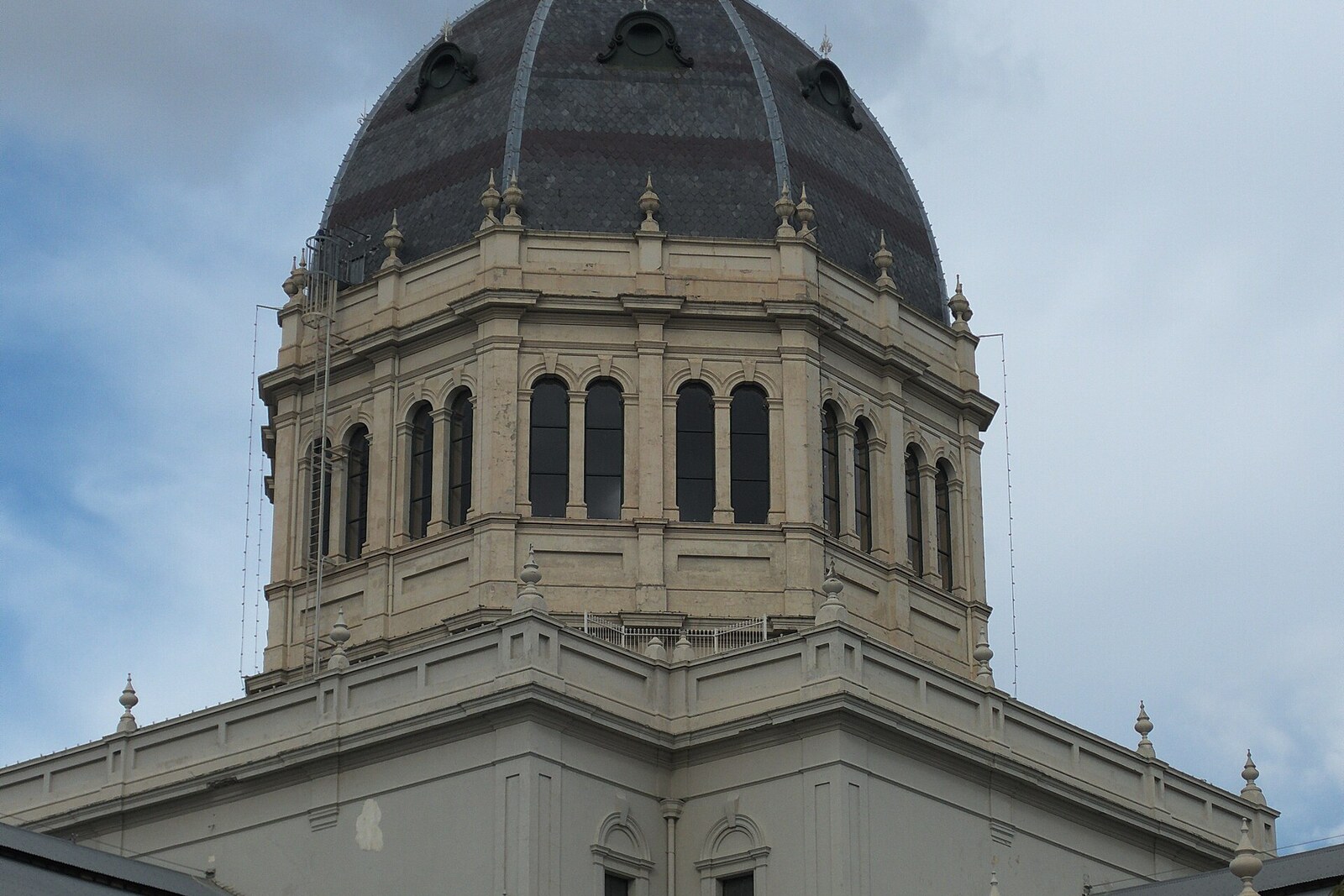
Look around first
What to notice
- The dome
- The Great Hall
- Restored paintings
- A depiction of Britannia and the six states
The story of the place
Beneath the dome of this exhibition hall once stood machines, works of art, and goods from thirty-three countries. It was built for an international exhibition and made so spacious that nowhere else in the city could gather so many people. The western annex was later demolished, but the central hall was preserved. The paintings overhead now repeat the old ceremonial decoration, and the space is once again given over to exhibitions and major events.
On May ninth, nineteen oh one, Edmund Barton entered this hall ahead of the first members of Parliament from a united Australia. Appointed the country’s first prime minister, Barton had spent ten years working toward a union of six British colonies. The union had already taken effect by law on January first, but Barton still had to win the first nationwide election and gain the right from voters to lead the government. At the end of March, his supporters won more seats than their opponents. Seventy-five elected members of the House of Representatives and thirty-six senators had received their mandates, but had not yet assembled together even once.
Their opening required a hall for twelve thousand guests. Nowhere else in Melbourne could hold that many people. The Royal Exhibition Building was erected for the international exhibition of eighteen eighty: beneath its dome stood machines, works of art, and goods from thirty-three countries. The architect John Ross Anderson now redesigned its decoration for a state ceremony. In less than four months, his artists covered the walls with brown, red, and green paintings, and beneath the dome depicted Britannia welcoming the six Australian states.
The senators took their seats before the platform, while the members of the House of Representatives waited in the western nave. At exactly noon, they were summoned into the central hall. George, Duke of Cornwall and York, the son of King Edward VII, arrived as his father’s representative: he had been entrusted with formally opening the Parliament of the new Commonwealth. He read the royal letter and declared Parliament in operation. Lord Hopetoun, Australia’s first governor-general, immediately administered the oath to all senators and members of the House of Representatives.
Federal work in the building ended there. That same day, the elected representatives moved to the Parliament of Victoria on Spring Street to choose the speakers of the two chambers; regular sittings began there the following morning. Federal members occupied the Parliament of Victoria for the next twenty-six years. Victoria’s own members had to vacate their chambers and meet here, in the western annex of the Royal Exhibition Building, until the federal Parliament moved to Canberra.
The western annex was later demolished. The Great Hall, where Barton assembled the first federal parliamentarians, survived, and the present interior paintings reproduce the decoration of their ceremony.
The word “Royal” appeared in the name much later. On the building’s centenary, October first, nineteen eighty, Queen Elizabeth II granted it royal status. She was represented here by her cousin, Princess Alexandra, who announced the new name. Today, organizers of exhibitions and major events once again occupy that same hall beneath the restored paintings of nineteen oh one.
Useful on site
Accessible outside according to the gardens' opening hours; interior access is usually through events, exhibitions, and Dome Promenade tours.
Checked: date not specified. Check the official source before visiting.The facade and the building’s connection with the gardens can be seen without a ticket. The interior hall opens for selected tours and events, which should be checked in advance.