 Guide On Map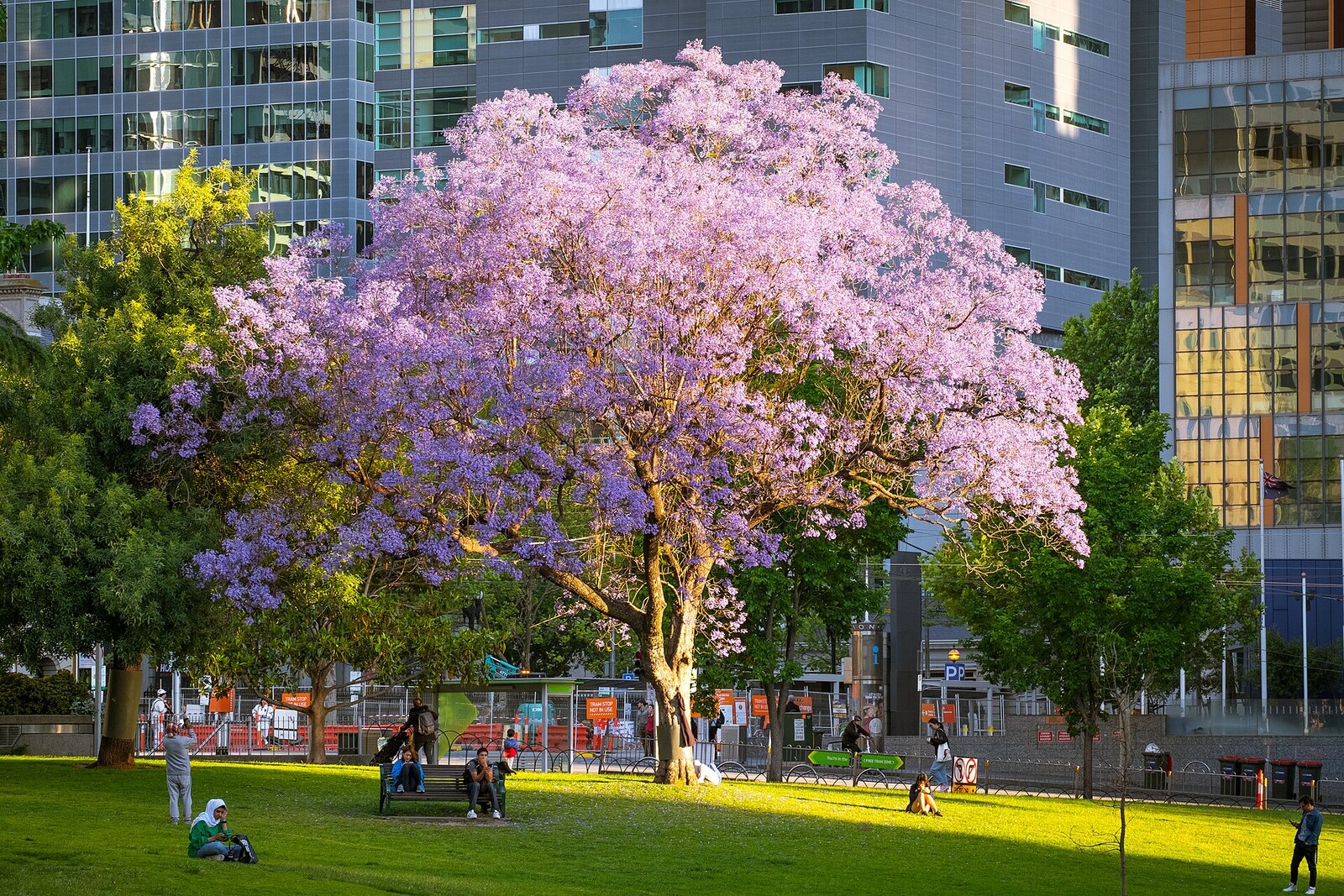
Look around first
What to notice
- The slope of the hill
- Lawns
- Tree canopies
The story of the place
At lunchtime, employees from neighboring offices settle beneath the tree canopies on this slope. Previously, the rise served as the city's signal station: a tall mast and an octagonal hut stood at the summit, while residents gathered at its foot. Earlier still, Melbourne's first European settlers were buried here. Nothing of the station has survived except the name of the gardens, which remembers the flagpole.
Every morning Charles La Trobe, the chief administrator of the Port Phillip District, rode up here with his secretary—to the hill where Flagstaff Gardens now lie. He wanted to read the latest list of vessels that had entered the bay. In the eighteen forties, this was the quickest way to find out who and what had arrived in Melbourne.
Ocean-going ships remained at Williamstown, in Hobsons Bay. There was no instant connection between the port and the city. Merchants waited for cargo voyages, while families waited for migrants and letters from Great Britain. News traveled by sea for several months and, after a ship arrived, could still take a long time to reach the city streets.
Officials decided to relay information by flags. They looked for a height for the city station from which the responding post at Gellibrand Point could be seen. Batman's Hill proved too low, and trees blocked the direction toward the bay. The site near the future courts was unsuitable as well. This hill was chosen. At the time, it was called Burial Hill: the first cemetery of the European settlement stood here.
In September eighteen forty, workers erected a mast at the summit, made in the manner of a ship's mast. The first attempt failed: the mast was too short, and signals from Williamstown were hard to read. The following year, it was replaced with a taller one, and the station was equipped with a powerful telescope.
The signalman at the port identified an approaching vessel and raised agreed signs. His colleague on this hill repeated them for the city. The position of a ball on the yard indicated whether a ship, barque, schooner, or steamer was coming in; combinations of colored flags gave the country or port of departure. A checkered flag signified a vessel carrying migrants. Lists of arrivals and departures were posted beside the octagonal hut.
City residents knew about twenty signals. When news came of a ship from England, they gathered on the slope and waited for letters—good or bad, as one of the early residents recalled. La Trobe's morning rides here were not an official whim: the city's everyday connection with the rest of the world depended on this sheet.
In eighteen fifty-four, an electric telegraph was strung between Williamstown and Melbourne. By eighteen fifty-seven, flags had stopped relaying ship news. The station buildings were briefly handed over to the observatory, then the equipment was taken away and the hill stood empty. Residents of West Melbourne petitioned to turn the abandoned slope into a place for recreation. In eighteen sixty-two, public gardens opened here.
Nothing remains of the mast, hut, or board with ship lists. High-rise buildings have blocked the former line of sight toward the bay. The name has survived: “Flagstaff” means flagpole. On the lawns where employees of nearby offices now eat lunch, a sheet bearing the names of ships that had just arrived was once spread out.
Useful on site
Open public park; check local restrictions for events and works.
Checked: date not specified. Check the official source before visiting.It is best to listen to the story closer to the summit, away from busy roads and without blocking walkways.