 Guide On Map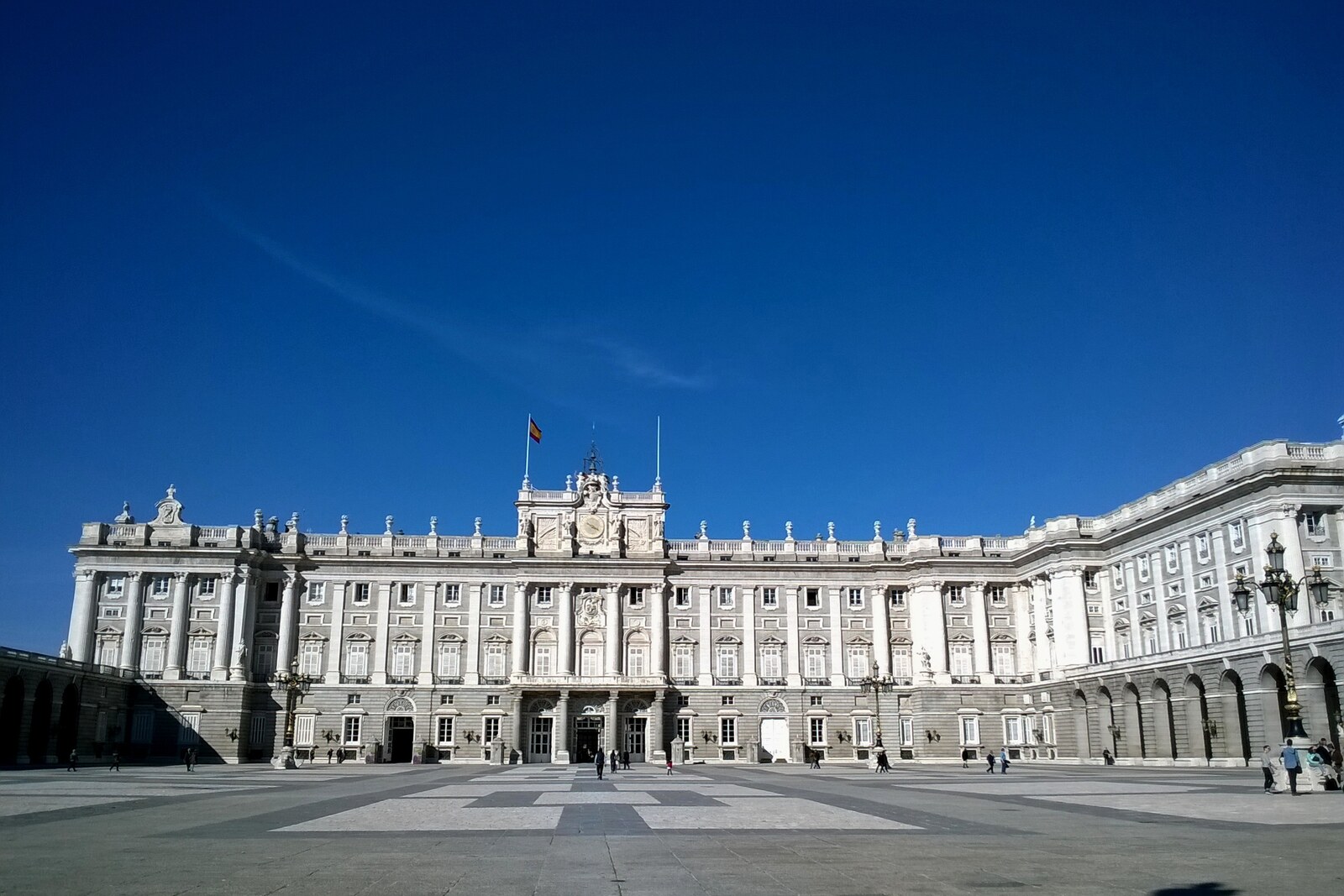
Look around first
What to notice
- The central balcony on the palace's south façade
- Plaza de la Armería
- Royal Armoury
- The palace gates
The story of the place
The square's name preserves the memory of the armoury that once stood opposite the former palace and enclosed the courtyard on the south. Philip II moved the royal armor and weapons here, above all his father's collection, and a separate building was set aside for them. It was destroyed by fire, and the Royal Armoury now occupies the west side of the square. Ceremonial changes of the guard pass through the courtyard before the south façade, while the palace hosts state ceremonies and operates as a museum.
On March twenty-fourth, seventeen sixty-six, Charles III stepped onto the central balcony of the south façade of the Royal Palace of Madrid. He had lived here for less than two years and was the first king to settle in the new building. Thousands of Madrid residents were waiting for him below.
Among them were servants, craftsmen, stonemasons, day laborers, and small traders. A day laborer was paid only for a day worked; the rising cost of bread could consume a day's earnings before evening. After poor harvests and speculation, the prices of bread and oil rose, and city residents blamed the royal minister of finance and war, Leopoldo de Gregorio, Marquis of Esquilache. A Sicilian who had arrived with the king from Naples, he wanted to make Madrid safer and ordered long cloaks and broad-brimmed hats banned: a person could hide their face and weapons beneath them.
The order was enforced literally. City bailiffs went around with tailors, dragged offenders into doorways, cut their cloaks short, and turned up the brims of their hats. Behind the clothing lay a more urgent bill: how much bread now cost. When bailiffs stopped a man in a long cloak on the street the day before, a fight broke out. The crowd ransacked Esquilache's house, did not find the minister, and in the morning moved here, toward the king.
The approaches to the palace were guarded by the Walloon Guards, a palace regiment that Madrid residents considered foreign. Stones flew at the soldiers. One of the detachments opened fire and killed three women and two men. The crowd did not disperse: people charged the bayonets, and the Walloons had to retreat inside the palace.
Alejandro O'Reilly, who commanded the defense, offered Charles III a choice: the soldiers could clear the square, but much blood would be shed. The king refused. He ordered an announcement that the prices of bread and oil would be lowered, but those gathered tore down the posted sheets. Then two dukes were sent to them with promises, but they too were not accepted. The people demanded that the king himself confirm Esquilache's dismissal, the repeal of the ban on cloaks and hats, the dissolution of the office in charge of food supplies, and the withdrawal of the Walloon Guards from Madrid.
At about five o'clock, Charles appeared on the balcony. Franciscan monks carrying a crucifix walked before the crowd. One of them won silence by ringing a small bell and read out the terms. Esquilache was stripped of his office, prices were lowered, the old clothing was permitted, and the Walloons were promised to be removed. The king confirmed every concession with gestures. Hats flew into the air, and people began to leave.
That same night, Charles III secretly took his family to Aranjuez. When they learned of his flight, Madrid residents seized weapons and blocked the road, demanding the king's return; he did not return to the palace until the end of the year. Esquilache, together with his wife and son, was sent through Cartagena to Naples. He kept his life and title, but never again headed Spanish ministries. The five people killed at the palace did not live to see the king accept from the balcony the demands for which they had come here.
The square's name is older than this scene. “Armería” means armoury. Philip II moved the royal armor and weapons to Madrid, above all the collection of his father, Charles V, and placed them in a separate building opposite the former palace. It enclosed this courtyard on the south, so the space came to be called Plaza de la Armería. The old building burned down in eighteen eighty-four; the present Royal Armoury stands on the west side of the square.
Today, the king does not live here: the palace hosts state ceremonies, and its rooms are opened as a museum. The square hosts a ceremonial changing of the guard. The incoming and outgoing Royal Guard occupy the very courtyard before the central balcony into which the Walloon Guards retreated after firing on the crowd.
Useful on site
The square outside is accessible without a ticket; checked 2026-06-30. The palace interior requires tickets, follows a seasonal schedule, and may close for official events.
Checked: June 30, 2026. Check the official source before visiting.For the end of the route, the square and the exterior façade are enough. Plan visits to the palace and the Royal Armoury separately, and check access in advance; damaged armor from the square cannot be seen.