 Guide On Map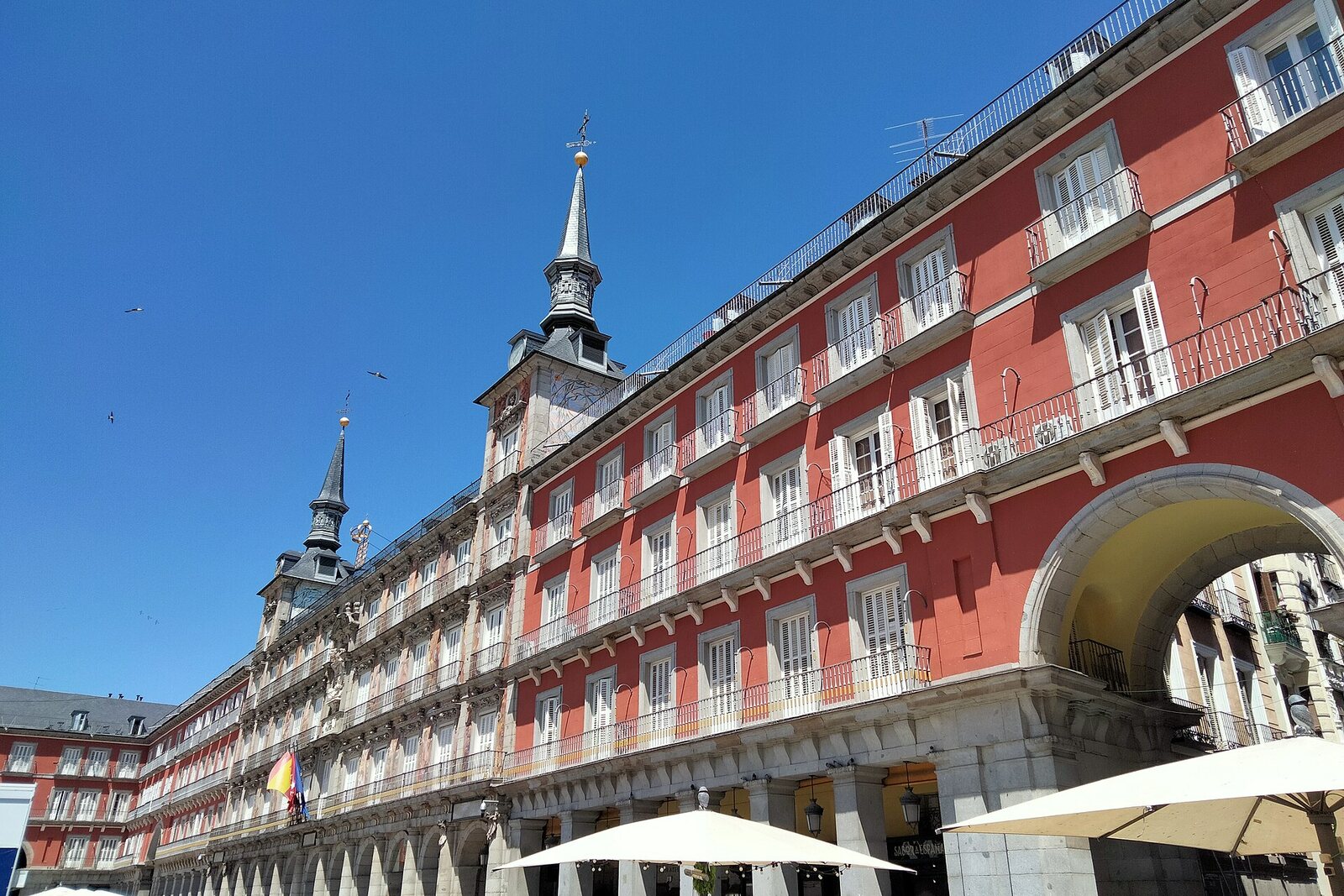
Look around first
What to notice
- Casa de la Panadería
- The central balcony of Casa de la Panadería
- Continuous rows of balconies around the perimeter
The story of the place
The word “Mayor” in this square’s name means “main.” At first, it was called Plaza del Arrabal—the square of the suburb. Roads met here beyond the medieval city wall, and merchants set up a market. When Madrid became the capital, the kings ordered this market turned into a place for events the entire city was meant to see. Under Philip III, the architect Juan Gómez de Mora enclosed the square with continuous façades lined with rows of windows and balconies.
On June thirtieth, sixteen eighty, the chief inquisitor Diego Sarmiento de Valladares held a great auto-da-fé here. This was the public proclamation of the Spanish Inquisition’s sentences and the penitence of those convicted; execution, contrary to a widespread belief, was a separate act. King Charles II occupied the central balcony of the building with two towers—Casa de la Panadería. At the start of the ceremony, he swore to defend the Catholic faith and persecute heretics and apostates.
For the defendants, priests, and judges, the carpenter and royal architect José del Olmo built a tiered wooden platform. The square was turned into a hall without a roof: balconies served as boxes, windows as viewing places, and those sentenced stood in the center.
Among them stood Clara Méndez, a forty-year-old widow and silk merchant from Pastrana. After her husband’s death, she supported herself with income from her trade. The Spanish Inquisition accused her of secretly observing Jewish rites. To be reconciled with the Church and avoid being among those handed over for execution, she had to admit the charge and recant. Clara stepped onto the platform in a sanbenito—the penitential garment of a convicted person—admitted her guilt, and publicly recanted.
Her life was spared, but the merchant was stripped of everything on which her independence rested. The court ordered her property confiscated and sentenced her to life imprisonment and to wear the sanbenito for life. Other convicts, after their death sentences were read, were led from the square beyond the city to the burning place by Fuencarral Gate.
José del Olmo’s wooden stands were dismantled. Nothing of them remains here. What has survived is the place of the royal box—the central balcony of Casa de la Panadería, from which Charles II watched Clara Méndez lose her trade, property, and freedom.
Useful on site
Open square; checked 2026-06-30. The square itself requires no ticket; the tourist center in Casa de la Panadería follows a separate schedule.
Checked: June 30, 2026. Check the official source before visiting.First look at the square from beneath the arcade, then walk along one side: this makes the difference between the enclosed stage and its exits more noticeable. Viewing requires no entry into the buildings.