 Guide On Map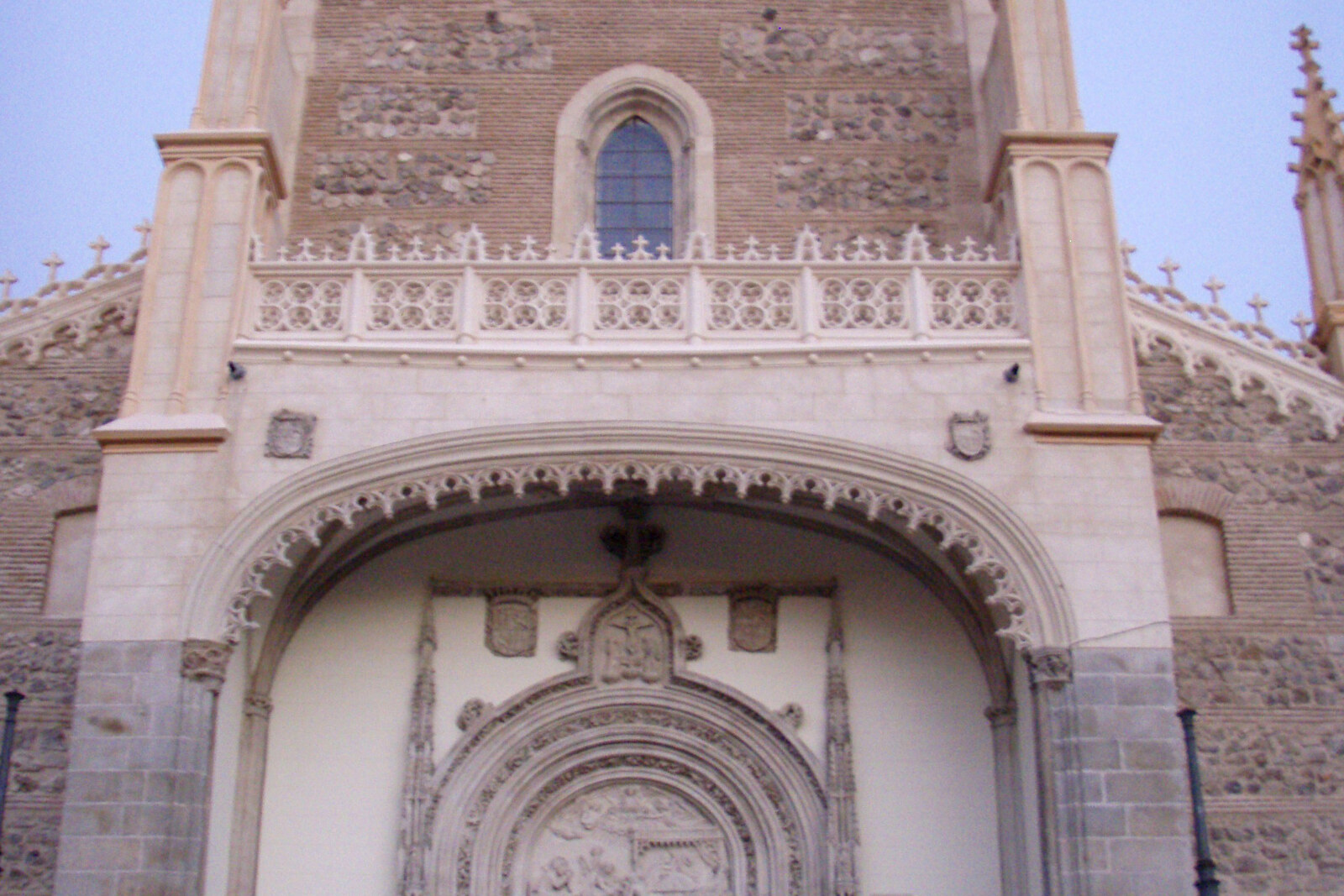
Look around first
What to notice
- Two towers
- Ceremonial staircase
- The church’s single-nave volume
The story of the place
Two towers and a broad staircase conceal behind the facade one long hall of the old monastic church. The monastery belonged to the Hieronymites and stood immediately beside the Royal Apartments, so it was nicknamed Royal. The monastic buildings have almost entirely disappeared, while the church remained a parish church; in its single nave, you can still make out the space where several estates could stand according to rank.
On June twentieth, eighteen thirty-three, Isabella was not yet three years old. She did not take the oath in this church. The king convened the old estate-based Cortes—bishops, nobles, and deputies from the cities—and one after another they knelt before an open missal and a crucifix. Each swore to recognize the girl as the lawful heir. Isabella herself sat in a separate chair beside her parents.
Her father, King Ferdinand VII, sought to ensure that the crown passed to his eldest daughter: he had no sons. He promulgated a law allowing a daughter to inherit in the absence of a son. Before Isabella’s birth, the next claimant had been the king’s brother, Carlos María Isidro. Carlos wanted to preserve his claim to the throne, refused to recognize his niece as heir, and did not come to the ceremony.
San Jerónimo el Real Church was chosen for the oath because heirs to the crown had been recognized here since fifteen twenty-eight. The Royal Apartments adjoined the church, and its broad single nave made it possible to arrange the estates by rank. Saint Jerome was a learned monk of Late Antiquity and the patron saint of the Hieronymites, who owned the monastery. Its founder, King Enrique IV, had already given the monastery the addition “El Real,” meaning “Royal.”
Among those swearing allegiance to Isabella was Infante Sebastián Gabriel—a member of the royal house and one of the distant claimants to the throne. He was twenty-one years old. He governed the Great Priory of the Order of St John and received income from its estates. His mother, María Teresa, supported Carlos and demanded that her son not take the oath: then both Carlos’s claim and Sebastián’s remote possibility of inheriting the crown would be preserved. She believed that her son obeyed Ferdinand out of fear of losing his estates, and wrote that she would rather see him dead than sworn to Isabella.
Sebastián nevertheless came to San Jerónimo and knelt. He was beholden to Ferdinand for his patronage and wanted to remain at the Madrid court. The king allowed him to stay; his mother declared that she no longer wished to know her son.
Three months later, Ferdinand died. Isabella was proclaimed queen, Carlos proclaimed himself king, and the dispute became the First Carlist War. At first Sebastián honored the oath he had taken here, then went over to Carlos. For refusing to return on the regent’s orders, he was stripped of his title as infante and his property was confiscated. He commanded a Carlist army and, after its defeat, lived abroad.
Twenty-six years later, Sebastián again laid his hand on the Gospel—in Naples—and once more recognized Isabella as the lawful queen. She allowed him to return and ordered his estates, collections, and court honors to be restored. It was impossible to restore the profitable priory: by then its lands had been sold, and Sebastián received monetary compensation.
The present facade, two towers, and ceremonial staircase appeared after that oath. Behind them, the church’s single-nave structure has been preserved, where representatives of the kingdom swore allegiance to a two-year-old heir. Most of the monastery was demolished, the church became a parish church, and Isabella’s ceremony was the last oath to an heir held here under the old rite.
Useful on site
Winter schedule (1 September–30 June): church daily 09:30–13:00 and 17:00–19:45. Summer schedule (1 July–31 August): 09:00–13:00 and 17:30–20:45. Visits are limited during masses, services, and parish events.
Checked: June 27, 2026. Check the official source before visiting.This is an active church: do not disturb services and ceremonies. If the doors are closed, the staircase and exterior provide enough material for this stop.