 Guide On Map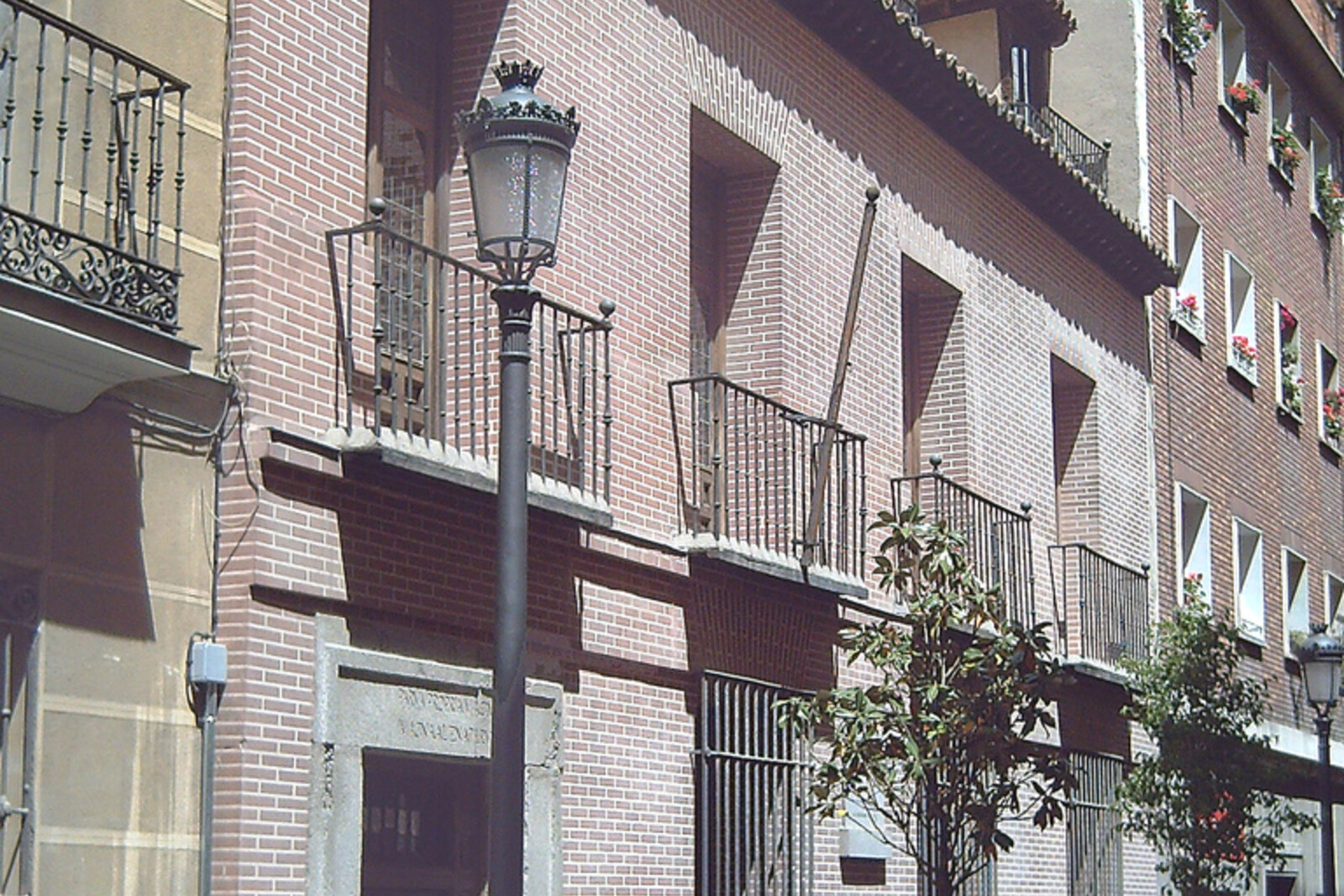
Look around first
What to notice
- The inscription on the façade
- The entrance to the house museum
The story of the place
Calle de Cervantes was still called Francos when a town house with a study, chapel, inner courtyard, and garden was bought here. People lived and worked in it, and the museum now begins beneath the commemorative inscription at the entrance. The location of one of the museum rooms is not historically confirmed, and its furnishings appeared here later.
The inscription on the façade states it plainly: Lope de Vega lived and died in this house. A native of Madrid, he wrote plays for the city's theaters and served for more than twenty years as secretary to the Duke of Sessa. Fame did not provide him with a steady income: in his letters, the celebrated playwright asked his patron to send money, clothes, and even oil for a lamp.
In sixteen ten, Lope paid nine thousand reales for this house on what was then called Francos, now Calle de Cervantes: five thousand at once, the remaining four within eight months. It had a study, a chapel, a courtyard, and a garden. Lope spent the last twenty-five years of his life in the house, wrote dozens of works here, and outlived almost his entire family.
By the summer of sixteen thirty-four, seventeen-year-old Antonia Clara was the one still beside him. Her mother was Lope's last lover, Marta de Nevares, who had died in this house two years earlier after blindness and severe mental illness. Lope was already a priest when Antonia was born, and Marta was married to another man, so the girl was registered as the daughter of her mother's lawful husband. In her father's house, she helped copy manuscripts and became his last constant companion.
One morning, Lope did not find Antonia in her room. Her belongings lay on the floor; clothes and jewelry had disappeared along with the girl. She had left with Cristóbal Tenorio, a knight of the Order of Santiago who served at the royal court and enjoyed the patronage of the Count-Duke of Olivares. The museum calls what happened an abduction; biographers also write of flight and seduction. It is impossible to determine Antonia's consent with certainty. Lope's poems suggest that she hoped to become Tenorio's wife.
He was under no obligation to marry her. Tenorio left Antonia and married another woman. For a seventeen-year-old girl who was legally considered the daughter of another man, that outcome meant losing both her home and the status she had been promised. Lope responded not with a pursuit or a lawsuit, but with poems: he turned his daughter into Filis and described the morning when tears kept him from seeing the emptied room. A year later, he died here as well.
Antonia outlived her father by almost three decades. Later documents show that she was again in contact with her sister Feliciana and owned some of the belongings from her father's house. After Antonia's death in sixteen sixty-four, an inventory of her property remained.
When the Royal Spanish Academy restored the house and opened the museum in nineteen thirty-five, it used this inventory together with an inventory of Lope's own property. The location of the present daughters' room is not historically confirmed, and its furnishings were assembled later. But the document of that very Antonia, after whose departure Lope saw belongings scattered across the floor, helped arrange it.
Useful on site
Open urban space; choose a viewing point that does not obstruct pedestrian flow.
Checked: date not specified. Check the official source before visiting.You can listen to the entire story from outside; if you want to see the reconstructed rooms, check the museum's visiting arrangements in advance.