 Guide On Map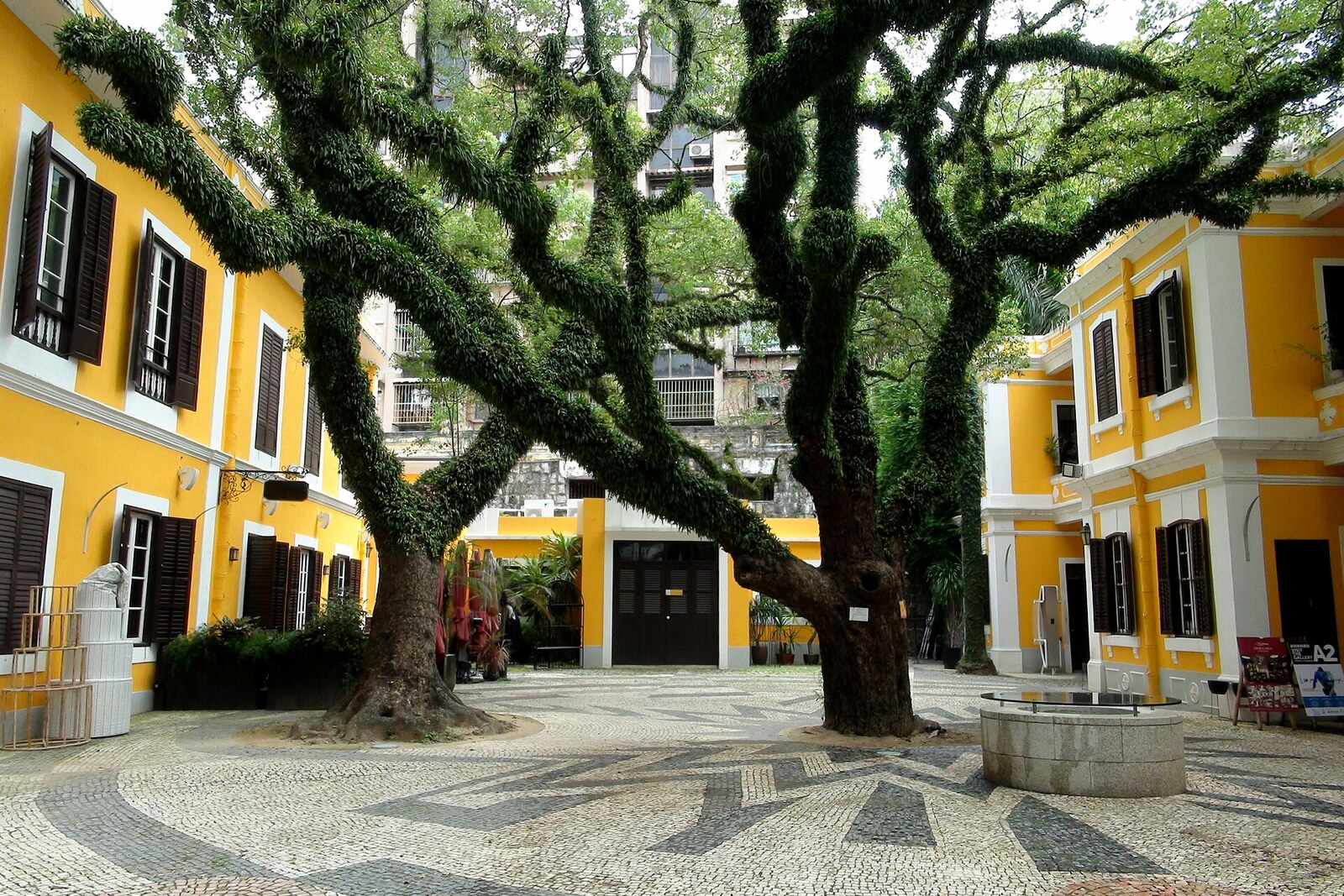
Look around first
What to notice
- Yellow facades
- Inner courtyard
- Old residential building
- Separate small house at the back
The story of the place
The historic Catholic confraternity of the Macao Holy House of Mercy ran a shelter here for homeless women and paupers. The yellow buildings with an inner courtyard retain its layout: women residents were housed in the old residential building, while the neighboring kitchen prepared food for them and other institutions of the confraternity. During the Second World War, the rooms were given to Portuguese women refugees from Shanghai.
In two thousand, the last residents were moved out of here. The elderly women were transferred to the renovated Our Lady of Mercy Home for the Elderly, and these buildings were closed: it had become unsafe to live in them.
The name “Albergue SCM” means “Shelter of the Macao Holy House of Mercy.” This is the name of the historic Catholic confraternity that owns the complex. It housed homeless women and paupers here. During the Second World War, the confraternity accommodated Portuguese women refugees from Shanghai in these rooms. Later, the shelter became a women's home for the elderly. More than one hundred elderly women lived here at the same time, and the neighbors gave the building a name that proved more enduring than the official one: the “Old Ladies' House.”
The vacant premises did not remain closed for long. In two thousand one, the local theater group Comuna de Pedra decided to establish an arts center here. The first exhibition was dedicated to the former residents. The artists found the women, collected their stories, photographs, and documents left in the rooms. For the opening, the former residents returned and cut the ribbon themselves. In a house where decisions had once been made for them about who would live in which room, they now opened a public history of their own lives.
The experiment lasted less than two years. The ceilings and walls required major reinforcement, and in January two thousand three, the owners told the artists to vacate the buildings. The group collected letters of support and secured different premises—a former municipal cowshed. There, it continued its work under the name Ox Warehouse.
Carlos Marreiros, a Macao architect and member of the Macao Holy House of Mercy, took on the dangerous buildings. He was responsible for reinforcing the buildings and preserving their former appearance. Together with engineers, Marreiros stabilized the structures, retained the courtyard layout, and restored the facades' traditional yellow color. The complex's future had not yet been decided then: even a hotel was discussed.
Around two thousand seven, Marreiros proposed giving the former shelter to artists again, but only after a full renovation and with permanent management. He received the confraternity's consent, created a management company with two of its members, and in January two thousand nine, the cultural center officially opened here.
The layout shows exactly what was preserved. To the right of the entrance is the oldest residential building—now home to a gallery, a shop, and designers' studios. To the left stood the kitchen, which prepared food for the residents and other institutions of the confraternity; a restaurant now operates there. A separate small house at the back of the courtyard is occupied by exhibitions, lectures, and classes. The shelter's name remains on the sign, and the rooms of the “Old Ladies' House” are still used collectively—only now artists come there to work.
Useful on site
The courtyard and residents follow different schedules; check current exhibitions, workshops, and the restaurant before visiting.
Checked: date not specified. Check the official source before visiting.This is an intimate cultural space, not a tourist attraction for passersby: keep quiet and do not take over the courtyard for staged photography. Whether you can enter the buildings depends on the program.