 Guide On Map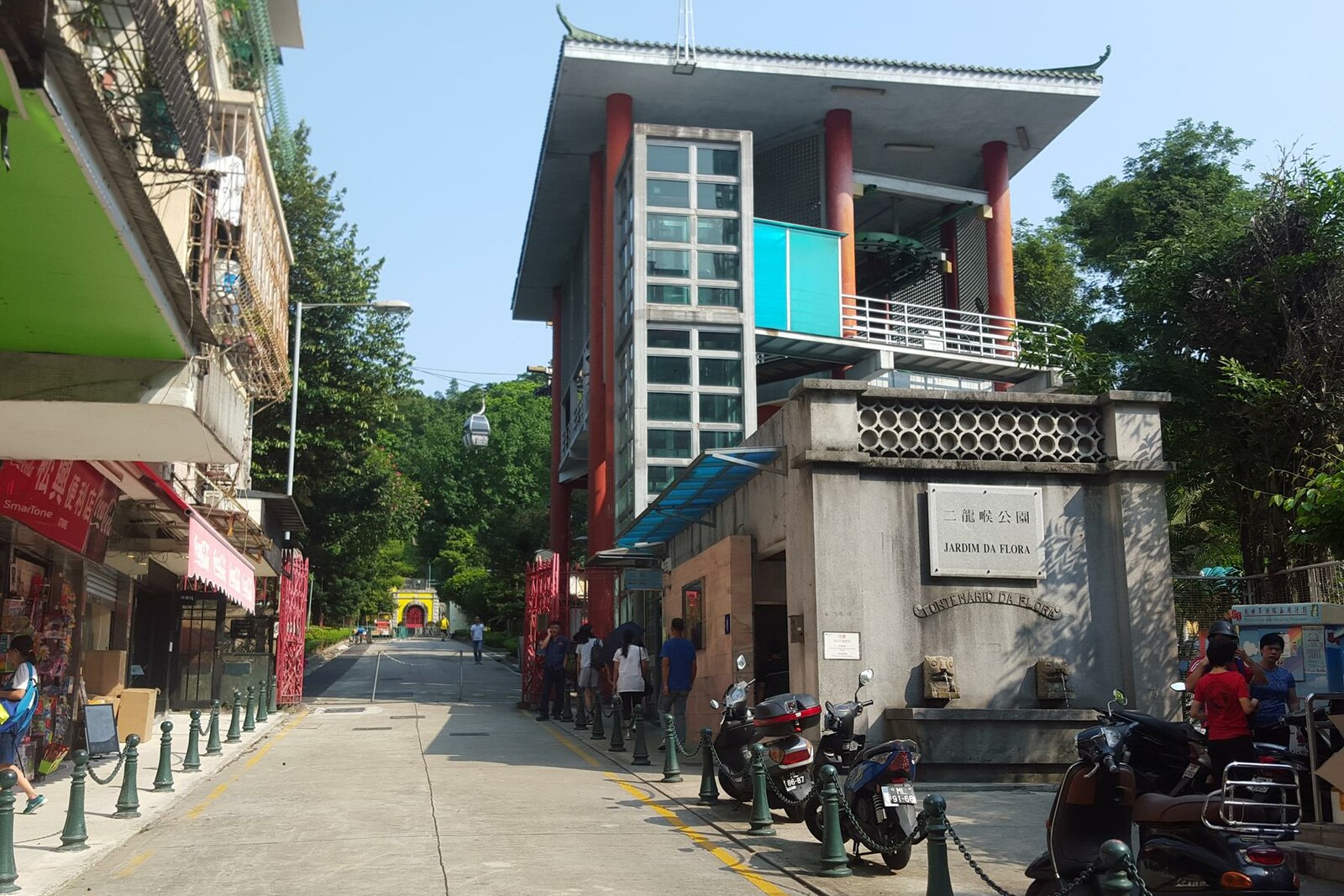
Look around first
What to notice
- Stone guardhouse
- Straight avenue
- Area with aviaries
- Stairs on the slope of Guia
The story of the place
At the foot of Guia lies a municipal garden: a level path runs from the stone guardhouse to the birds in the aviaries, and beyond them stairs lead into the trees on the slope. In the middle of the last century, it was expanded with neighboring land and opened for walks, children’s play, and visits to the aviaries. Before the present park, a nursery operated by the garden wall: saplings grown near water were intended for the local hills, whose soil heavy rains had washed into deep furrows. Gardeners prepared seedbeds, grafted young trees, and directed water, and some of the plantings were then carried up Guia.
At five thirty-five on August thirteenth, nineteen thirty-one, a military gunpowder store exploded here. Flora Palace then stood on the site of the present-day area deep in the garden. The governors of Macao had already left their former summer residence, and in nineteen twenty-four officials placed a kindergarten in the palace. The military continued to store munitions behind the palace garden.
The cause of the explosion was then linked to overheated gunpowder and insufficient cooling of the storehouse. The blast wave demolished the former palace, destroyed six houses, and damaged dozens more buildings. Twenty-one people died. Twenty-four injured people suffered severe wounds, and around fifty sought help for less serious injuries.
Firefighters and soldiers arrived to put out the fire, knowing that one section of the store remained intact and was still filled with munitions. They stopped the fire before a second explosion occurred. No attempt was made to restore the kindergarten, the palace, or the former garden.
Robert Ho Tung, a Hong Kong businessman and philanthropist who owned the neighboring plot on the slope, helped with the expansion of the new public area. He transferred this land to the administration so that it could be incorporated into the park. Hence another local name—Flora Garden. In nineteen fifty-nine, the park opened in its present capacity, with walking paths, playgrounds, and aviaries. The Portuguese name “Flora” remained from the destroyed palace. The Chinese name Flora Garden, “two dragons’ throats,” is associated with the mountain springs by the entrance.
The slope had been needed for the park before. As early as eighteen eighty-three, Governor Tomás de Sousa Rosa decided to plant trees on Macao’s bare hills. Rain had cut deep gullies into their pale soil, and the official established a nursery near the wall of Flora Garden. The site was chosen at the foot of Guia, near water and directly below the slope that was to be greened.
Rosa came here with engineers and gardeners and took up a spade himself: he showed them how to prepare seedbeds, graft saplings, and distribute water. Over four years, around sixty thousand trees were planted in Macao under the program he began—roughly one for every resident of the city at that time. Some of the saplings from the Flora nursery were carried up Guia and other city hills.
The stone building by the entrance once served as the palace guardhouse. The straight avenue leads to where the palace and kindergarten stood; a park area with aviaries is now laid out there. Farther on, steps climb the tree-covered slope of Guia—to the place where saplings from the nursery below were once carried.
Useful on site
Open municipal garden; hours of individual areas and services may differ.
Checked: date not specified. Check the official source before visiting.Walk a little through the garden before the ascent: the contrast between the orderly greenery below and the city view above is important along the way. After rain, take care on wet paths.