 Guide On Map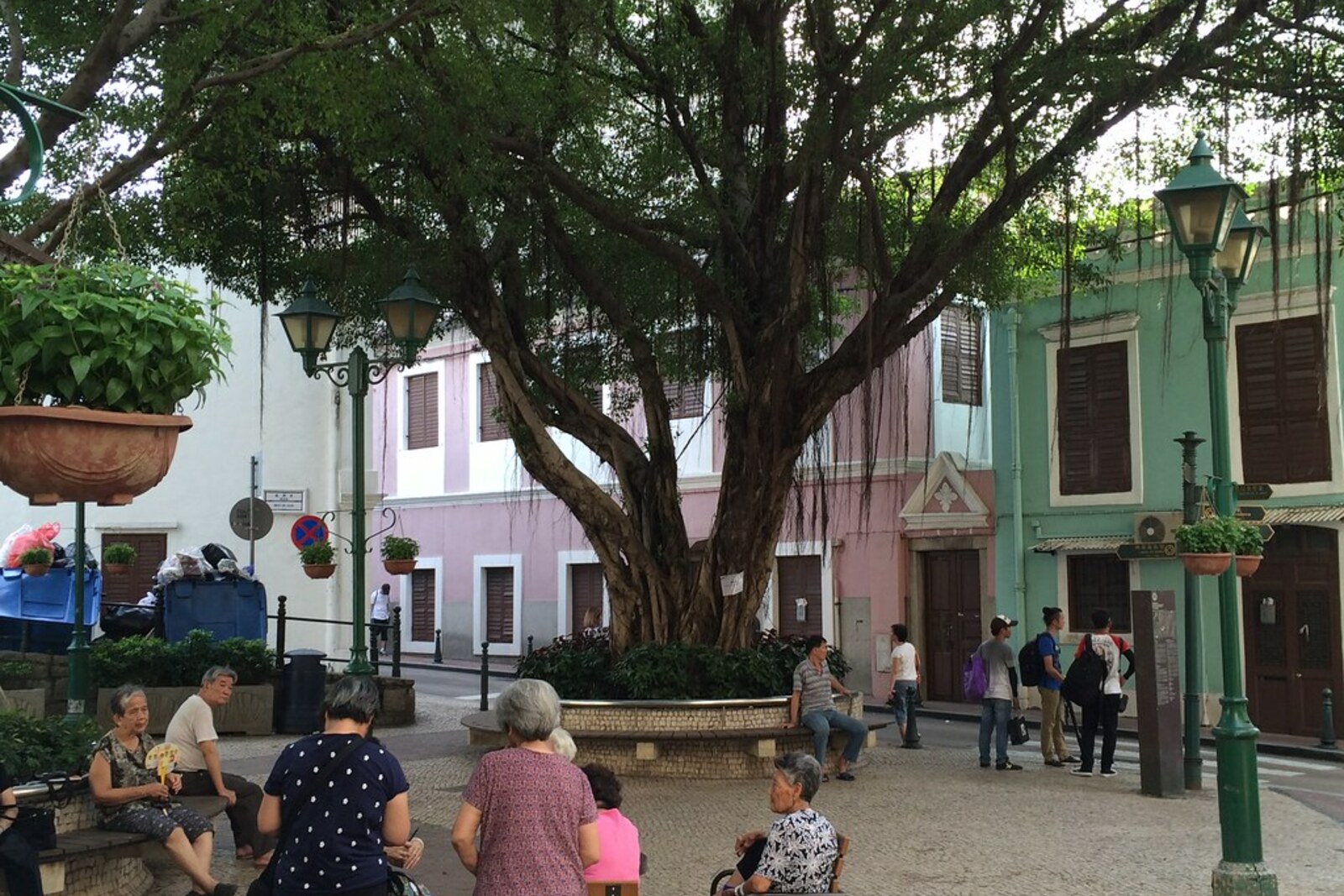
Look around first
What to notice
- Wall basin with a drain
- Sloping lane
- Residential facades around the square
The story of the place
In Macau, fresh water could not be drawn from the nearest wells: salt seeped into them. A mountain spring emerged on the northern slope of Penha Hill, and Portuguese settlers established one of their early residential quarters beside it. Water was channelled to the square through a stone water point, which was regularly inspected, cleaned, and repaired. Today, a wall basin with a drain at the end of the sloping lane and the residential facades around it recall the quarter’s former dependence on the spring.
On April twenty-first, nineteen thirty-three, at six in the morning, people had already gathered at the Lilau water point. Among them were servants from Macanese families—Macau residents of mixed Portuguese-Asian descent. They had come to draw water for their employers’ homes: this morning trip was part of their everyday work.
At the time, water came from a mountain spring channelled through a stone wall with a carved human face. Because of this figure, the spring was also called the Well of the Human Head. While people waited by the wall, its masonry suddenly collapsed. A stone crushed one servant’s right leg; he was taken to hospital, where he died. Debris killed a maid from another family on the spot. Several people were injured. The old water point was destroyed.
The queue gathered here because of the way Macau itself was laid out. There are no rivers or lakes on the peninsula, and salt water seeped into wells near the sea. A fresh-water spring emerged on the northern slope of Penha Hill. In a document from seventeen eighty-four, it was called the city’s main fountain. Portuguese settlers built one of their first residential quarters around it: proximity to water determined where they could run a household.
“Lilau” is an old local name for a mountain spring. The Chinese name of the square means “Well of the Old Woman.” According to legend, an elderly woman took pity on neighbors who had to carry water up the slope, hired people to channel the spring, and had a reservoir built. There are no documents about her; this explanation belongs to an urban legend. What is documented, though, is the quarter’s daily dependence on the spring, in records of repairs, cleaning, and water inspections.
This is also where a Macanese saying came from: whoever drinks Lilau water will not forget Macau—he will either marry here or return. After the water supply spread, people stopped coming here for water, and the spring eventually dried up. The stone wall that collapsed onto the morning queue is gone. At the end of the sloping lane, a wall basin with a drain remains, surrounded by later residential facades. The square has kept the name of the spring that once sustained this quarter.
Useful on site
Open square, accessible around the clock; it is easier to read in daylight.
Checked: June 30, 2026. Check the official source before visiting.Do not treat the historic spring as drinking water. The square is open for exterior viewing, but keep passages and house entrances clear.