 Guide On Map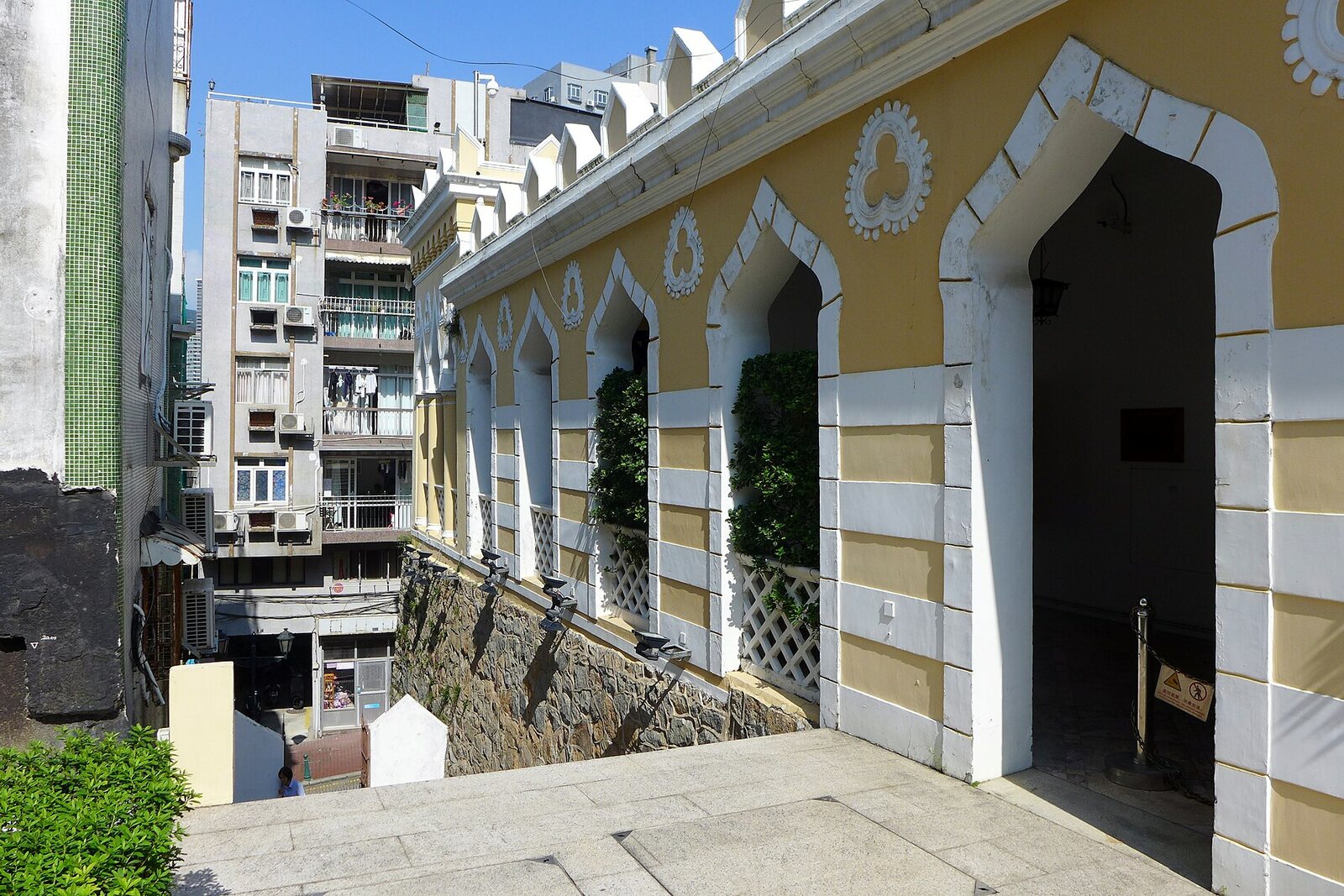
Look around first
What to notice
- Pointed arches
- Facade ornament
- Wide galleries
- A long building on the slope
The story of the place
A long building with pointed arches and a patterned facade stretches along the slope of Barra Hill. Wide galleries let in the breeze and provide shade, while shared dormitories and the rooms of the commanding staff once stood side by side inside. The premises were later given to the port service and maritime customs police. City agencies now work behind these arches, but the old name outlived all its former residents.
In November eighteen seventy-two, the Macau government sent a police recruitment notice to Goa. Governor Januário Correia de Almeida needed men for city patrols. He knew where to look: before his appointment to Macau, he had governed Portuguese India.
A candidate had to have previously served in the army of Goa or British India, have a good reference, and pass a medical examination. The contract was for three years. A police officer was promised seven patacas a month; the rate was later raised to eight, while the cost of the uniform was deducted from pay. At the end of the term, he could receive a ticket back to Goa or stay for an extra pataca. These were hired employees who crossed the South China Sea in search of earnings.
The Portuguese recorded them as “Moors.” The word had previously referred to the Muslims of North Africa, but was then extended to the inhabitants of India and Sri Lanka. That is why the name of the barracks does not mean that a regiment from Morocco was stationed here. They were Indians from Goa, mostly Muslims. The terms of employment promised food in accordance with their religious customs, shared quarters as a separate company, and even a plot for a mosque if one was needed.
The first forty-one police officers arrived in June eighteen seventy-three. The promised barracks did not yet exist, so the men were temporarily housed in a house in the St. Lazarus quarter. Construction began on a large building for them on the slope of Barra Hill, above the entrance to the Inner Harbour. In August of the following year, the company moved here. The building was intended for about two hundred people: it contained shared dormitories and officers’ rooms, while four-meter galleries provided shade and cross-ventilation.
The pointed arches and ornament recall Islamic and Indian architecture, but there is no evidence of a mosque inside. These were residential and service quarters: from here the police officers left on patrols and returned here after duty. Sources do not say how many men from the first group used the ticket home after three years, or how many accepted the extra pay. The overall outcome is known: the Indian company grew, and its administrative nickname became attached to the building.
In eighteen eighty-nine, the police company was transferred to St. Francis Barracks—the premises above the harbor were needed by the marine police. From nineteen oh five onward, the port authority and maritime customs police were housed here. The Indian residents disappeared, but their name remained. Behind the Moorish arches are now the offices of the Marine and Water Bureau.
Useful on site
The route is intended for exterior viewing. The official heritage website lists the veranda as 09:00–18:00, but another current page describes the site as not open to the public; do not plan to visit the interior.
Checked: June 30, 2026. Check the official source before visiting.Plan primarily for exterior viewing: the building is used by a government agency, and access inside cannot be considered part of the walk.