 Guide On Map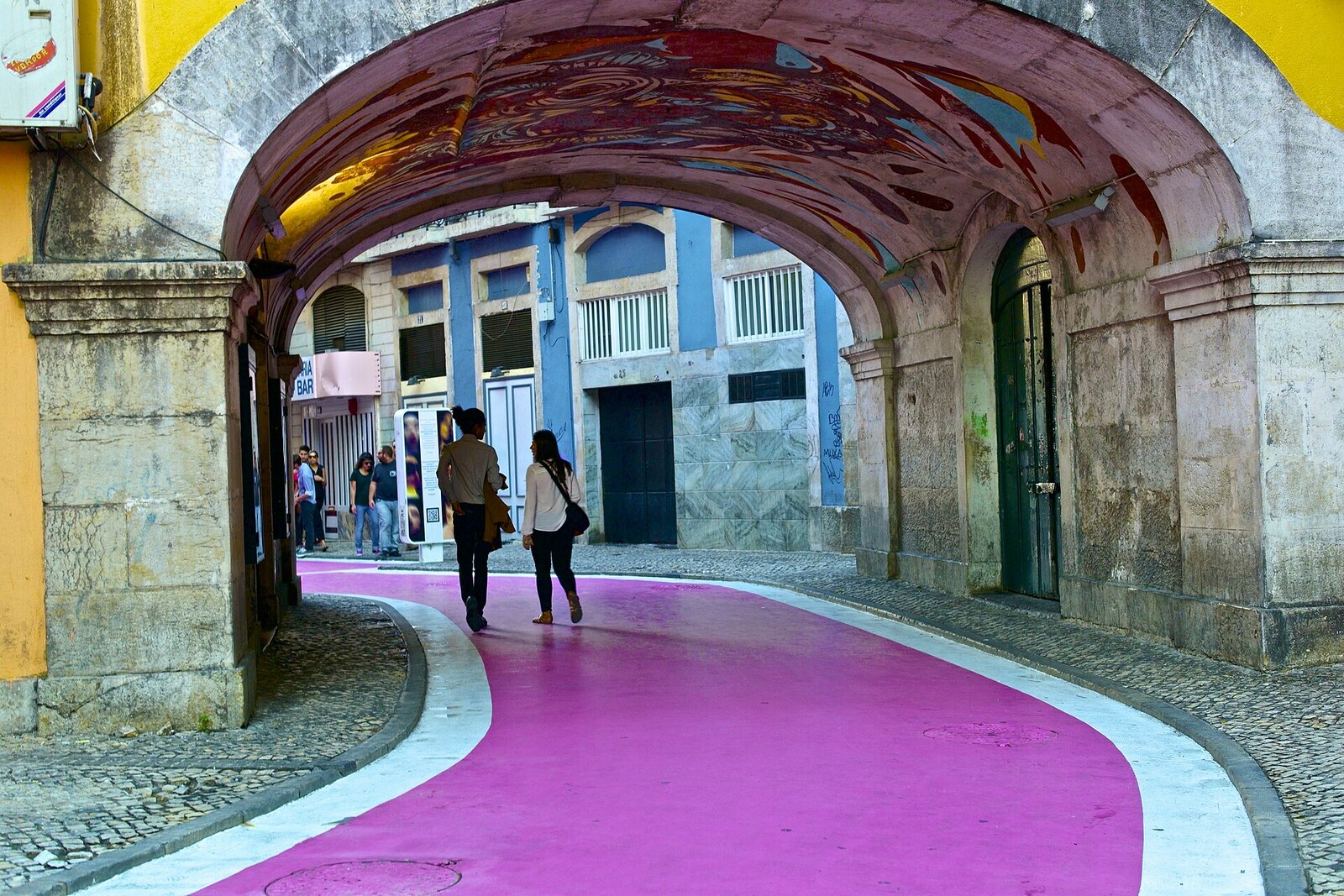
Look around first
What to notice
- Pink pavement
- The level line of the roadway and sidewalks
- Signs with the names of ports
- Outdoor terraces
The story of the place
The Sodré family owned houses by the quay and invested in waterfront construction after the earthquake; their surname later passed to the streets, the station, and the whole district. Rua Nova do Carvalho was a port street for crews and workers who came ashore while a ship was in port: bars, tobacco shops, barbershops, and boarding houses with rooms rented for a few hours operated here. Names of distant ports remain above the doors because each owner tried to attract a foreign sailor before a neighboring establishment did. Passengers from river ferries, trains, and the metro now come along the level paving without a curb to these doors, while terraces occupy the former roadway.
On December sixth, two thousand eleven, two artists from Artbuilding began covering the asphalt of Rua Nova do Carvalho with pink paint. The commission came from the newly opened Pensão Amor, and city hall supported the work. The bar owners needed to show that a new nighttime street had appeared in the waterfront district. They placed this sign directly beneath the feet of passersby.
Ships brought the former clientele here. In the nineteen twenties, expensive clubs in the center did not cater to sailors and port workers. They looked for drinks and company near the quay while their ship was in Lisbon. On Rua Nova do Carvalho, bars, tobacco shops, barbershops, and rooms rented for a few hours opened for them.
Employees of one of the first bars, Europa, saw how much sailors spent and began leaving to start businesses of their own. The new establishments were given the names of ports and countries familiar to foreign crews: Liverpool, Copenhagen, Rotterdam, Tokyo, Jamaica. The name above the door was meant to catch the right customer before the neighboring bar did.
Four boarding houses operated at number thirty-eight. Women brought sailors there, and the owners rented rooms by the hour. Pensão Amor—“Boarding House of Love”—opened in this building later. The new establishment retained a direct reference to the former trade in its name, although it was already aimed at a different clientele.
This kind of trade could exist as long as crews regularly came ashore. When the number of such disembarkations declined, the owners lost their usual revenue. New clubs appeared in other parts of Lisbon, while establishments here closed and buildings stood empty. At the beginning of the two thousands, entrepreneurs began reopening old bars and taking over vacant premises. José Carlos Carvalho, director of Mainside, invested in former boarding houses and wanted to bring restaurants, music, and small creative businesses together by the river. The pink paint was part of this gamble.
The first coating was not enough. An association of local bar and restaurant owners pressed for a pedestrian street where tables could be set out and exhibitions held. Architect José Adrião was given the task of making the temporary transformation permanent. In two thousand thirteen, builders leveled the roadway with the sidewalks, repainted the surface, and installed eight exhibition panels that also served as streetlights. Cars gave up the full width of the street to people and terraces. The owners gained a steady flow of visitors, and the nickname Pink Street displaced the official address in everyday speech.
The official name nevertheless remained on the plaques. Rua Nova do Carvalho is named after the Carvalho family: it included the Marquis of Pombal, who led Lisbon’s reconstruction after the earthquake of seventeen fifty-five, and his brother Paulo de Carvalho e Mendonça, who managed the construction work in this part of the city.
Cais do Sodré means “Sodré’s Quay.” The Sodré family owned houses here and invested in post-earthquake construction by the water; their surname first became attached to the quay, then to the streets, the station, and the whole district. Visitors to today’s bars now get off trains, the metro, and river ferries. On Rua Nova do Carvalho, a curb no longer separates the roadway from the sidewalk, names of distant ports can still be found above the doors, and the path between them is painted pink.
Useful on site
The square and waterfront are open around the clock; bars stay open until late at night.
Checked: June 17, 2026. Check the official source before visiting.First, look at the river from the safe side of the waterfront, then head to Pink Street. In the evening, keep an eye on your belongings and do not count on free entry to the establishments.