 Guide On Map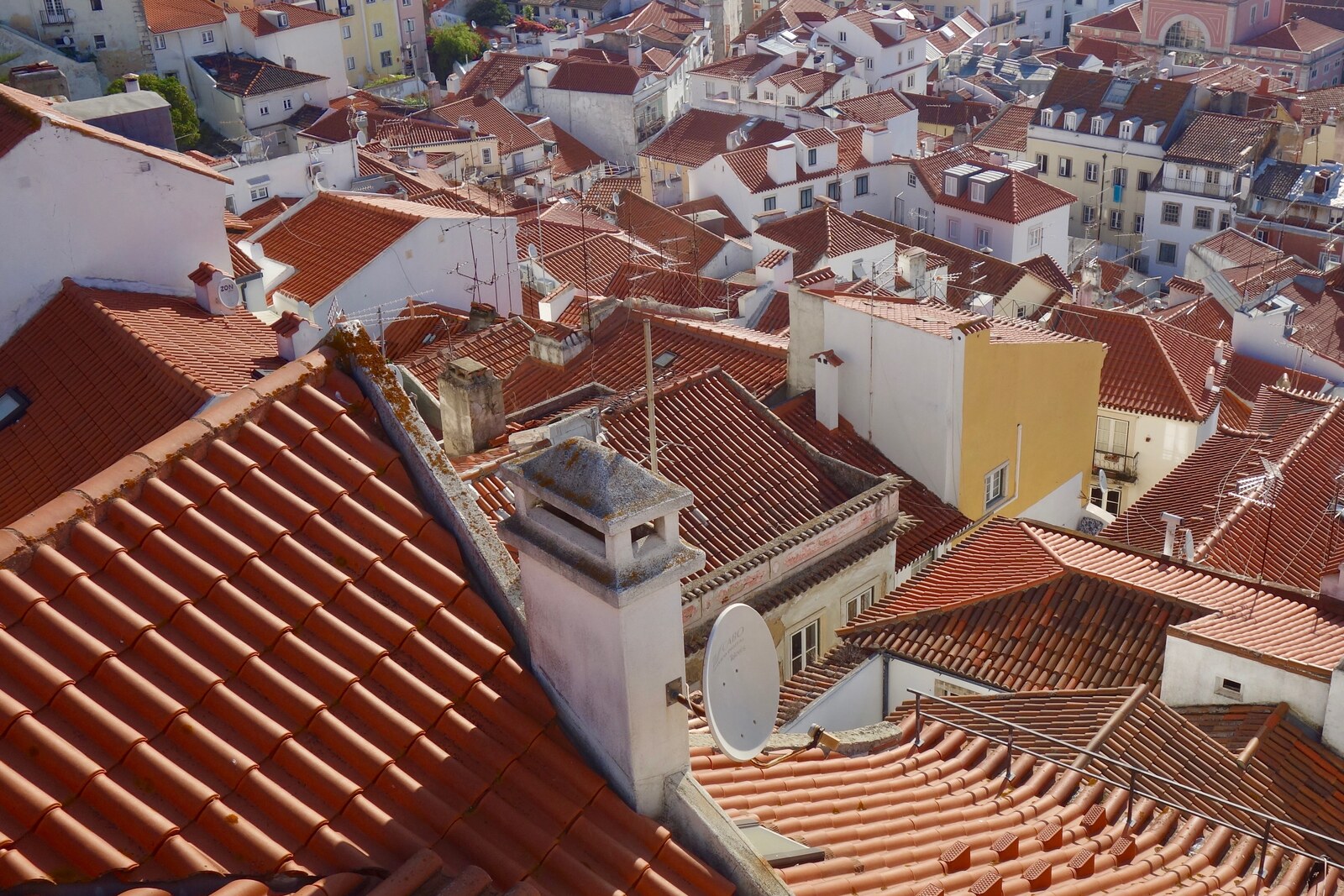
Look around first
What to notice
- Masonry along the Norberto de Araújo Stairway
- The eastern slope beyond the terrace
- The rooftops of Alfama and the Tagus
The story of the place
The masonry by the Norberto de Araújo Stairway runs along the edge of the old city wall. In Muslim Lisbon, funeral processions passed through the exit here on their way to a cemetery on the slope of Graça. Later, the gates were called Portas do Sol for their eastern orientation. From the terrace, this slope descends toward the rooftops of Alfama and the Tagus.
The name “Portas do Sol” refers to gates that are no longer here. Their arch cut through the eastern side of the Old Wall, roughly at the upper end of the Norberto de Araújo Stairway. Beyond the gates began the slope of Graça and the road to Santarém. From here, guards could see the approaches to the city; today’s panorama above Alfama was once an observation field.
In Islamic Lisbon, the gates were called Bab al-Maqbara—the Cemetery Gate. Muslim residents carried their dead through them to a necropolis beyond the wall, probably on the slope of Graça. After the Christian conquest, the opening was given the name Portas do Sol: it faced east. The sun in the name indicates the position of the old entrance.
In the summer of eleven forty-seven, Afonso Henriques, the first Portuguese king, was besieging Muslim Lisbon. The king needed a fortified port on the Tagus, but his own forces were not enough to storm it. So he persuaded crusaders sailing from Northern Europe to Palestine to stop at the city. Under the agreement, they could expect military booty and ransom for captives; to those wishing to stay, the king promised housing in conquered Lisbon.
Flemings and warriors from the Rhineland took the eastern sector of the siege, near these gates. First, they brought a covered wooden battering ram up to the wall. The defenders pelted the structure with burning materials, wounded the people inside, and forced the rest to retreat. After that, the crusaders went underground.
For about a month, sappers dug a tunnel beneath the eastern wall between Portas do Sol and the Alfama Gate. They removed the earth and stone from beneath the masonry and supported the ceiling with wooden posts. On October sixteenth, they set the posts on fire. When they burned through, several dozen meters of wall collapsed.
The crusaders rushed into the breach, but the defenders met them in the passage that had formed and repelled the first assault. They held the breach, but could no longer rebuild the wall during the fighting. Food in the city was running out, and from the other side a new siege tower was approaching the fortifications. A few days later, representatives of the besieged agreed to surrender.
Afonso Henriques gained Lisbon. The victors’ entry was accompanied by plunder and violence; part of the Muslim population died or left the city. Some crusaders settled here, while the rest continued on to Palestine. The breached wall was later restored, and for several more centuries the gates let people through to the eastern road.
The earthquake of seventeen fifty-five damaged the structure, after which the remains of the gates were dismantled. The masonry along the Norberto de Araújo Stairway belongs to the same line of fortifications, but the arch itself is not among it. In its place remain an east-facing passage and the name Portas do Sol.
Useful on site
Open around the clock, free entry; source checked 2026-06-29.
Checked: June 29, 2026. Check the official source before visiting.Do not limit yourself to the river view: linger by the parapet and find a few landmarks that will disappear from view after the descent.