 Guide On Map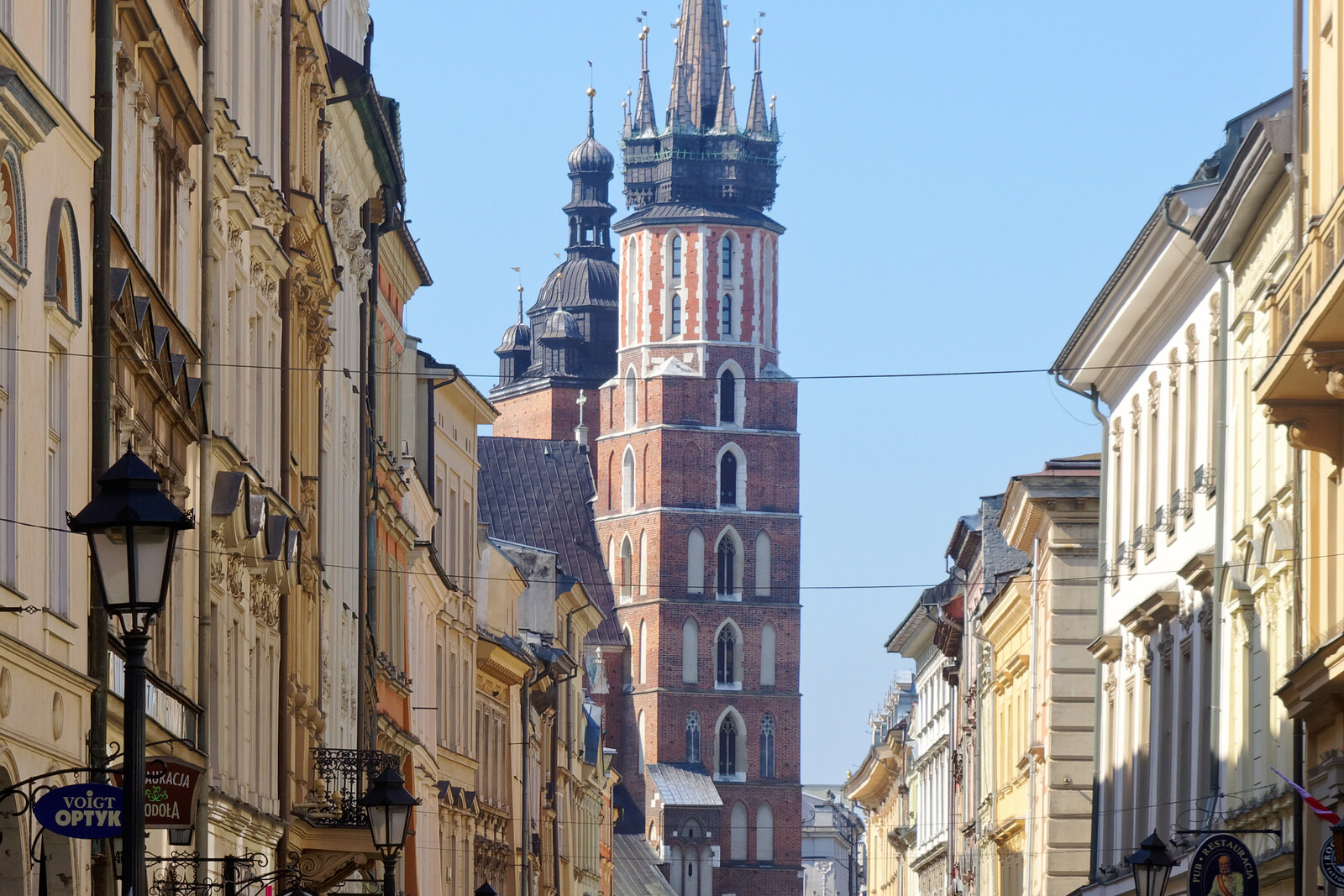
Look around first
What to notice
- Facade of building number 45
- Drawings on the café walls
- Display cases with puppets
- Stained-glass window with the owner and a tray
The story of the place
Day after day, commercial traffic traveled along the road from the northern gate to the market square, while on ceremonial days coronation entries and funeral processions moved along this street toward Wawel. Among the facades stands house number forty-five: it still contains a café that was once divided into a bright confectionery by the entrance and a windowless room farther inside. The drawings of early visitors, display cases with puppets, and a stained-glass window showing the owner carrying a tray of food and drinks have survived inside.
Floriańska Street got its name from Church of St. Florian beyond the city walls. St. Florian was a Roman officer executed in the early fourth century for refusing to renounce Christianity. In eleven eighty-four, Prince Kazimierz II Sprawiedliwy and Gedko, the Bishop of Krakow, secured the transfer of his relics to Krakow and founded a church for them. When the streets of the new town were laid out in twelve fifty-seven, the road from the market square to this church was named Floriańska Street.
Coronation entries and funeral processions bound for Wawel passed along it. On ordinary days, the street's advantage was commercial: traffic between the northern gate and the market square passed by its shops. This was the flow that Jan Apolinary Michalik, a young confectioner from Lviv, was counting on. In eighteen ninety-five, he leased premises in house number forty-five and opened the Lviv Confectionery. In the front room, he sold pastries, doughnuts, and ice cream. In the windowless back room, visitors were served coffee, food, and alcohol.
The School of Fine Arts stood nearby, and its students began gathering in the back room. They left drawings and caricatures on the walls and brought along writers and actors. It was this windowless room that gave the establishment its new name: Jama Michalika.
In nineteen oh five, the playwright Jan August Kisielewski, who had seen cabarets in Paris and Vienna, decided to stage a similar show in Krakow. He needed a private room and his own audience; Michalik already had both. According to the recollections of the physician and writer Tadeusz Boy-Żeleński, the future principal author of the cabaret texts, the hardest part was persuading the owner. Michalik considered performances a desecration of a respectable confectionery. Then he realized that the evenings would bring in revenue and agreed.
In the autumn of nineteen oh five, the first performance of Zielony Balonik, Poland's first literary cabaret, took place in the back room. Almost the entire program was improvised for invited guests: the performers mocked artists they knew, theatrical customs, and Krakow officials. Boy-Żeleński began writing verses for these evenings, later published in the book Słówka. From nineteen oh six onward, puppet shows became the main attraction; by nineteen eleven, tickets were already being sold for them.
The success allowed Michalik to expand the confectionery. In nineteen ten, he added two rooms and a kitchen, while the artist Karol Frycz designed the furniture, doors, lamps, and stained-glass windows. The expansion proved to be the owner's last major gamble. By nineteen twelve, the old jokes had run dry, the First World War struck the establishment, and in nineteen eighteen Michalik sold it. He left for Poznań and opened a boarding house there.
Jama Michalika café still operates in house number forty-five. Inside, the drawings of its first visitors have survived, along with display cases containing Zielony Balonik puppets and a stained-glass window created by Frycz: it shows Michalik himself leaving the confectionery with a tray of food and drinks.
Useful on site
This street stop is freely accessible at any time. The main variable here is the density of foot traffic, not opening hours.
Checked: June 16, 2026. Check the official source before visiting.The street is narrow and busy; view the buildings from the opposite side without blocking entrances. The museum and the establishment inside are visited separately.