 Guide On Map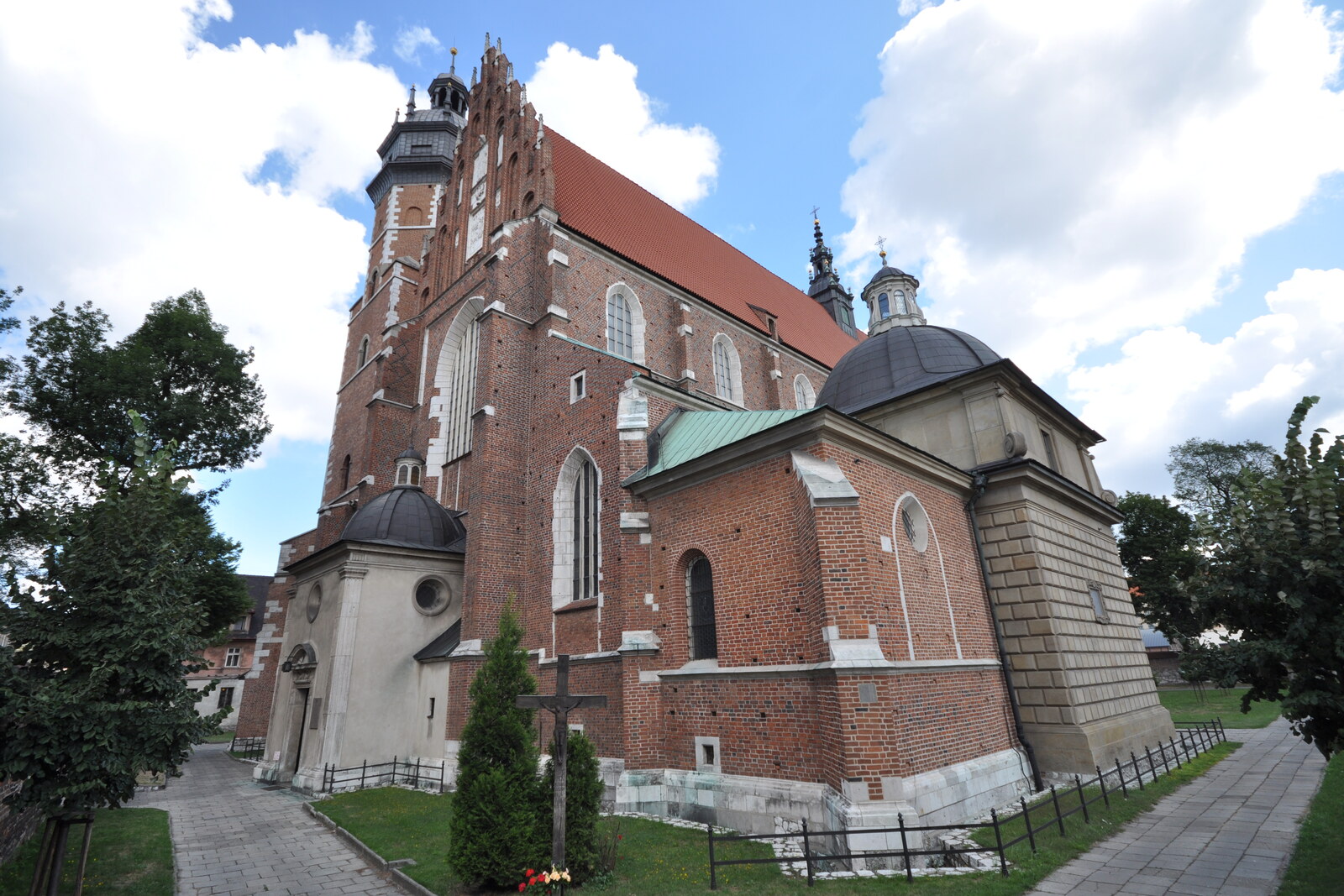
Look around first
What to notice
- The basilica's brick structure
- Images of the procession in the sacristy
- The monstrance in old images
The story of the place
Kazimierz parish needed its own church near the market square: the older ones were too far away. The basilica's brick structure was built in the town that King Kazimierz III the Great founded in thirteen thirty-five; after his death, the town council was responsible for construction, and the townspeople provided the funds. In fourteen oh five, King Władysław II Jagiełło transferred the church to the Canons Regular. They lived as a community under a monastic rule, served the parish, and remain at the basilica to this day.
Krakow tradition begins the history of this basilica with a mistake by robbers. The chronicler Jan Długosz, who recorded the tradition more than a century later, dated the event to the year thirteen forty-seven. In the week after the feast of Corpus Christi, people searching for gold broke into Krakow's Church of All Saints. They forced open the tabernacle and took a gilded monstrance—a vessel used to display the consecrated host, the bread of Communion. Catholics venerate it as the body of Christ.
Only after the theft did it become clear that the monstrance was made of copper. It was impossible to sell it for the price of gold, and the robbers faced severe punishment for sacrilege. According to Długosz's account, they came here, to the marshy land of the village of Bawół, and threw their loot into Mate Marsh. The chronicler does not say what happened to them afterward.
The tradition continues the story with heavenly lights that supposedly appeared over the marsh. Bodzęta, Bishop of Krakow, and King Kazimierz III the Great organized a procession here to find the sacred object. The monstrance was found in the thickets and returned to the Church of All Saints. Kazimierz decided that the miracle was addressed to him and vowed to build a large brick church on the site of the discovery. The name “Corpus Christi” referred to the host that, according to this story, was taken from the marsh.
But this is precisely a tradition. Długosz relied on oral accounts, and the date he gave fits poorly with the documents: construction of the church began before thirteen forty-one. Archaeologists investigated the ground beneath the altar area and found no layer typical of a marsh. Wet clay soil, on which a bog could have formed, was found on the other side of St. Lawrence Street. The exact site of the legendary discovery cannot now be identified.
The documented reason for construction was more practical. In thirteen thirty-five, Kazimierz III the Great founded Kazimierz, and the older churches were too far from its market square. The new town needed its own main parish church. After the king's death, the town council took on the expenses; the people of Kazimierz provided the money. In fourteen oh five, King Władysław II Jagiełło transferred the church to the Canons Regular—a community of priests who lived together under a monastic rule and served the parish. The same community remains at the basilica to this day.
The proximity of the former market square explains the church's location. Tradition preserved its name: old images in the sacristy show the procession and the monstrance raised from the marsh. There is no confirmed marsh beneath the church, but in these pictures the recovered Corpus Christi is still carried through Kazimierz.
Useful on site
The church is usually open during the day and closed to tourist visits during services. Tourist and parish sources give different time frames, so before entering, check the current notices at the church and behave as you would in an active church.
Checked: June 29, 2026. Check the official source before visiting.Enter only outside service times and remain quiet. Do not expect to climb the old staircase or freely view all memorial sites: part of the space may be closed to regular visitors.