 Guide On Map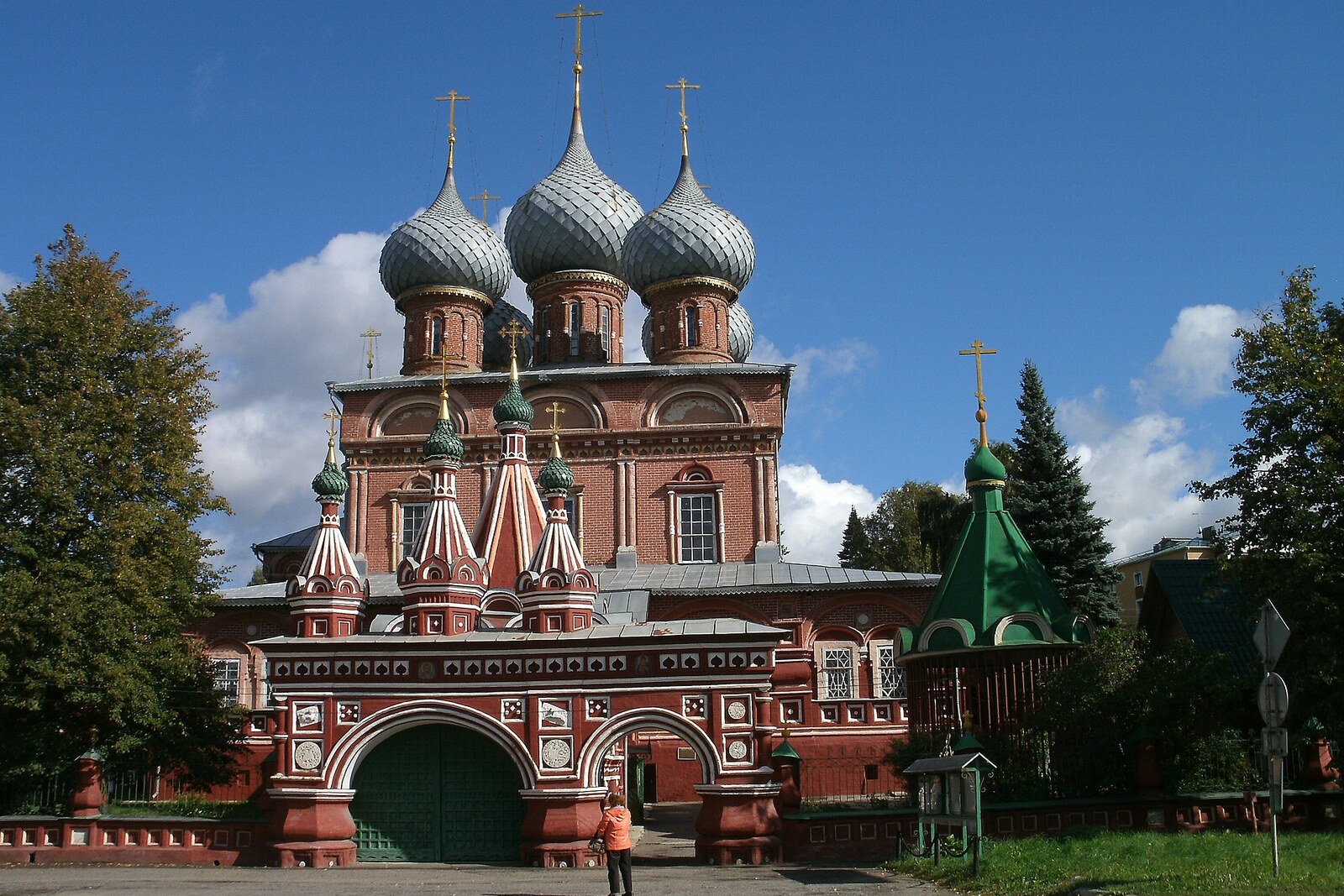
Look around first
What to notice
- The church's stone walls
- Northern chapel
- Church of the Sign
- Monastery bell tower
The story of the place
The Chapel of the Three Hierarchs adjoins the main body of the Church of the Resurrection on the Debra on the north. Beneath it is a stone lower chamber with a burial vault, and above it a seventeenth-century painting has survived. Inscriptions in the church name the commissioners of the construction and the parish residents who collected donations for it.
In the first half of the seventeenth century, Nizhnyaya Debrya was already an inhabited settlement of tanners. Here, “debr” meant a wooded place below the town hill; the forest receded, but the name remained. On this site stood a wooden parish church with its main altar dedicated to the Resurrection of Christ. Its dedication and name passed to the present stone church.
The largest donor was Kirill Isakov, a trader in leather and imported dyes who sought to build a large stone church for his parish. He belonged to Gostinaya Sotnya, the term for the upper ranks of the merchant class admitted to long-distance and foreign trade. Isakov even bought dyes for local tanners in England.
A legend recorded by a Kostroma local historian only in the early twentieth century concerns the source of his money. Supposedly, one of the barrels sent from England was unusually heavy. Isakov opened it and found gold ingots instead of dye. The merchant did not dispose of the find without the supplier's consent and sent an inquiry. The Englishman supposedly told him to use the gold for a pious cause. Isakov then gave it to the church, added his own funds, and began collecting donations from parishioners. Documents do not confirm the gold barrel; yet inscriptions in the church directly name Kirill Isakov and the residents of the Resurrection parish as the builders and commissioners.
Isakov did not live to see the consecration. He died while the finishing work was still under way and was buried in the lower chamber beneath the northern chapel. His brother donated a silver altar cross with a memorial inscription. In sixteen fifty, the Chapel of the Three Hierarchs was consecrated “for the soul of Kirill Isakov in eternal memory,” and the main church a year later.
The burial vault of the commissioner still lies beneath the northern chapel. Above it, in a seventeenth-century painting, Kirill of Alexandria is depicted—the saint whose name the merchant bore.
Useful on site
Begin by viewing the exterior. If the church is open, behave inside as you would in an active church; access to the paintings may depend on the service and local rules.