 Guide On Map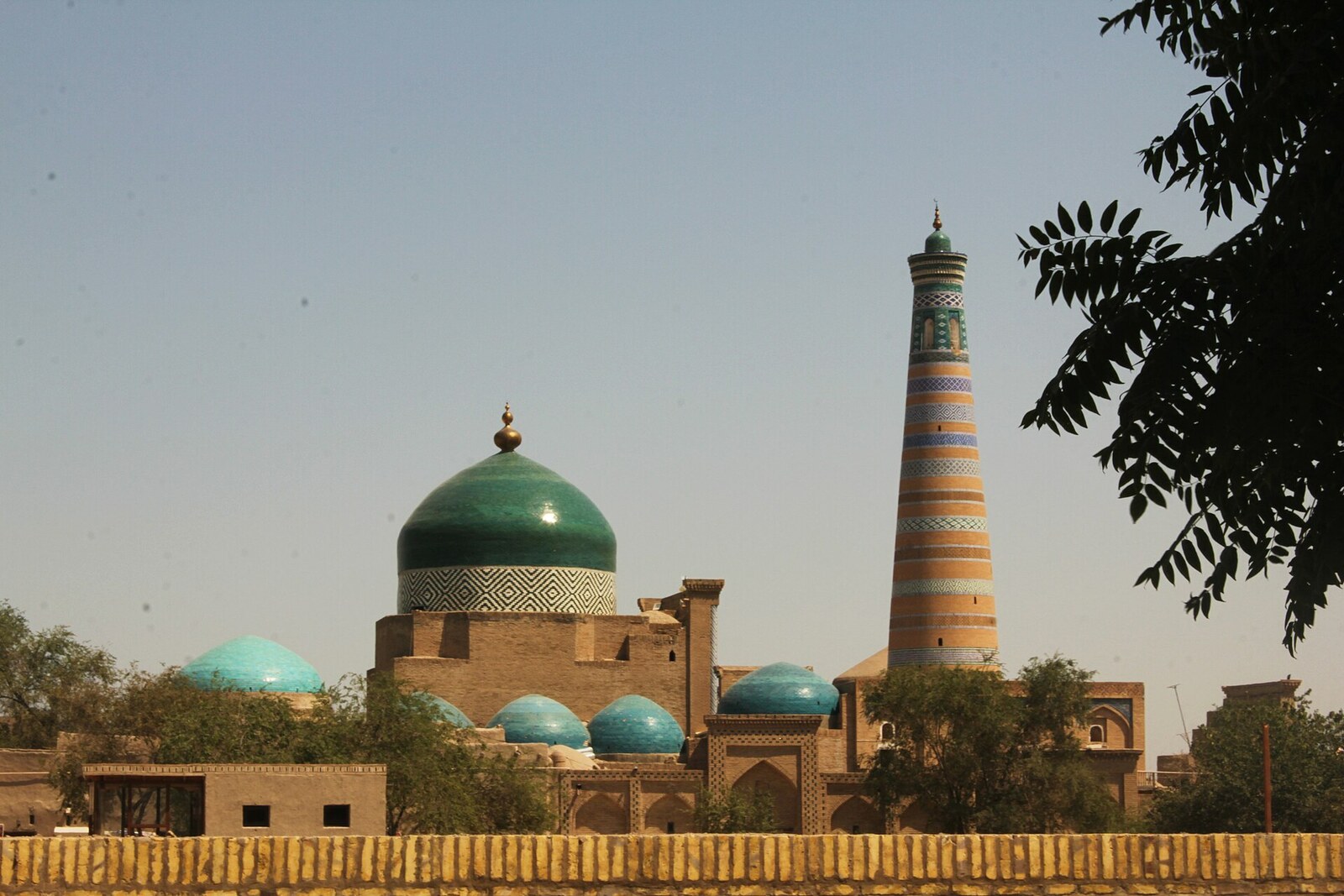
Look around first
What to notice
- The western opening of the great hall
- The grave of Pahlavan Mahmud
- The tombstone of Muhammad Rahim Khan
- Marble slabs of earlier khans
The story of the place
Beyond the western opening of the great hall lies the grave of a craftsman whom Khiva venerates as its patron saint. According to local tradition, he was buried in the courtyard of his workshop, and a cemetery later grew up around it. Later, the grave was enclosed by a richly decorated mausoleum, a room for reading the Quran, and a khanaqa, where people prayed and received pilgrims. This same hall also contains the marble tombstones of rulers from the earlier dynasty, moved here from other places.
In eighteen oh six, Muhammad Rahim returned to Khiva from a failed campaign without his elder brother. Eltuzar Khan, the first khan of the new Qungrat dynasty, was killed while retreating from the Bukhara army. Two years earlier, he had broken with the old order: until then, the Qungrats had ruled the country in the name of nominal khans—descendants of Genghis Khan—while Eltuzar Khan took the khan's title himself, though he had no such lineage. Rivals from other Uzbek clans refused to recognize him. Muhammad Rahim inherited the title for which his brother had already paid with his life.
Four years later, Muhammad Rahim defeated his chief rivals and returned from a successful campaign against Kungrad, a city in the lower reaches of the Amu Darya. He now invested heavily in the grave of a man whose veneration did not depend on khanly genealogies.
That man's name was Mahmud. He lived at the turn of the thirteenth and fourteenth centuries, earned his living as a tanner and maker of headwear, and wrote Sufi quatrains in Persian. “Pahlavan” is an honorary nickname for a wrestler and a strongman. Stories of his victories in contests in India and Iran belong to legend; little reliable information about his life has survived. According to local tradition, Mahmud was buried in the courtyard of his own workshop. A cemetery grew up around the grave, and the craftsman himself came to be revered as Khiva's patron saint.
By Muhammad Rahim Khan's order, craftsmen incorporated the old grave into a new complex. They built a richly decorated mausoleum, a room for reading the Quran, and a large khanaqa—a hall for prayer and receiving pilgrims. In this same khanaqa, the khan prepared a place for his own burial. In this way, the new ruler placed his family beside the city's patron, whom its residents already recognized without a khan's decree.
After that, the Qungrat khans made a ziyarah here—a prayerful visit to a revered grave—before ascending the throne or after campaigns. In the khan's army, the banner of Pahlavan Ata went first, ahead of the banners of the ruler and individual tribes. Muhammad Rahim himself was buried after his death in the niche he had prepared, and later generations of Qungrats turned the complex into their dynastic mausoleum.
The western opening of the great hall leads to the grave of Pahlavan Mahmud. Muhammad Rahim Khan's tombstone stands by the northern wall. In front of it are the slabs of Abu al-Ghazi Khan and Anusha Khan—earlier rulers from the line of Genghis Khan's descendants. Only their marble tombstones were moved into the new hall.
Useful on site
An active shrine and museum site; admission is often not included in the general ticket. Hours may change because of religious events.
Checked: date not specified. Check the official source before visiting.This is a living place of pilgrimage: yield the way to worshippers, keep quiet, and do not repeat ritual gestures for a photograph.